Will Ronnie Hakim Go to Bat for Bus Riders? So Far, the Answer Is “No”
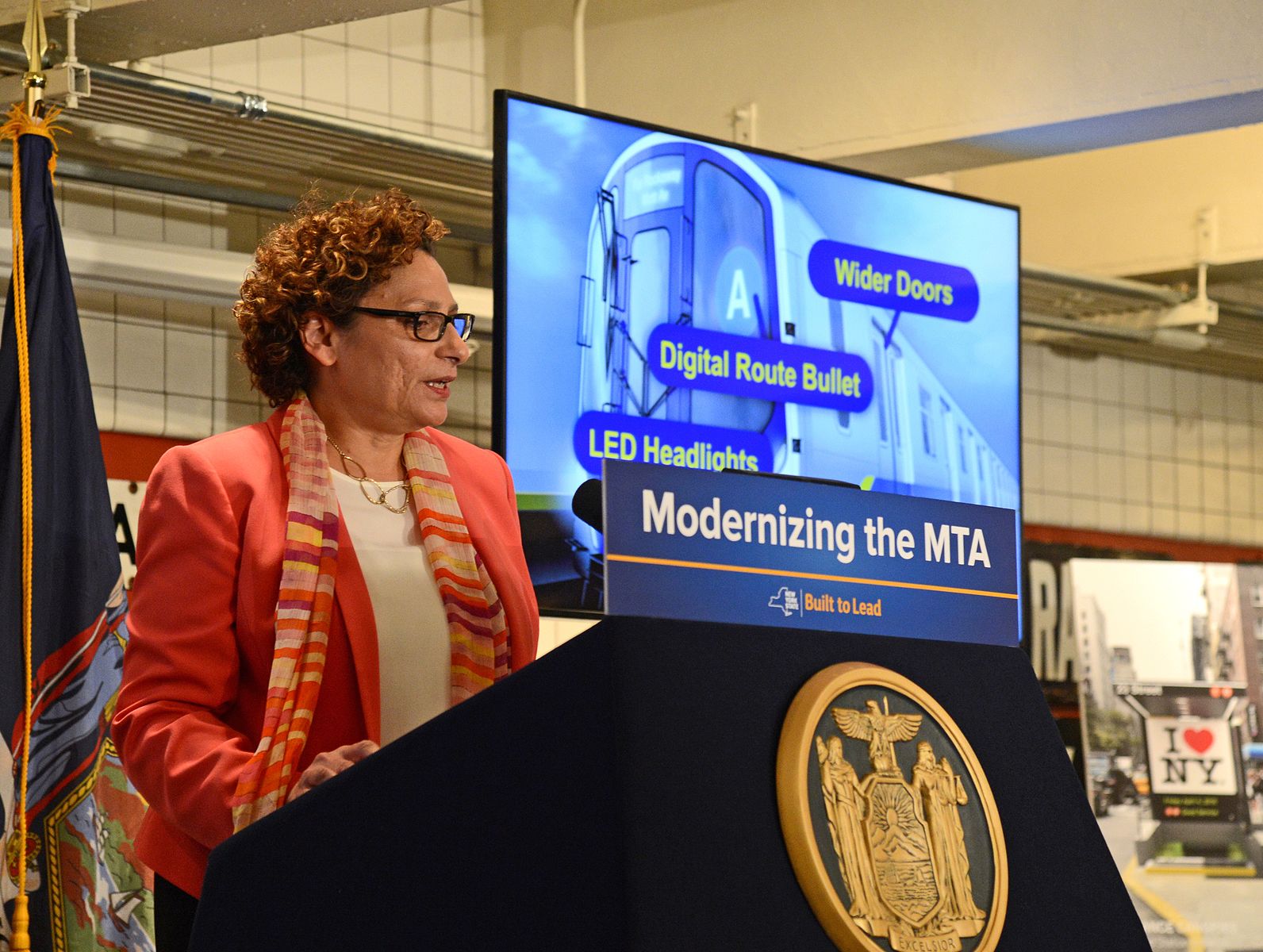
Don’t count on MTA interim chief Veronique “Ronnie” Hakim to inject a sense of urgency into the task of turning around the agency’s sputtering bus system. In testimony to state legislators this afternoon, Hakim repeated the same excuses the MTA has given for months to justify stonewalling on fare technology that promises to speed up bus trips.
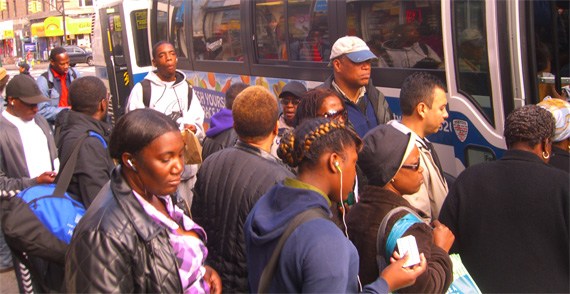
Advocates are calling on the MTA to adopt a fare payment system that enables all-door boarding on all MTA buses, which would reduce the time buses stand still at stops. MTA officials have repeatedly refused to commit to such a system, citing the “threat of fare evasion” as an obstacle to system-wide implementation.
Hakim, who replaced the recently-retired Tom Prendergast, repeated the fare evasion line today after Assembly Member Jeffrey Dinowitz asked about the feasibility of all-door boarding. Hakim told Dinowitz that the practice “presents some concerns about fare evasion.”
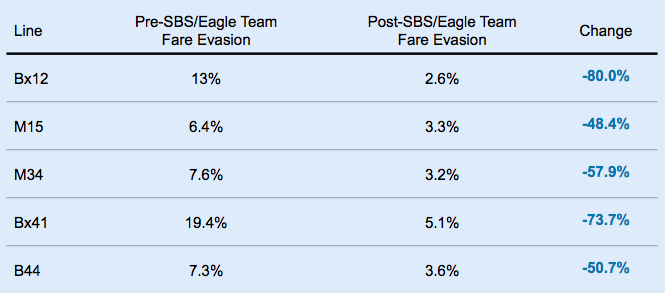
But those concerns are not borne out by the MTA’s own experience. On Select Bus Service lines, all-door boarding has actually correlated with substantial decreases in fare evasion.
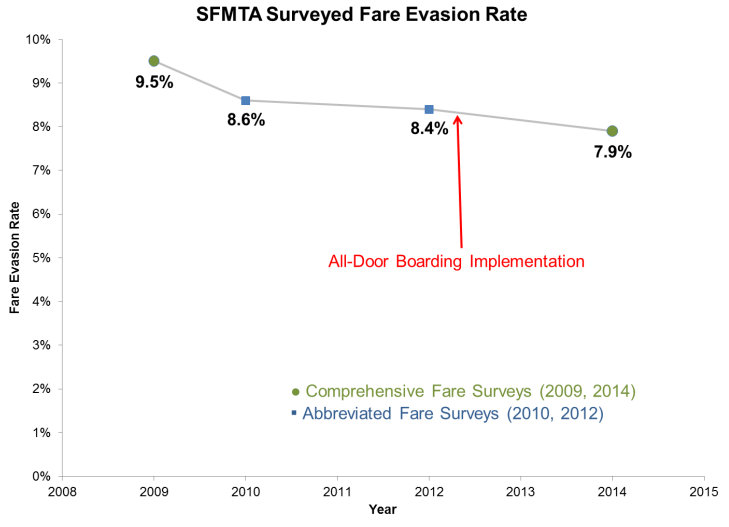
And when San Francisco switched to systemwide all-door boarding in 2012, there was no increase in fare evasion:
Ultimately, the MTA has to start worrying more about providing good service that attracts riders and stop fretting about fare collection.
New Yorkers are abandoning the bus in large numbers. To get bus ridership trending in the right direction again, the MTA needs to take a page from agencies like Transport for London and prioritize the rider experience.
“You can sit there and go through all the revenue protection measures you like, but [some] people are not going to pay,” TfL Head of Business Development Matthew Hudson told Streetsblog in November. “Even if you, for instance, gated all the bus entries or something, they’re probably not going to travel then. Have you really missed out on revenue?”

Streetsblog has migrated to a new comment system. New commenters can register directly in the comments section of any article. Returning commenters: your previous comments and display name have been preserved, but you'll need to reclaim your account by clicking "Forgot your password?" on the sign-in form, entering your email, and following the verification link to set a new password — this is required because passwords could not be carried over during the migration. For questions, contact tips@streetsblog.org.