Downtown Seattle Added 45,000 Jobs and Hardly Any Car Commuters

Transforming from a car city to a transit city is no easy task. Just ask Denver and Los Angeles, which have spent billions to build rail systems and still struggle to reduce solo car commuting rates.
But it can be done, and the proof is in Seattle.
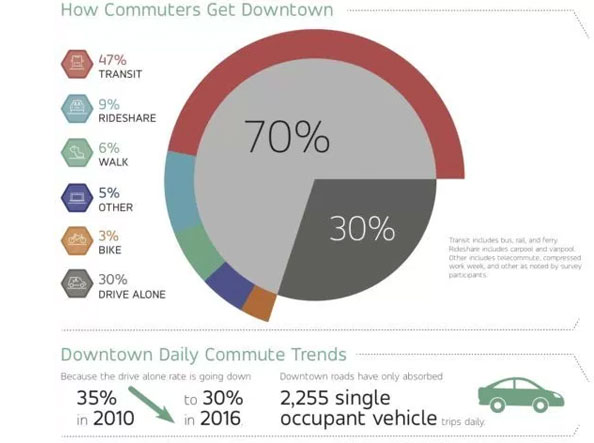
A new report from the nonprofit Commute Seattle reveals that the share of downtown commuters who drive alone dropped from 35 percent in 2010 to 30 percent last year. Tom Fucoloro at Seattle Bike Blog explains why that’s so impressive:
Downtown Seattle has added 45,000 jobs since 2010. During the same time, only 2,255 new drive-alone trips have been added to downtown streets, according to a new Commute Seattle survey. The other 95 percent of commute trips were absorbed by transit, walking, biking, telecommuting and shared car trips.
The survey, released every two years, suggests that efforts to increase and improve transit service and build more homes near jobs are working. It also suggests that downtown streets are basically at capacity for peak-hour car trips, a truth anyone who spends any time downtown during peak hours could tell you. We can add more jobs, but we can’t add more cars.
Transit is by far the biggest winner in the survey, drawing very close to reaching 50 percent of downtown commute trips (it’s currently at 47 percent, so it could reach half very soon). Transit absorbed a net of 31,000 of those 45,000 new commute trips, a combination of new commute trips and exiting commuters who switched to transit.
Zach Shaner at Seattle Transit Blog says credit is due to thoughtful local policy making:
This leads me to two conclusions. First and foremost, praise is due to our transit agencies for improving service and delivering exciting new products such as University Link. Praise is due to SDOT for stepping in and greatly boosting service within the city, and praise is due to voters for approving it. Praise is due to Seattle’s progressive business community, including the Downtown Seattle Association, who partially funds Commute Seattle and who heavily backed ST3*. Praise is also due to the hundreds of companies paying for transit passes, installing bike amenities, and implementing other transit-friendly policies. Many of our peer cities are falling behind, even those building lots of shiny trains, but Seattle is leading the way.
For more on Seattle’s transit success story, watch this primer from Streetfilms and TransitCenter:
More recommended reading today: The Bicycle Coalition of Greater Philadelphia reports that the Pennsylvania Senate passed a bill withholding funds from sanctuary cities, but Governor Tom Wolf says he “has problems” with the legislation. And at Strong Towns, Joe Cortright writes that cities need to decide whether to prioritize speed for cars or experiences for people.

Read More:
Streetsblog has migrated to a new comment system. New commenters can register directly in the comments section of any article. Returning commenters: your previous comments and display name have been preserved, but you'll need to reclaim your account by clicking "Forgot your password?" on the sign-in form, entering your email, and following the verification link to set a new password — this is required because passwords could not be carried over during the migration. For questions, contact tips@streetsblog.org.