U.S. DOT Releases New Guidance to Make Streets Safe for Cycling

Last month in Pittsburgh, Transportation Secretary Anthony Foxx unveiled a new federal initiative aimed at reducing pedestrian and cyclist fatalities. Despite declining overall traffic fatalities, people walking and biking are being killed more often on American streets, a disturbing trend that U.S. DOT wants to reverse.
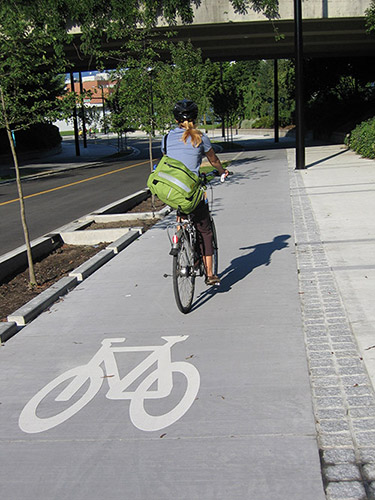
Now we’re beginning to see what the feds have in mind. This week, U.S. DOT released a new guide for transportation professionals it calls Bikesafe. The online resource includes recommendations for state departments of transportation and local governments on how to make streets safer for cyclists and pedestrians.
Bikesafe contains a list of 46 “countermeasures,” including chicanes, protected bike lanes, roundabouts, and “visual narrowing” of the roadway. Under protected bike lanes (FHWA calls them “separated bike lanes“), for example, the guide advises planners to pay particular attention to driveways and intersections and to “make full use of signing and marking to improve awareness and guidance of the facility through these conflict zones.”
In addition, the guide includes a primer on how land use decisions affect bicycling safety, how complete streets serve to improve safety, and other big-picture elements of sound bike planning. Another component is supposed to help agencies identify the proper intervention for specific safety problems they encountered.
Caron Whitaker, vice president of government relations at the League of American Bicyclists, said national advocates are pleased that this initiative is focused on infrastructure solutions — like better bike lanes and traffic calming — rather than education alone. Whitaker also likes that the proposal laid out by Foxx calls for requiring state DOTs and FHWA field offices to study bike networks and establish strategies for improving safety.

Read More:
Streetsblog has migrated to a new comment system. New commenters can register directly in the comments section of any article. Returning commenters: your previous comments and display name have been preserved, but you'll need to reclaim your account by clicking "Forgot your password?" on the sign-in form, entering your email, and following the verification link to set a new password — this is required because passwords could not be carried over during the migration. For questions, contact tips@streetsblog.org.