How Bike-Friendly Streets Help Denmark Combat Inequality


Michael Andersen blogs for The Green Lane Project, a PeopleForBikes program that helps U.S. cities build better bike lanes to create low-stress streets.
We don’t have to dream of a country where protected bike lanes and other quality bike infrastructure have dramatically improved life for poor people. We can visit it.
It’s called Denmark, and it’s arguably the most egalitarian country in the world.
Data published online for the first time suggests that bicycle transportation has been part of that triumph.
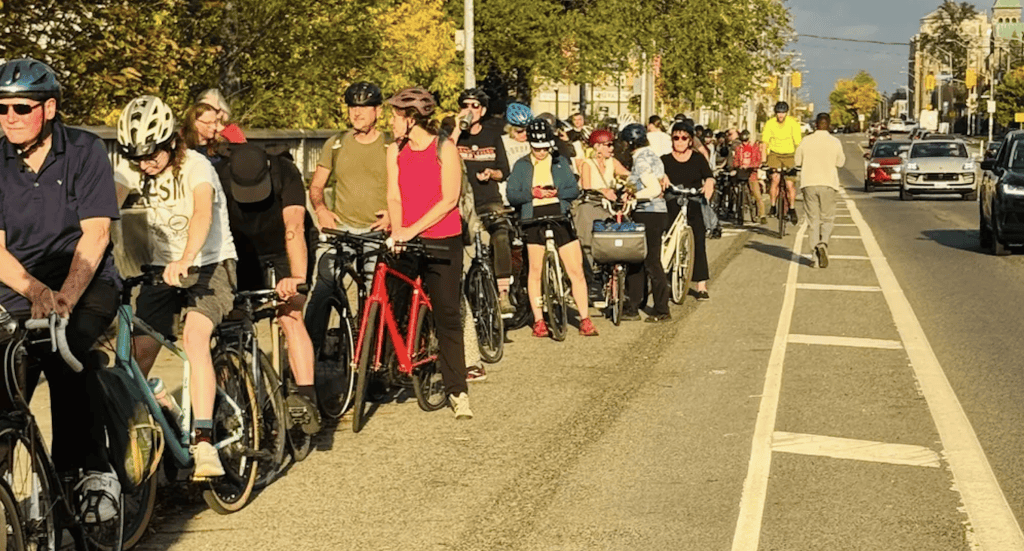
After embracing cars in the 1950s and 60s, Denmark took a U-turn around 1970 and began using protected bike lanes and low-speed side streets to make bicycle transportation an efficient, comfortable option. Today, this small, prosperous peninsula (whose capital, Copenhagen, is about the size of Columbus, Ohio) has the second-highest biking rates in the developed world after the Netherlands.
Ask Danes what sort of Danish people bike and they will probably say: “everyone.” In a sense, that’s true. But it also obscures something you’ll almost never hear a Dane mention: the massive benefit biking provides to the country’s poorest.
As you can see in the top chart, people of all incomes bike in Denmark, but biking is most common among the poorest Danes.
Who are these very low-income Danes? Mostly they’re recent immigrants and the long-term unemployed, who don’t fully qualify for the cash payments Denmark offers to people in school or between jobs. Because bikes are everywhere in modern Denmark, these poor people can remain mobile in Danish cities without facing pressure to devote a huge share of their money to cars if they don’t want to.
Adding protected lanes to major streets made bike trips as safe and comfortable as car trips

Here’s the complete breakdown (previously unavailable online) of how Danes of different incomes get around:

And here’s the same breakdown in the United States:

For the poorest Danes, car transportation is expensive. But it isn’t impossible. It’s not even rare.
It’s simply optional.
Only 41 percent of the poorest Danes’ trips happen in cars, compared to 72 percent of trips by the poorest Americans. More than anything else, this difference is because of bicycles: quick, cheap, direct and easily combined with good public transit.
Though Danes bike more, they don’t walk less or ride transit less. Danes at almost every income level do both of those things more than their American peers. Essentially all of Denmark’s additional biking is due to one thing: less reliance on cars.
Denmark has made it dramatically easier for poor people to escape poverty

In most of the United States, not owning a reliable car can turn poverty into an inescapable trap.
For someone without a working car, a huge share of jobs essentially drop out of reach. For 73 percent of Americans, the typical job would take more than 90 minutes to reach by public transit. Living carless in most American cities can mean being cut off from many of the family and friends who help people find work, feel happy, care for children, or recover from emotional or economic bad fortune. This problem shackles both the poorest American adults and their kids.
It’s part of the reason that only a third of children born into the poorest American families ever make it to the economic middle or above. Four in ten spend their lives in the lowest fifth.
In Denmark, things are different. As the chart above shows, three-quarters of Denmark’s poorest improve their situation by middle age. About one in seven of Denmark’s poorest children lands among the country’s richest adults, almost twice the rate in the United States.
Denmark is different from the United States in many ways; biking is just one. Bicycling is certainly less important to Danish equality than tax and social security policy.
Moreover, it has not eliminated poverty.
But it’s done the next best thing: it’s made poverty much easier to escape. And one of its tools in that fight has been making it normal and comfortable to do the daily business of one’s life on a bicycle.
You can follow The Green Lane Project on Twitter or Facebook or sign up for its weekly news digest about protected bike lanes.

Read More:
Streetsblog has migrated to a new comment system. New commenters can register directly in the comments section of any article. Returning commenters: your previous comments and display name have been preserved, but you'll need to reclaim your account by clicking "Forgot your password?" on the sign-in form, entering your email, and following the verification link to set a new password — this is required because passwords could not be carried over during the migration. For questions, contact tips@streetsblog.org.