How Silver Spring, Maryland, Outgrew Its Parking Lots


In healthy urban areas, people always complain that there’s not enough parking. And they still do that in Silver Spring, Maryland, says Dan Reed at Greater Greater Washington.
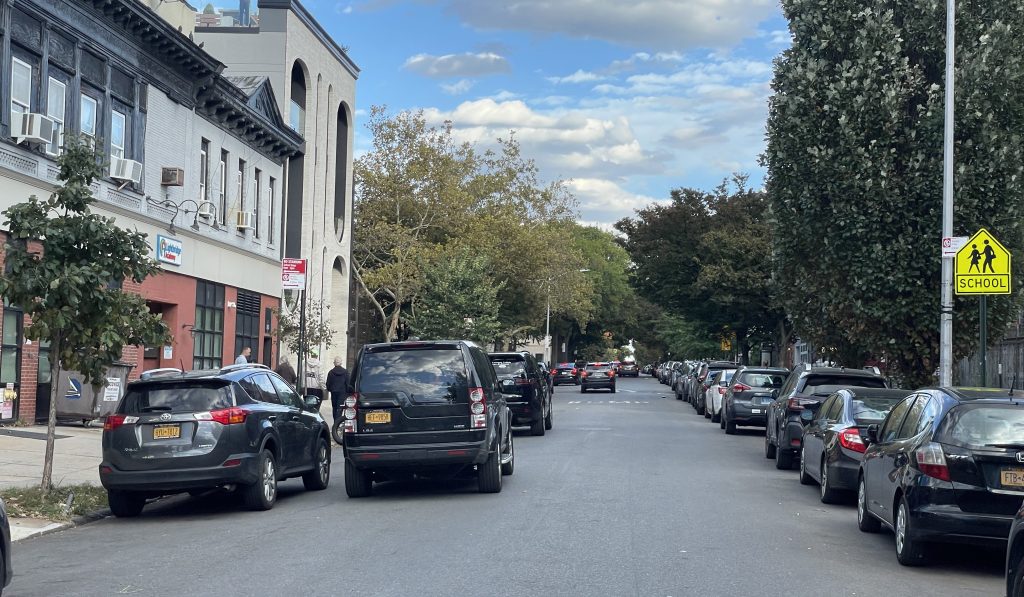
But they’re wrong. The city’s downtown parking supply is only about 58 percent occupied on an average day. Even as the city has grown, more parking is sitting unused thanks to the efforts of local leaders. Here’s how they did it:
In 2011, [Tom] Brown led a team at NelsonNygaard, where I now work, that recommended ways Montgomery County could better use its parking to promote and strengthen its downtowns.

Montgomery County has had its own municipal parking authority since the 1940s. A 1952 spread in the Washington Post’s “Silver Spring Advertiser” section boasted, “Look at all the parking space!” in downtown. But downtown Silver Spring couldn’t match the sea of free parking at new suburban malls like Wheaton Plaza, and it began to languish.
When Silver Spring started competing on place, not parking, it started to take off as an urban destination for the entire region. And a funny thing happened: as more homes and offices and shops were built around the Metro station, filling downtown’s gaps and vacant lots, the demand for parking actually decreased.
According to the Montgomery County Department of Transportation, the demand for parking in Silver Spring actually peaked in the early 1980s, when it had fewer residents and jobs. Today, a majority of downtown residents get to work without a car. Over 40% of downtown’s 9500 parking spaces are vacant all the time.
Realizing that its parking policies needed to reflect how people actually got around in its downtowns, county officials asked NelsonNygaard to offer suggestions. The resulting Montgomery County Parking Policy Study recommended reducing or eliminating parking requirements in urban areas, since there was already a glut of parking spaces, and finding ways to direct drivers to underused lots and garages.
Officials are starting to take the advice. Last year, the county passed a new zoning code that still mandates parking in new developments near transit stations, but requires far fewer spaces than it does for more suburban, car-dependent areas. That will conserve land and reduce building costs, as structured parking garages are very expensive to build lowering the barrier for potential residents and businesses who want to come here.
Meanwhile, the Department of Transportation has introduced demand-based pricing in Bethesda, setting higher rates for on-street parking spaces and lowering them in garages to encourage drivers to park there instead. This frees up on-street spaces for drivers staying for brief periods; reduces circling for a space, which causes congestion; and sends a message to drivers that they’ll be able to find a space.
Elsewhere on the Network today: Better Institutions looks at how transportation spending has come to account for a bigger share of U.S. household budgets over time. Systemic Failure scoffs at the transportation priorities laid out by Republicans in the House of Representatives. And Strong Towns says there’s a downside to justifying transportation investments based on time savings.

Read More:
Streetsblog has migrated to a new comment system. New commenters can register directly in the comments section of any article. Returning commenters: your previous comments and display name have been preserved, but you'll need to reclaim your account by clicking "Forgot your password?" on the sign-in form, entering your email, and following the verification link to set a new password — this is required because passwords could not be carried over during the migration. For questions, contact tips@streetsblog.org.