Eyes on the Street: A Better Queensboro Bridge Approach in Manhattan


Many commuters on the Ed Koch Queensboro Bridge this morning noticed new markings going in on First Avenue for a short but critical extension of the protected bike lane between 59th and 61st Streets. The changes, part of a plan supported by Community Boards 6 and 8 last spring, bring safer connections to both First Avenue and 59th Street.
More than 3,400 people crossed the Queensboro Bridge by bike over a 12-hour period during DOT’s August count last year. Now, riders heading south will be able to use First Avenue for a block and turn right on 59th Street, where sharrows and a new contra-flow bike lane link to Second Avenue. Previously, these riders would have had to head north to 61st Street and navigate the often-clogged car and truck entrance to the bridge.
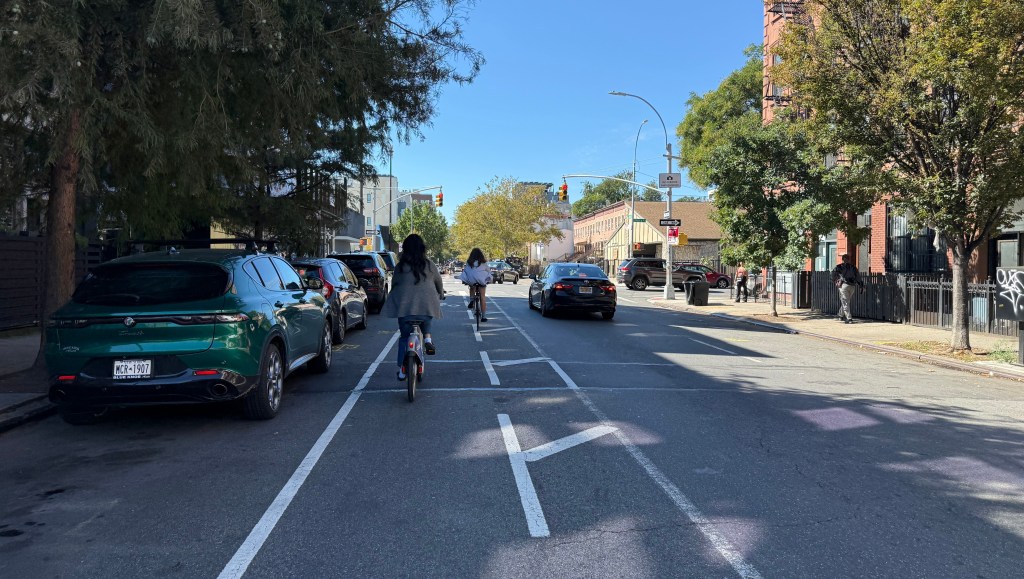
The plan includes a concrete barrier for the new two-way bike lane on First Avenue and a bicycle traffic signal for cyclists turning left from 59th Street to Second Avenue. There will also be new shared lane markings and flexible posts to help cyclists navigate traffic turning from First Avenue to 57th and 59th Streets. Reader Jeremy Lenz sent in some photos of the progress this morning.
First Avenue between 60th and 61st Streets is also receiving a northbound protected bike lane and two pedestrian refuge islands, connecting with a lane that already extends to 125th Street. Farther north on First Avenue, DOT is wrapping a repaving project between 72nd and 125th Streets, smoothing the concrete street with a new layer of asphalt.
Plus: Clarence snapped a photo of markings recently striped on the repaved Queensboro Bridge path, restoring the configuration that directs pedestrians to the north side and cyclists to the south side of the shared path.


Read More:
Streetsblog has migrated to a new comment system. New commenters can register directly in the comments section of any article. Returning commenters: your previous comments and display name have been preserved, but you'll need to reclaim your account by clicking "Forgot your password?" on the sign-in form, entering your email, and following the verification link to set a new password — this is required because passwords could not be carried over during the migration. For questions, contact tips@streetsblog.org.