Spreading Falsehoods on Student Fares, Brodsky Takes Page From Giuliani

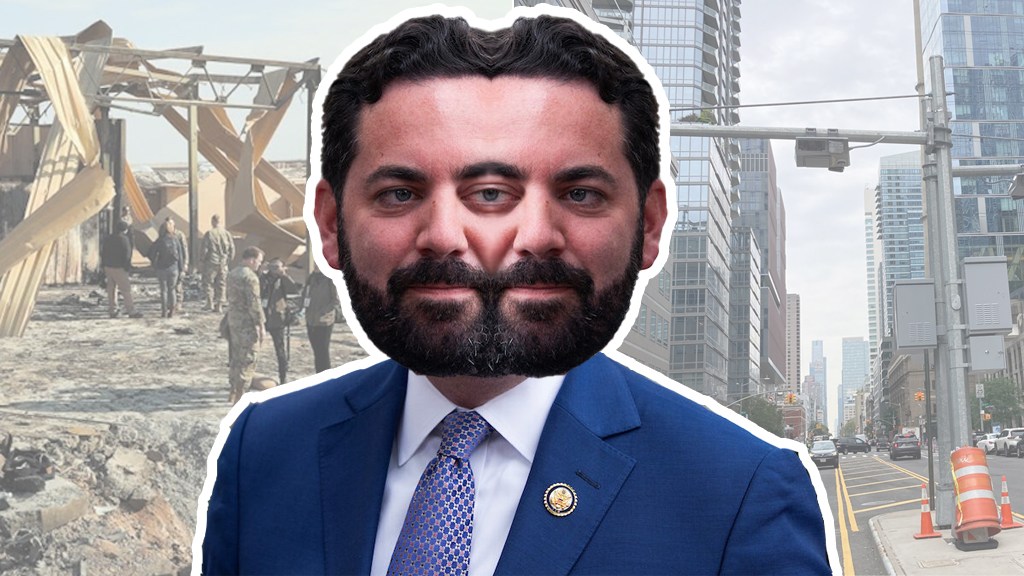
The Westchester Democrat who carried the banner for congestion pricing foes in Albany two years ago is grabbing attention with another anti-transit stance. Posing as a defender of New York City school children, Assembly member Richard Brodsky sent a letter to the MTA this week claiming that “the actual cost of free and discounted student fares is close to zero.” Twenty-three of his Assembly colleagues, including New York City Democrats Jeffrey Dinowitz and Linda Rosenthal, have signed on.
 Him again.
Brodsky’s assertion is a patently false claim that has a history of surfacing when politicians try to shirk their responsibility to pay for student transportation. The argument hinges on the faulty assumption that the MTA runs a fixed number of trains and buses which students can hop on and off without affecting how the system operates. It ignores the fact that the 584,000 students who receive free or discounted fares comprise a significant portion of New York City Transit’s daily ridership — and that most of them use the system all at once. To handle the load, the MTA must run more buses and trains.
“About 20 percent of the morning peak bus requirement is moving schoolkids,” said Gene Russianoff of the Straphangers Campaign. “Anyone who’s been on a city bus in the morning knows exactly the truth of that.”
On the subways, when students head home around 3 o’clock, there’s a whole peak period distinct from the post-work evening rush hour. “They have to put out more trains to handle the afternoon rush,” said Russianoff. (For more on the logistics of transporting students, read this excellent post by Jarrett Walker.)
“It’s just ridiculous to say that it costs zero,” said Russianoff, adding that the true cost probably lies much closer to the MTA’s $214 million figure in yearly foregone fares.
In ignoring the facts about student transport, Brodsky has company in addition to his fellow Assembly members. He joins the likes of former Mayor Rudy Giuliani, whom Russianoff remembers making a similar argument when the city attempted to withdraw funding for student transit passes back in 1995. That showdown ended when the city, state, and MTA each agreed to contribute $45 million to student transportation.
The facts are: for fifteen years the MTA has been shouldering an increasing proportion of the cost of getting kids to school; Brodsky, the rest of the state legislature, and Governor Paterson have cut the state’s contribution to covering that cost even further; and, in being asked to pay for an educational expense — student transport — the MTA is an exception among American transit agencies.
Up in Albany, however, robbing from transit is the norm.

Read More:
Streetsblog has migrated to a new comment system. New commenters can register directly in the comments section of any article. Returning commenters: your previous comments and display name have been preserved, but you'll need to reclaim your account by clicking "Forgot your password?" on the sign-in form, entering your email, and following the verification link to set a new password — this is required because passwords could not be carried over during the migration. For questions, contact tips@streetsblog.org.