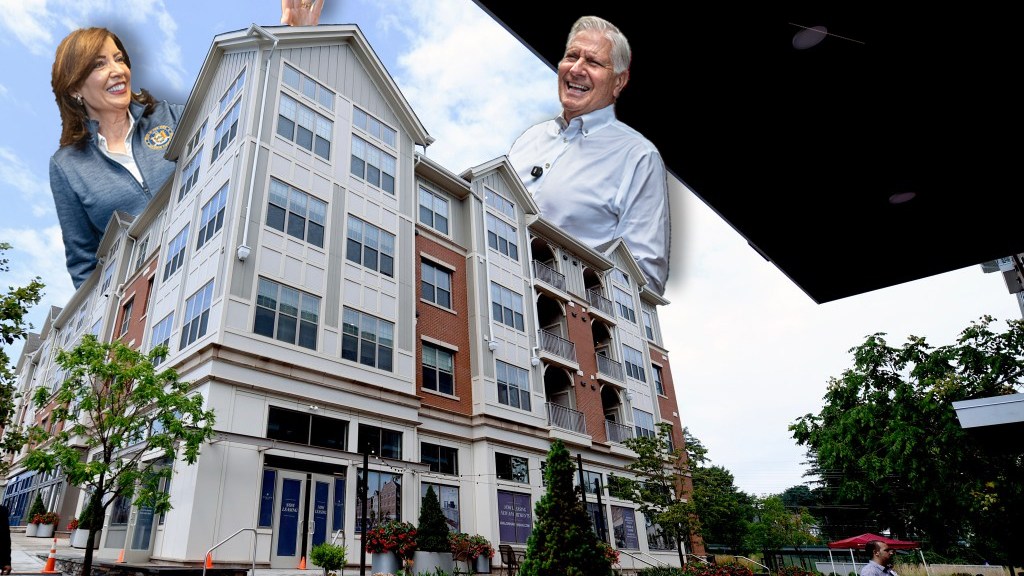
Lose-Lose? Bay Ridge Pol Celebrates More Parking, Less Housing
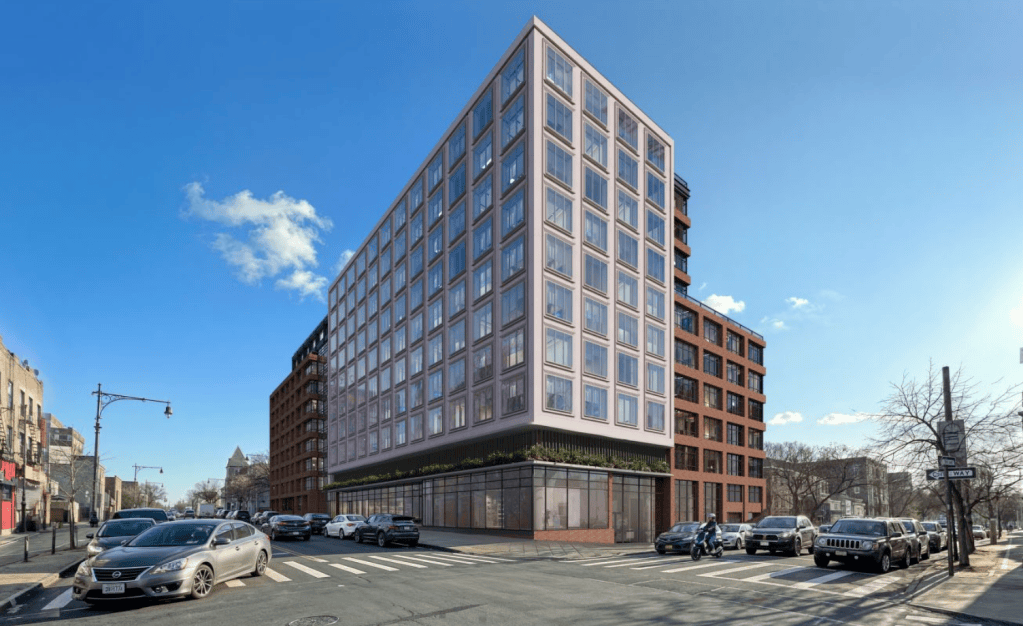
A Brooklyn City Council member claimed victory after she got developers of a potential housing site adjacent to a subway to reduce the number of units and add far more on-site parking than city law requires — a lose-lose for the neighborhood.
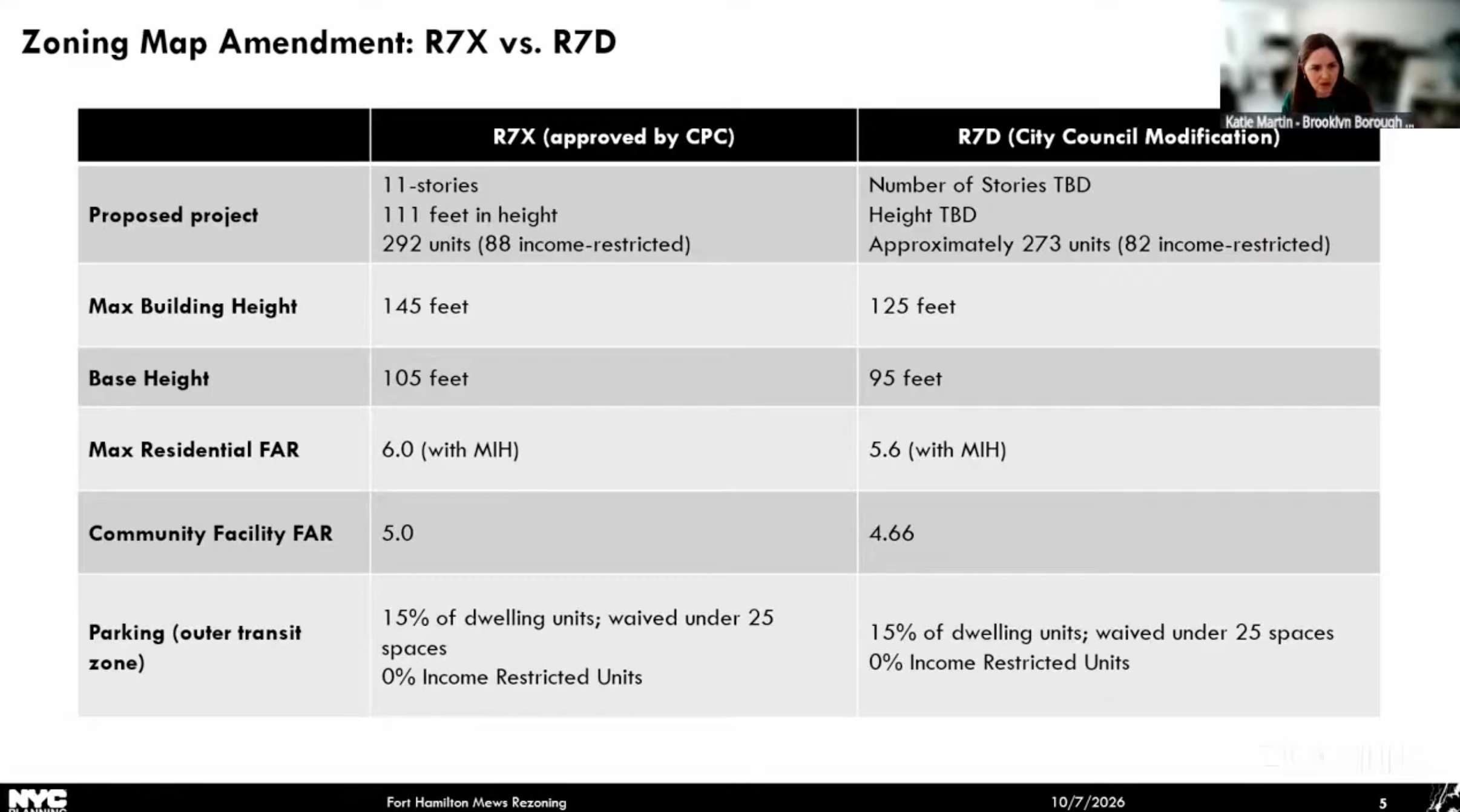
Council Member Kayla Santosuosso (D-Bay Ridge) took to X last week to brag about securing what she dubbed “major benefits” — specifically, a commitment from the developer to build fewer units of housing (and fewer below-market-rate “affordable” units) plus 200 parking spaces, which is 170 more than city law requires.
So instead of 292 new units — with 88 priced below market rate — in the neighborhood, the negotiated building will have 273 units and 82 units with slightly better affordability levels. Santosuosso declared victory for the neighborhood because the resulting units will be bigger, and more suitable for families, compared to the original proposal, which would have had more one bedroom apartments and less parking, according to a CPC presentation.
But Santosuosso’s celebration is misguided at best, according to experts, because the cost of building parking is typically so high that developers typically reduce the number of units — and raise each unit’s price — to compensate.
“The decision of increasing the parking requirements, and claiming that as a victory, is really contrary to our own research that shows that [increasing required parking] has ultimately a larger scale negative effect on the availability of housing and how affordable that housing is,” said Marcel Negret, director of land use at the Regional Plan Association, who authored a report on the effect of parking requirements on affordable housing.
The inclusion of the large parking garage, coupled with the lower unit count, could end up raising the price of the eventual market rate apartments, Negret said. The average underground parking space in New York City costs over $60,000 to build.
The site, at 9305 Fifth Avenue in Bay Ridge, is currently a Staples with a large surface parking lot. The developer, Daniel Grinshteyn with BWH group, bought the lot for $17 million in 2024 and wants to rezone it to allow for a large residential building with ground-floor retail. The site sits next to the R train’s Bay Ridge-95th Street station and the B8 bus.
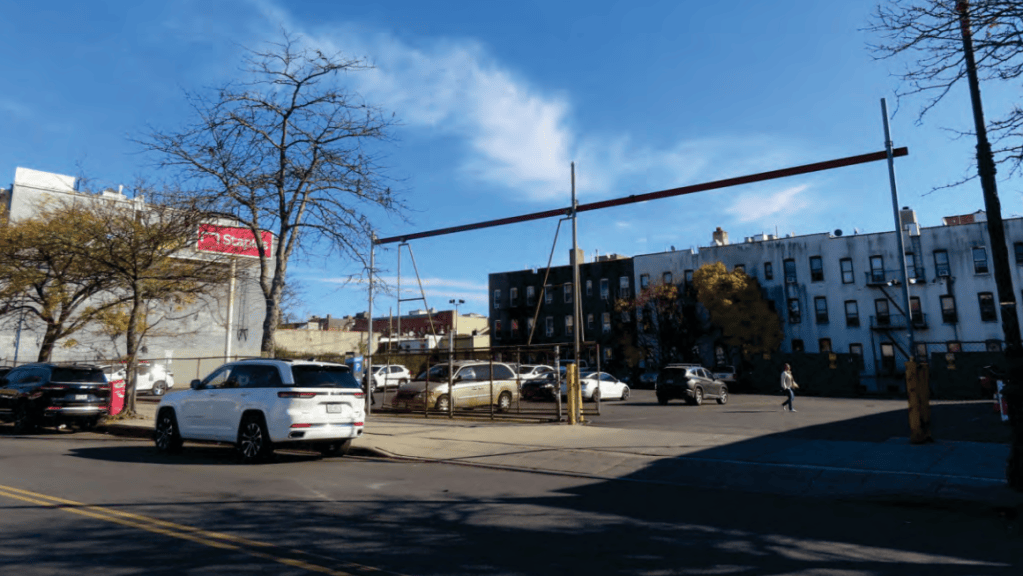
The proximity to transit makes the site “amenity rich” and suitable for development, in the parlance of Borough President Antonio Reynoso.
As part of his 2025 “Comprehensive Plan For Brooklyn,” Reynoso created an “access to opportunity” index that found that Bay Ridge in general, and the 9305 Fifth Avenue site in particular, was a great place for a large residential building.
“Housing … is crucial in high-access neighborhoods where additional residents can benefit from existing resources,” the Borough President wrote in his recommendation that the planning commission approve the original project. “At the Census tract level, the Project Area is identified within the second-best grouping of scores for access to opportunity.”
Car ownership is higher in Bay Ridge than in other parts of Brooklyn, but even so, 44 percent of households there have no access to a vehicle, according to federal census data.
The lot’s proximity to the train and location in a commercial area make it a good spot to prioritize building more units rather than more costly underground car storage, which not only drives up costs, but does encourages car ownership, which in turn contributes to pollution, congestion and traffic-related injuries and health problems.
“In places that have transit we should reduce or substantially limit or even eliminate parking requirements because it just makes the product more expensive,” Negret said.
The developer had originally proposed 75 subterranean parking spaces, more than double the 30 that required under the requested rezoning for a lot close to a train station.
The new plan, which the City Council approved last week, will have the developer build 200 underground parking spaces and around 273 units of housing, prioritizing larger “family-sized” units, according to Santosuosso’s post.
Grasping on to local power
The city under former Mayor Eric Adams recently updated its zoning code to spur more housing development. The change, called the City of Yes, overhauled the amount of parking mandated for development.
Initially, Adams administration officials aimed to scrap mandated parking altogether to allow developers to decide how much parking to include, based on market forces or community need, rather than due to an arbitrary requirement. But the plan was watered down to appease lawmakers in less-dense areas of the city.
Nevertheless, the zoning reforms, coupled with a set of approved ballot initiatives affecting the rezoning process, aimed to streamline development in order to address the city’s housing shortage.
In some ways, the fact that the Santosuosso came to any sort of agreement with the developer speaks to the success of those ballot initiatives, which city voters approved last year.
As part of those initiatives, starting in January, Bay Ridge will be subject to a new affordable housing fast-track framework that would make a comparable rezoning application faster and easier. Santosuosso knows this, which is why she came to the table to negotiate in the first place, her post suggests.
“While this is likely one of the last rezoning votes I can make in Bay Ridge, negotiations were still heavily shaped by the charter changes that take effect in January,” her post reads. “The developers made it clear that if the Council did not approve a modified project they would take advantage of the new rules to resubmit at their original building – or an even bigger, denser building – for expedited approval and with no wins for the community.”
Without the affordable housing fast track looming on the horizon, this whole process may have gone very differently.
When the developer initially proposed the plan to the community board in May, the board overwhelmingly rejected it. The board’s rejection leaned on common NIMBY tropes — that is, that the “scale, height, density, and massing” of the 11-story project is not “compatible” with the surrounding neighborhood and would “fundamentally alter Bay Ridge’s established character and built environment.”
The board also cited “difficult parking conditions” in the neighborhood in its rejection.
The developers argued that in order to make a significant percentage of the units permanently affordable and in order to build more parking than the 30 required spaces, they would need the proposed density.
Before the ballot initiatives passed last year, rezoning applications were subject to the whims of the local Council member, whose opinion often carried the rest of the Council under the custom of “member deference.”
A year ago, Santosuosso would merely have had to reject the proposal, and the rest of her Council colleagues would fall into line.
It’s not clear why the developer didn’t just wait and refile its application in January, considering the agreed-upon proposal will likely be more expensive to build and less lucrative; there are simply details about financing and building a large project that aren’t publicly known.
Neither the developer nor Santosuosso responded to multiple requests for comment.

Read More:
Streetsblog has migrated to a new comment system. New commenters can register directly in the comments section of any article. Returning commenters: your previous comments and display name have been preserved, but you'll need to reclaim your account by clicking "Forgot your password?" on the sign-in form, entering your email, and following the verification link to set a new password — this is required because passwords could not be carried over during the migration. For questions, contact tips@streetsblog.org.