Battery Drain: MTA Trims New Flyer Electric Bus Order Amid Tech Growing Pains
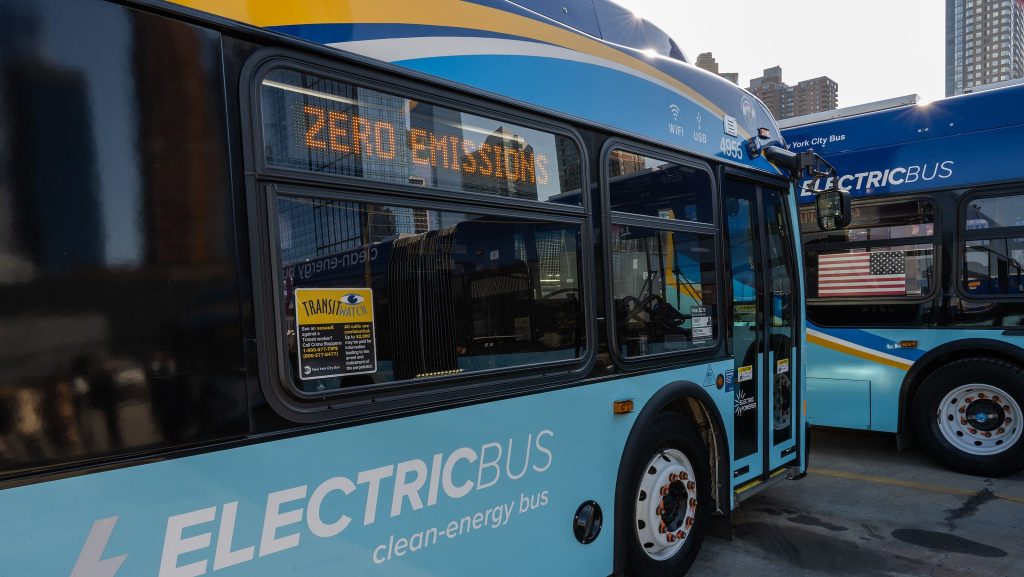
The MTA will buy 85 fewer electric buses than planned and swap them with diesel-electric hybrids while its manufacturer sorts out why its 60 e-buses already on the road can’t last a full day of service.
MTA board members on Monday advanced an amendment to the authority’s 2024 contract with bus manufacturer New Flyer that lowers the number of 40-foot e-buses in the order from 380 to 295, and swaps in 85 diesel-electric hybrids in their stead.
The buses are expected to arrive between April and December of 2028, officials said — three years after the MTA was supposed to begin accepting orders of the battery-electric buses.
The MTA’s 60-vehicle electric bus fleet has so far failed to provide reliable service due to a laundry list of mechanical and technological issues. New Flyer has pledged to make modifications to address those issues, transit officials said.
“Our lesson from this experience is that we must set some framework for evaluating the performance of propulsion before we go all in,” Jessie Lazarus, the MTA’s head of rolling stock procurement, told the committee on Monday. “We had 500 spots for battery-electric buses that didn’t really pan out, and so we have to catch up with our net new bus deliveries.”
MTA officials briefed the board in June on the problems plaguing the five-dozen electric buses the authority currently has in service, which cover only about 2,500 miles on the road before a mechanical breakdown takes them out of service, compared to 8,500 miles for diesel buses.
Officials have previously sounded the alarm in 2025 that the batteries that power the buses overheat or fail hold a full day’s charge, and that electric components that power systems like the air brakes were failing while buses were in service.
The agency faces twin pressures on the electric bus front. State law mandates that the entire fleet comprise zero-emissions buses by the end of 2040, and the MTA has made buying new electric buses a centerpiece project funded by congestion pricing tolls.
But the U.S. bus manufacturing industry has failed to deliver reliable buses, and federal “Buy America” requirements make it impossible to use federal grants to buy buses from European or Asian manufacturers who don’t have factories in America.
A lack of reliable electric buses leaves the MTA in the tough position of trying to replenish its fleet while also meeting the zero-emissions mandate. A bus is supposed to last 12 years.
The contract modification does note that electric buses technology appears to be improving. MTA officials made the case that punting on the current order will allow them to keep the bus fleet up-to-date while working with New Flyer to work out the kinks with the buses.
“Making the proposed contract modifications now will position the MTA to obtain assurance that the [battery-electric buses] can meet our performance requirements before issuing notice to proceed for a larger quantity,” MTA officials wrote in the official modification document set for a final board vote on Wednesday. “These modifications enable the MTA to support the maturing of the [battery-electric bus] industry generally and New Flyer specifically, such that the MTA is able to achieve its sustainability goals while simultaneously reducing overall implementation costs, maintaining good service and improving customer experience.”
The MTA’s pledge to work with New Flyer notwithstanding, agency leadership has talked about using its financial muscle and demand for thousands of new buses to bend the domestic bus manufacturing industry to its will.
Beyond bus manufacturers, the domestic industry needs more companies that build parts like batteries, the MTA said. Lazarus’s team has been kicking around how to bring more of that manufacturing muscle to the U.S. and New York state in particular.
“We’re using the capital program dollars to make sure that our acquisitions for new rolling stock are actually greater than the sum of its parts,” she told board members on Monday, “We want to make sure that we’re helping to bolster the industrial policies that support rolling stock manufacturing, and buses, in particular.”

Read More:
Streetsblog has migrated to a new comment system. New commenters can register directly in the comments section of any article. Returning commenters: your previous comments and display name have been preserved, but you'll need to reclaim your account by clicking "Forgot your password?" on the sign-in form, entering your email, and following the verification link to set a new password — this is required because passwords could not be carried over during the migration. For questions, contact tips@streetsblog.org.