Report: Increased Daylighting, Bike Lanes, Speed Limits Would Put Vision Zero ‘On Steroids’
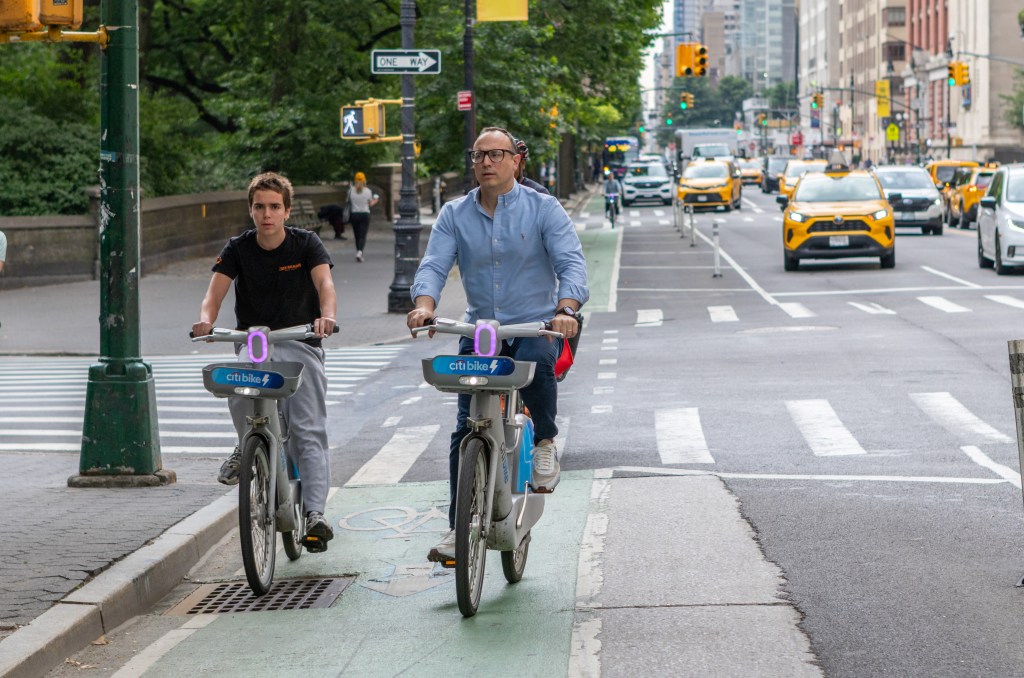
The city must make intersections safer, keep building bike lanes, and slow down drivers, according to a new report that reveals a rise in pedestrians, cyclists and kids killed by drivers in the first half of 2026.
The report, by Transportation Alternatives, highlights the shortcomings of the city’s decade-plus-old Vision Zero initiative, which seeks to eliminate traffic fatalities in the manner of exotic cities like Oslo and Hoboken. Chief among the shortcomings is the city’s limited amount of daylighting — a treatment that makes pedestrians, cyclists and drivers more visible to each other — as well as its failure to reduce speed limits.
Both are street safety initiatives that Mayor Mamdani said he supported when he was a candidate for the most important job in the country.
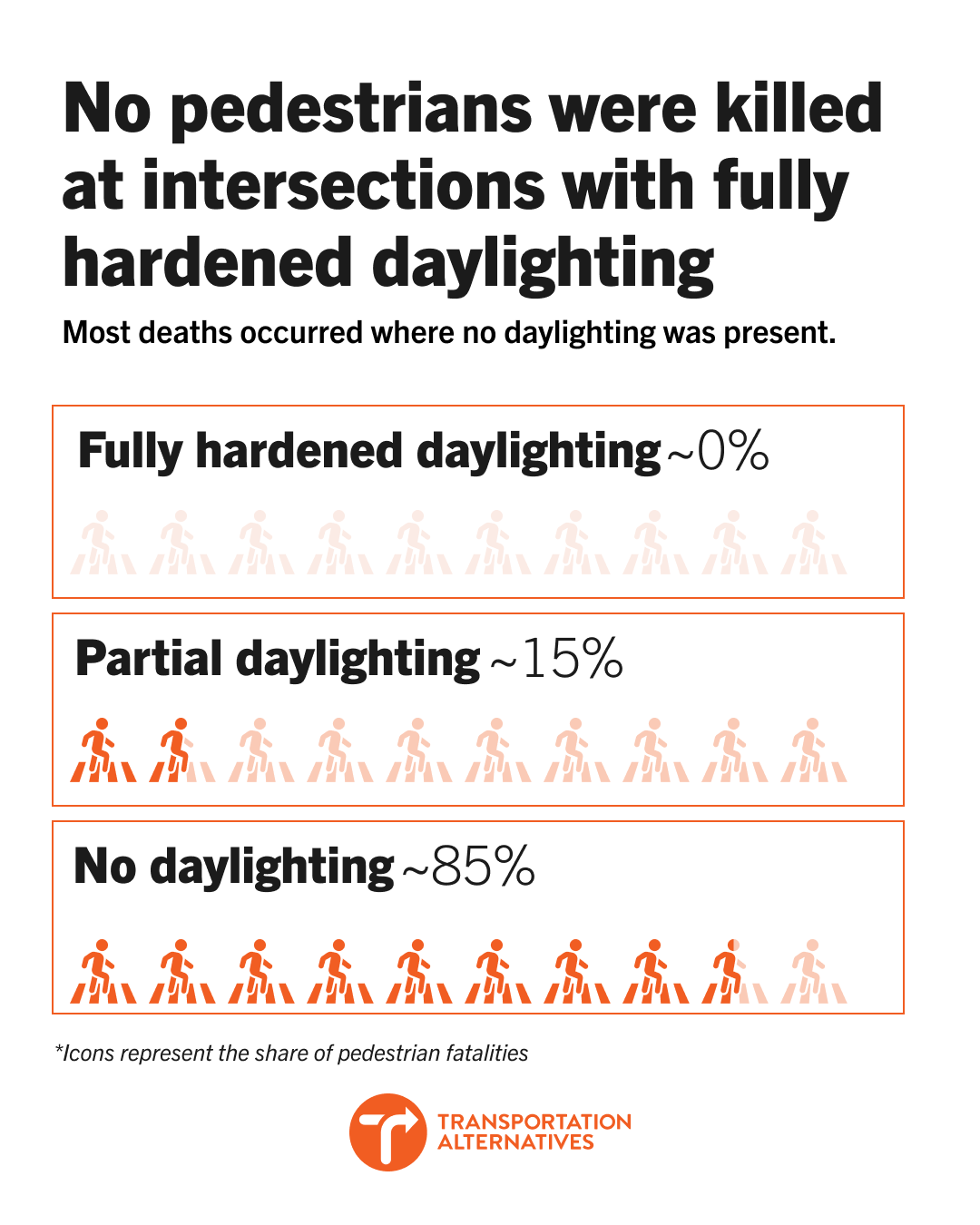
Daylighting makes a significant difference in pedestrian safety. Not a single pedestrian was killed in the first half of the year at an intersection with hardened daylighting, which means there is street furniture or other items that keep car drivers from blocking viewsheds. But 31 pedestrians — or 85 percent — were killed at intersections that lack daylighting. The remaining six pedestrians, or 15 percent, were killed in partial daylighting zones.
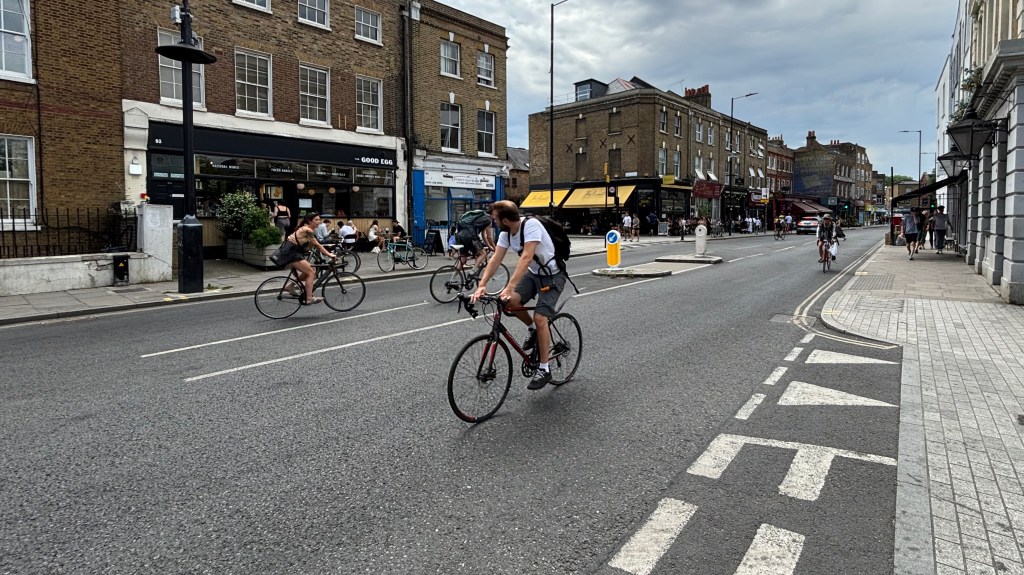
Thirteen cyclists were killed in the first half of 2026, up from eight over the same period last year — and, most important, 10 of those 13 victims were killed on streets without bike lanes.
The problem of continued road deaths is a longer legacy than just the first six months of this year; the report found that fatalities constantly overlap with areas the city has already classified as dangerous. Close to one-third of civilians killed in the last six months died in a “Priority Corridor,” which are designated areas of high traffic and danger for pedestrians and cyclists. Such corridors comprise only 7 percent of the city.
One way to further calm traffic in priority corridors would be for the Mamdani administration to use its power under state law to lower the speed limit to 20 miles per hour under “Sammy’s Law.” Passed in 2024 in honor of 12-year-old Sammy Cohen, who was fatally struck by a driver on Prospect Park West in 2013, this law can lower speed limits on all streets except those with three or more vehicle lanes in the same direction.
Ninety-six percent of all city streets are eligible, but the city Department of Transportation has only reduced the speed limit to 20 miles per hour on a handful of road segments and in a few micro-neighborhoods. But in the first half of 2026, the report says, that pedestrians and cyclists are being killed in the very area where car drivers are allowed to go too fast: 37 cyclists and pedestrians were killed in areas where the speed limit could be reduced — which is roughly 75 percent of all the pedestrian and cyclist fatalities.
And 12 pedestrians were killed in community boards that passed resolutions calling for district-wide implementations of Sammy’s Law.
Historically, these areas have been sites of speed camera installations, local NYPD precinct funding, and pedestrian island constructions, according to the DOT. But today, in the face of rising death tolls, comprehensive action has still not been taken to address the issues.
Fatalities are a limited way of looking at the danger that car drivers present to themselves and others. According to the NYPD, in the first six months of 2026, drivers injured more than 25,000 people, including more than 4,700 pedestrians and more than 2,000 cyclists.
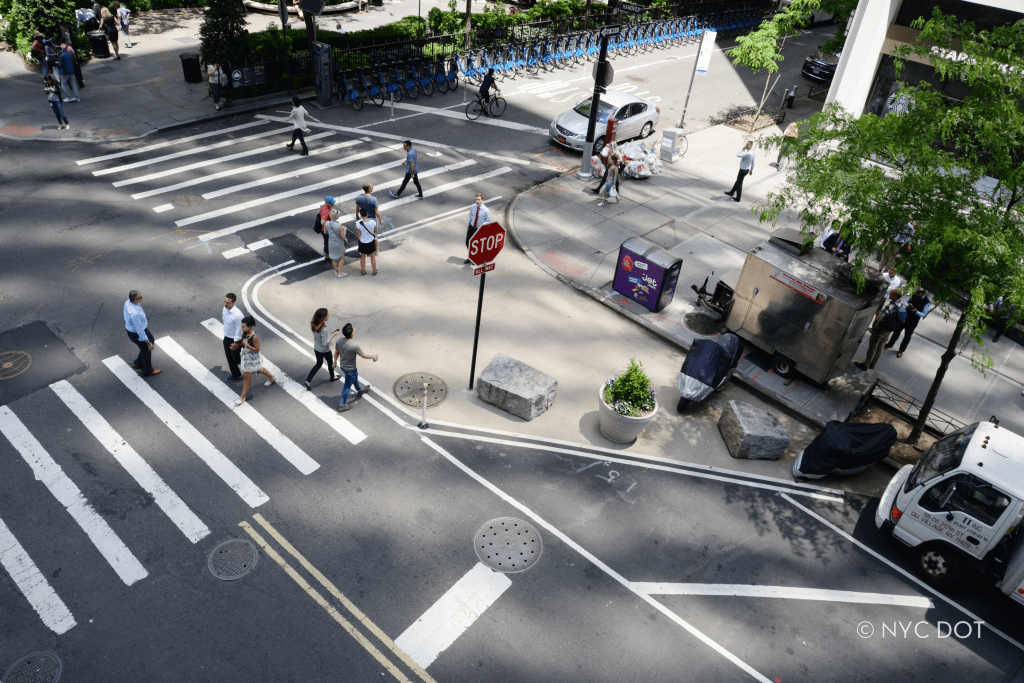
Not all hope is lost, however — the DOT has a toolbox full of Vision Zero interventions. Check out what the agency did in Hanover Square:
The Mamdani administration has certainly announced and implemented multiple street safety plans, including many that were blocked or stalled by his predecessor, as the Streetsblog tracker shows. But the full scope of the young mayor’s intentions is not known; the Mamdani administration has yet to release its Vision Zero plan, traditionally issued at the beginning of a term. Mamdani was once derided as “de Blasio on steroids,” but many activists and electeds are actually eager for the “steroids” part.
“A 62-percent increase in cyclist fatalities,” Council Member Shahana Hanif (D-Park Slope) said in a statement. “We know what works: lower speed limits, safer street design, hardened daylighting, and stronger accountability for the most dangerous drivers and vehicles.”
Correction: An earlier version of this story misstated the number of cyclist deaths in 2025 and, due to an error by Transportation Alternatives, misstated the number of children who have been killed.

Read More:
Streetsblog has migrated to a new comment system. New commenters can register directly in the comments section of any article. Returning commenters: your previous comments and display name have been preserved, but you'll need to reclaim your account by clicking "Forgot your password?" on the sign-in form, entering your email, and following the verification link to set a new password — this is required because passwords could not be carried over during the migration. For questions, contact tips@streetsblog.org.