Report Shows Yet Another Benefit to Congestion Pricing: Faster Emergency Response Times
There’s a new definition of a New York Minute.
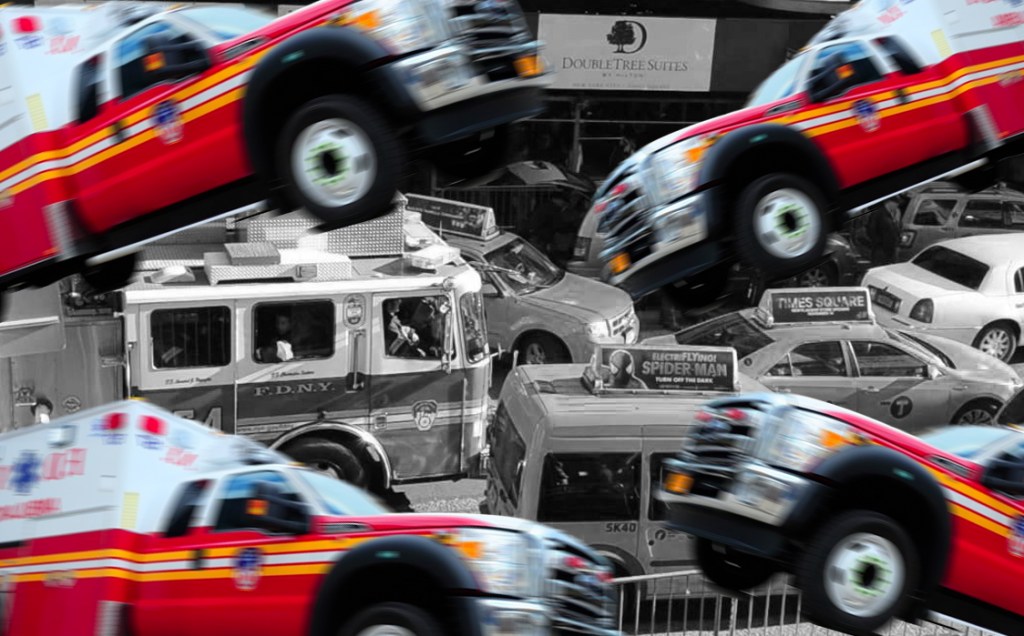
Ambulance response times dropped by 63 to 70 seconds after the introduction of congestion pricing, a drop of close to 6 percent in an arena where just a few seconds can mean the difference between successful treatment and death, according to a new analysis.
The improved EMT response times stem directly from the reduction in total vehicles in Manhattan closest to the congestion cordon at 59th Street: “Passenger vehicle counts fell by approximately 21 percent and truck traffic by 18 percent near the boundary,” wrote the authors of the National Bureau of Economic Research working paper, “Congestion Pricing and Emergency Medical Service Response: Evidence from New York City.”
“These traffic reductions translated into clear improvements in EMS performance,” added the paper, which is the first to deeply analyze emergency response times among patient pickup and hospital sites inside the congestion zone.
Of course, ambulance response times were expected to improve, given that total vehicle speeds within the central business district had improved on the order of 10 to 15 percent (and better during peak congestion periods), but the report lays it out in clear terms:
- Travel time to the incident declined by approximately seven to nine seconds (which is about 2 percent better than the pre-toll baseline.
- Travel time from the site of the incident to the nearest hospital fell by roughly 54 to 59 seconds (which is an 8-percent improvement.
- The total travel time decreased by 63 to 70 seconds (which is a 5- to 6-percent improvement).
The effect was not consistent deeper into the congestion pricing zone because ambulance transport times depend on so many factors — hospital location, network
congestion, and interactions with pedestrian and bicycle traffic, with that last category especially pronounced in central Manhattan, especially as some drivers switched to walking or cycling for trips “over the border.”
“Taken together, these findings suggest that congestion pricing generates localized improvements in traffic conditions that translate into measurable gains in EMS response performance near the policy boundary,” the authors wrote.
The report even debunks a myth put forward by some congestion pricing opponents, namely that a March 2025 change in FDNY policy to transport patients to the closest hospital rather than patients’ preferred hospital reduced response times: “After accounting for this concurrent policy change, the evidence consistently points to important improvements in EMS response performance within the congestion zone, suggesting that congestion pricing delivers emergency response benefits that existing cost-benefit frameworks have not previously captured.”
But the overall findings confirm what prior FDNY commissioners have long said: congestion caused by car drivers has contributed significantly towards slowing down emergency vehicles and removing some of those drivers’ vehicles will improve ambulance flow.
And advocates were pleased to see their hard work confirmed.
“This thoroughly researched paper finding ‘that [EMS] … total travel time decreased by 63–70 seconds’ is no surprise to me and was a potential benefit highlighted in a report I wrote with [then state Sen.] Brad Hoylman-Sigal in September 2024: Fewer vehicles entering the congestion zone means less congestion and less delay for emergency responders,” former DOT top official “Gridlock” Sam Schwartz told Streetsblog. “While a one-minute travel time saving may not sound striking to some, it can be lifesaving to individuals undergoing a medical emergency. In one minute, during a stroke, two million brain cells die. A minute delay in a cardiac arrest means a 7- to 10-percent reduction in survival.”
Just another toll benefit
Of course, the widespread benefits of congestion pricing have long been documented by academics and even humble journalists for months since its Jan. 5, 2025 start. And many of those benefits — the reduction in crashes, the cleaner air, the improved business climate, the faster buses, and the increased revenue for transit — are re-highlighted in this report.
And, as an aside, the report doesn’t want New Yorkers to forget another great benefit of congestion pricing, which connects to reducing the very need for ambulances:
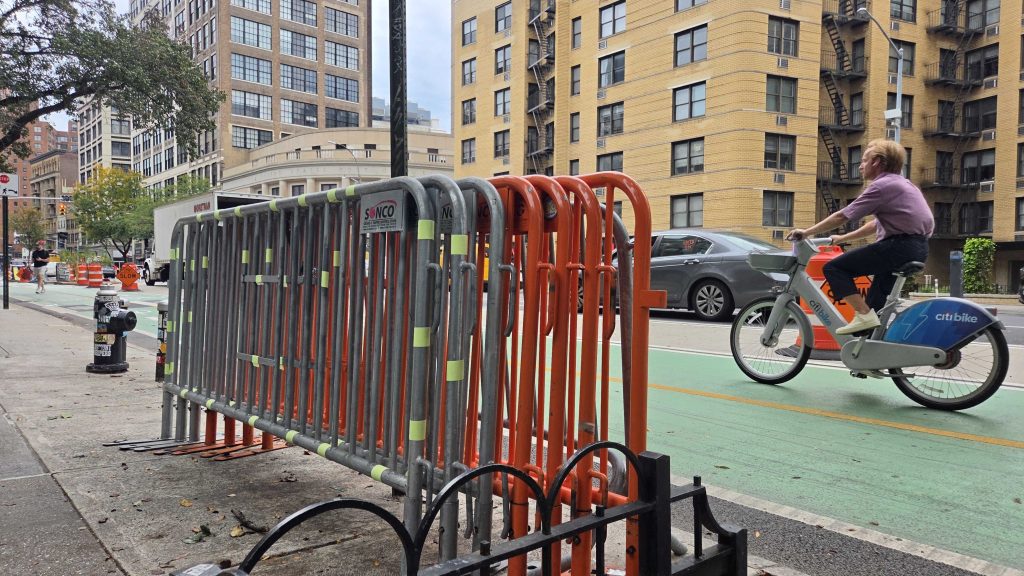
“Pedestrian counts rose by roughly 14 percent, consistent with some commuters … substituting walking for driving, while bicycle traffic increased by nearly 20 percent, suggesting meaningful modal substitution toward cycling,” the report said.
It’s important to not understate how costly traffic is to the movement of emergency vehicles in the first place. According to the report, congestion adds between $95 million and $285 million in extra costs to emergency medical services in California every year — and that’s not even including delayed police and private ambulance response.
Now that there is direct empirical evidence that congestion pricing has improved emergency medical service response performance, the importance can’t be understated, the authors said.
“Our results suggest that emergency response system performance should be treated as a distinct welfare channel alongside the more commonly studied outcomes of commuter travel time, accident [sic] rates, and air quality,” the report stated.
Note about the report
The report was based on Incident Dispatch Data provided by the FDNY through the New York City Open Data portal.
Streetsblog would obviously like to explain the minutiae of the academics’ analysis, but we cannot for many reasons, all of which, we believe, can be summarized by just showing you one of the formulas in the report:
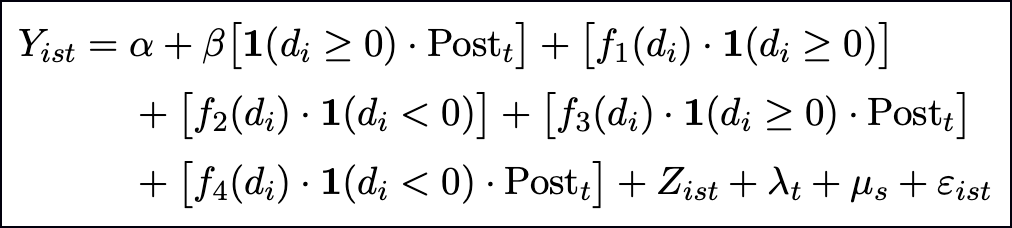
Suffice it to say, we urge everyone to read the report itself.
Update: After initial publication of the story, the FDNY disputed the findings of the report with the following statement:
“When comparing 2025 to 2024, Fire response times to all emergencies decreased in the CBD by one second on average. … However, when it comes to ambulance response times to life-threatening medical emergencies, comparing 2024 to 2025, they increased by 57 seconds in the CBD to an average of 9:21 in 2025, and they increased in every other part of the city as well. Fire Operations response times are basically flat, so there is no evidence that congestion pricing impacted those responses. EMS response times increased everywhere, including the CBD. We attribute the EMS increase to staffing and call volume pressures, not congestion pricing.”

Read More:
Streetsblog has migrated to a new comment system. New commenters can register directly in the comments section of any article. Returning commenters: your previous comments and display name have been preserved, but you'll need to reclaim your account by clicking "Forgot your password?" on the sign-in form, entering your email, and following the verification link to set a new password — this is required because passwords could not be carried over during the migration. For questions, contact tips@streetsblog.org.