‘Mountable’ No More? City Says New Bike Lane Design on Grand Concourse Will Curb Illegal Parking
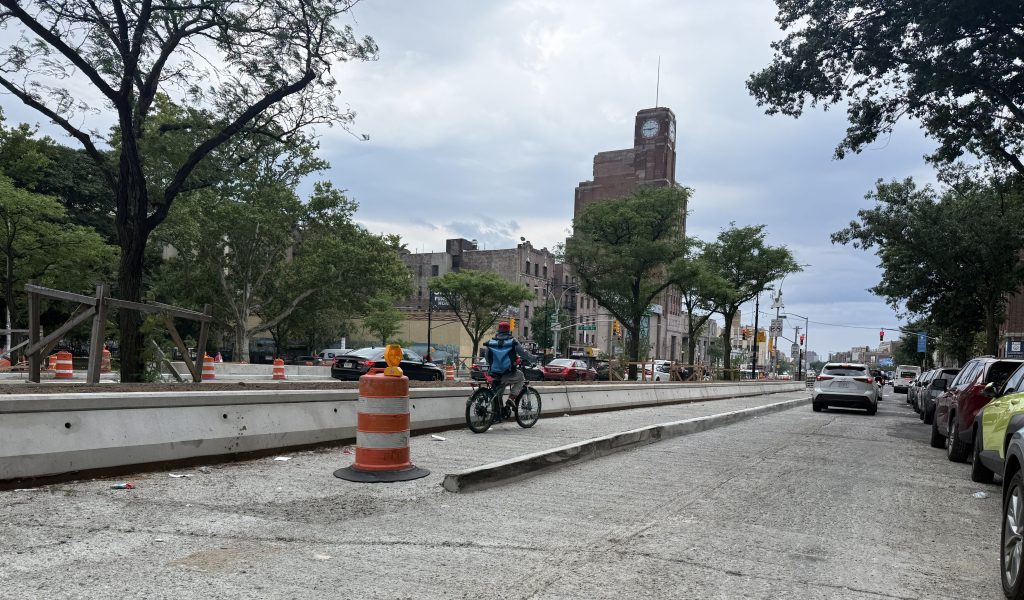
The next phase of the city’s raised bike lane on the Grand Concourse in the Bronx will feature a curb that’s more difficult for drivers to abuse — a change from the initial and much-criticized “mountable” bike lane design that transportation officials claim will finally discentivize motorists from driving and parking on it.
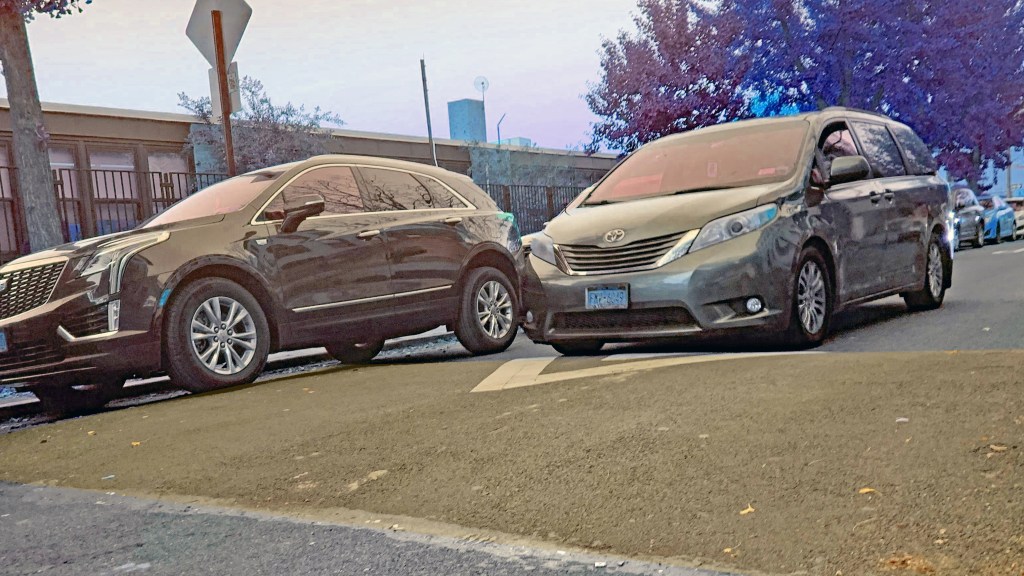
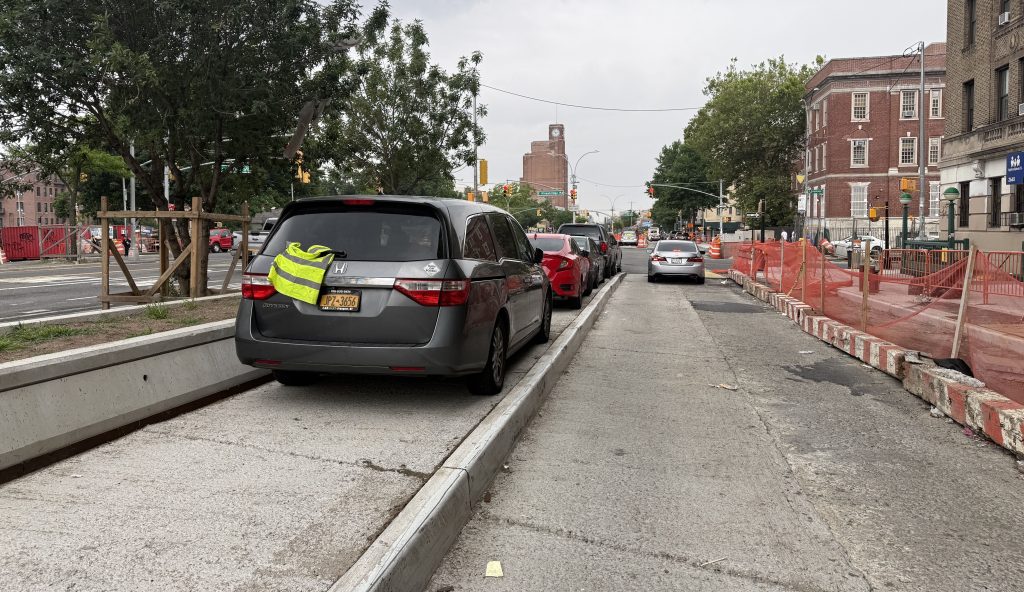
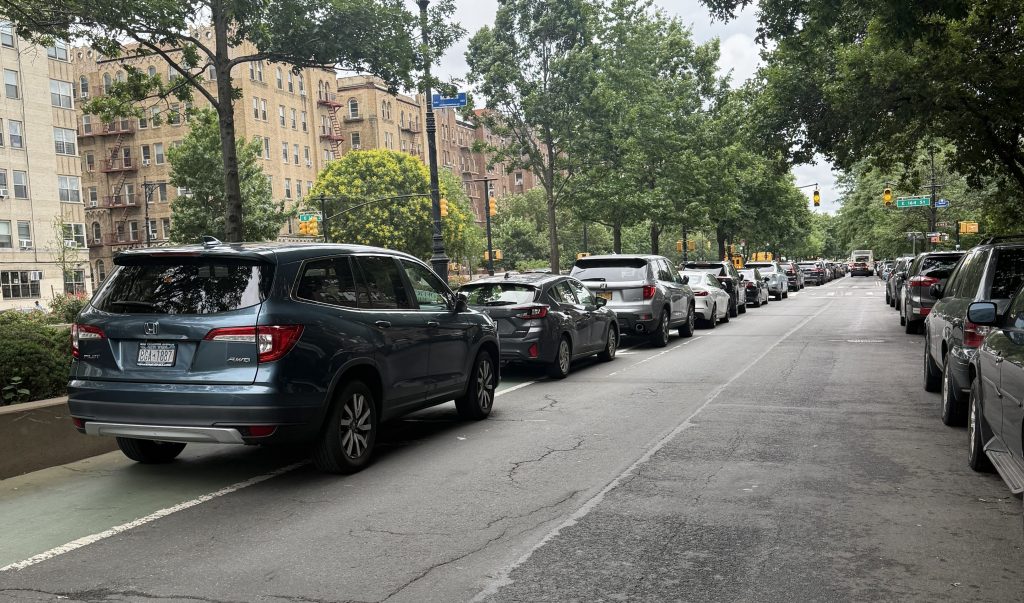
Of course, when Streetsblog visited the Boogie Down’s iconic thoroughfare the other day most of a block of the bike lane was covered … with parked cars.
Still, the Department of Transportation is optimistic that its new elevated bike path, between Fordham Road and East 198th Street, will deter illegal parking because it features a standard curb instead of an angled “mountable” one. Still, each block of the new design includes the raised curb only mid-block with no curb at the beginning and ends of each block — which some drivers will read as a “Free Parking” sign.
“We’ve updated our curb design to help prevent illegal parking while still preserving emergency vehicle access,” Department of Transportation spokesperson Mona Bruno said in a statement to Streetsblog. “This next phase of the Grand Concourse reconstruction will continue delivering life-saving improvements that will protect everyone on the street and help reduce speeding and other dangerous driving behavior.
Advocates agree that the new design improves upon the raised bike lanes the city installed further south in 2023. Those have sloping curbs along their entire length, easily allowing motorists to mount the lane. Not only did Streetsblog observe the construction workers’ cars parked on nearly completed section, but one advocate said she was worried that such illegal driving and parking would continue.
“I’m still a little bit skeptical because I don’t know that a sharp curb would necessarily deter drivers,” said Lucia Deng, a Bronx organizer with Transportation Alternatives. “They’re demonstrating to the public right now what people can do.” (A spokesperson for the Department of Design and Construction said the agency would demand that construction workers no longer show off the shortcomings of the design.)
The city launched the $44-million redesign in May and expects to complete it in 2030, according to the city’s capital project portal. DDC previously installed the aforementioned “mountable” bike lanes during a previous phase of Grand Concourse’s reconstruction in 2023, as part of an overhaul stretching south from Fordham Road to E. 175th Street.
That design featured angled curbs, for the purpose of allowing emergency vehicles to bypass car traffic. But regular, non-emergency drivers clogged the resulting paths with their illegally parked cars anyway — so often, in fact, that DDC’s very own press release had a photo with a vehicle in the lane:
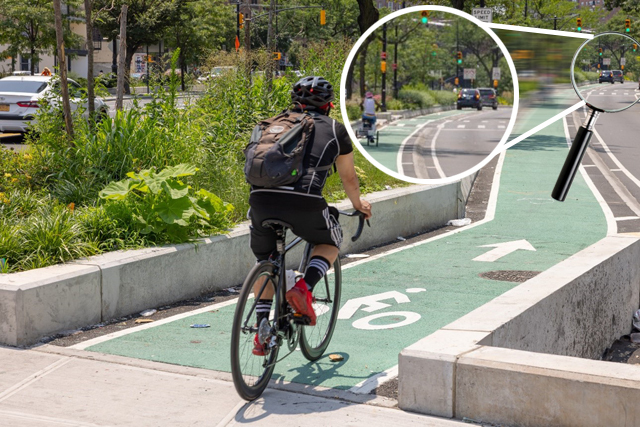
Parts of that redesign also relied on paint and plastic bollards, and counter-intuitively, those sections suffered less from illegal parking. The raised lane seems to attract drivers like catnip because it’s easy to access, perfectly sized to fit a car, and elevated from the driving lane, Deng said.
“It’s just the perfect combination of things that it encourages bad behavior,” the advocate said. Neither agency rep said whether the city would go back to redo this section’s curb to be less mountable.
Deng encouraged the city to install a cheaper grade-level bike lane protected by plastic posts or the armadillo-shaped humps that DOT has trialed on other bike lanes, including those around Union Square.
The Grand Concourse project will need those barriers to prevent drivers from blocking the new bike lanes up and down the corridor, especially near the courthouses north of E. 161st Street.
DOT plans to reuse its Grand Concourse design along Queens Boulevard, upgrading the existing bike lanes made of paint and plastic bollards. An agency rep previously told Streetsblog in 2023 that the Queens overhaul’s curb would be 50 percent taller than those on Grand Concourse, closer to standard curbs.
The Queens Boulevard overhaul won’t be done until 2032, 17 years after DOT installed its temporary street improvement project with painted bike lanes in 2015. Similar revamps frequently run up eye-watering tabs, partly mitigated by the fact that the city often combines roadbed work with sewer repairs. The city has a depressing history of taking eons to build out capital street redesigns.
Mayor Mamdani recently chose Paul Ochoa to lead DDC. The former senior DOT deputy vowed to speed up these kinds of projects, which will be a proving ground for Hizzoner’s promise to turn the Big Apple’s streets into “the envy of the world.”
Additional reporting by Emily Smith

Read More:
Streetsblog has migrated to a new comment system. New commenters can register directly in the comments section of any article. Returning commenters: your previous comments and display name have been preserved, but you'll need to reclaim your account by clicking "Forgot your password?" on the sign-in form, entering your email, and following the verification link to set a new password — this is required because passwords could not be carried over during the migration. For questions, contact tips@streetsblog.org.