More Troubles for Fly E-Bike: Feds Order Costly Moped Recall
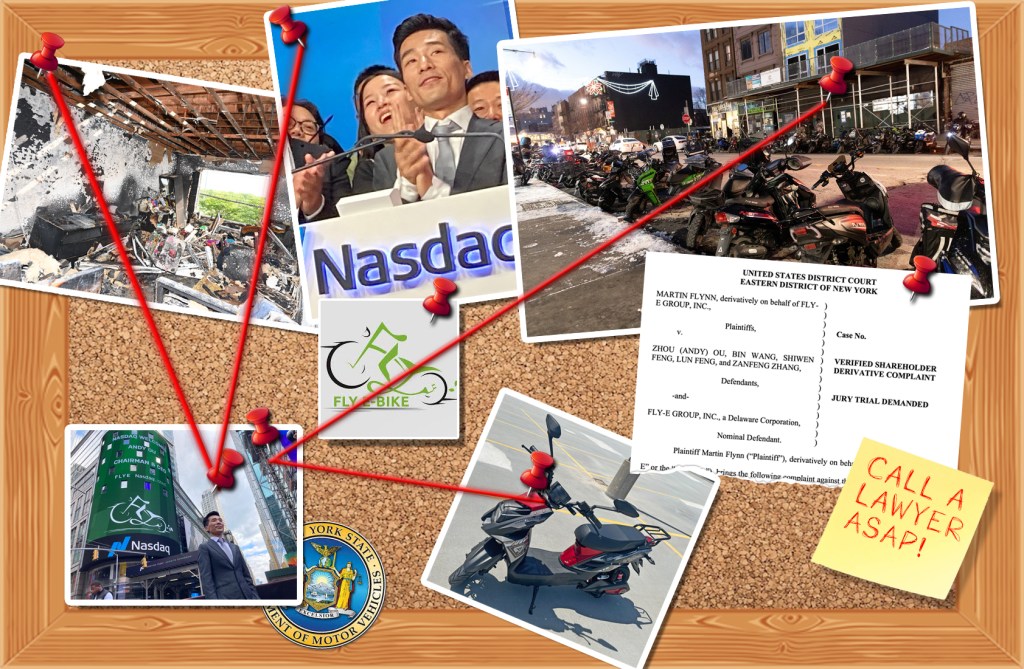
Braking news: Federal officials have ordered the troubled micromobility company Fly E-Bike to recall devices that feature a flawed braking system that does not meet federal standards despite Fly’s promise that it did.
According to the National Highway Traffic Safety Administration, all Fly 10 mopeds made between July 1, 2022 and Oct. 31, 2024 are equipped with the flawed braking system. It’s the same model that was cited in a Streetsblog investigation last year for its involvement in at least one fatal fire in New York City.
In the federal test, a Fly 10 at 38 miles per hour needed 83.8 feet to come to a complete stop, which is 8.23 more feet, or nearly 11 percent, more distance than federal standards allow.
In a wet weather test, the Fly braking system’s average deceleration upon application of the brake was 16 percent worse than federal standards require.
Such results mean the Fly 10 was not in compliance with section 122 of the Federal Motor Vehicle Safety Standards, which covers brakes. But such results are not just numbers on a ledger. They have real-world implications.
“Failure to comply with FMVSS No. 122 may result in reduced braking performance, which could increase stopping distance or lead to a loss of vehicle control, increasing the risk of a crash that may result in injury,” the National Highway Traffic Safety Administration said in the recall notice.
Brake performance is in one of the nine categories in the FMVSS testing regime for mopeds. Until Streetsblog’s investigation was published last year, federal authorities had never tested a Fly device. That’s why we bought a Fly 9 moped and had it tested by Applus+ IDIADA, which tests vehicles for governments and manufacturers.
Affixed to the bottom of the moped we tested was a metal plate that read: “This vehicle conforms to all applicable U.S. Federal Motor Vehicle Safety Standards.”
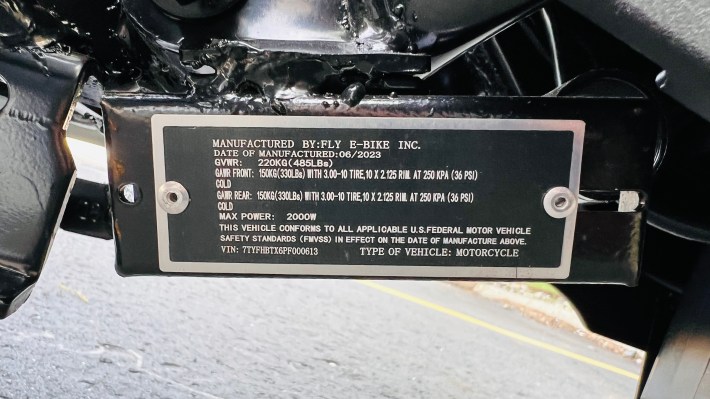
That turned out to be untrue. Of the nine FMVSS standards, IDIADA tested our Fly 9 for compliance with five of them — and the Fly 9 failed all of them, according to IDIADA. The NHTSA test of the Fly 10, which has a similar braking system, would appear to be a sixth area where Fly fails to meet federal standards.
One delivery worker advocate pointed out the human toll.
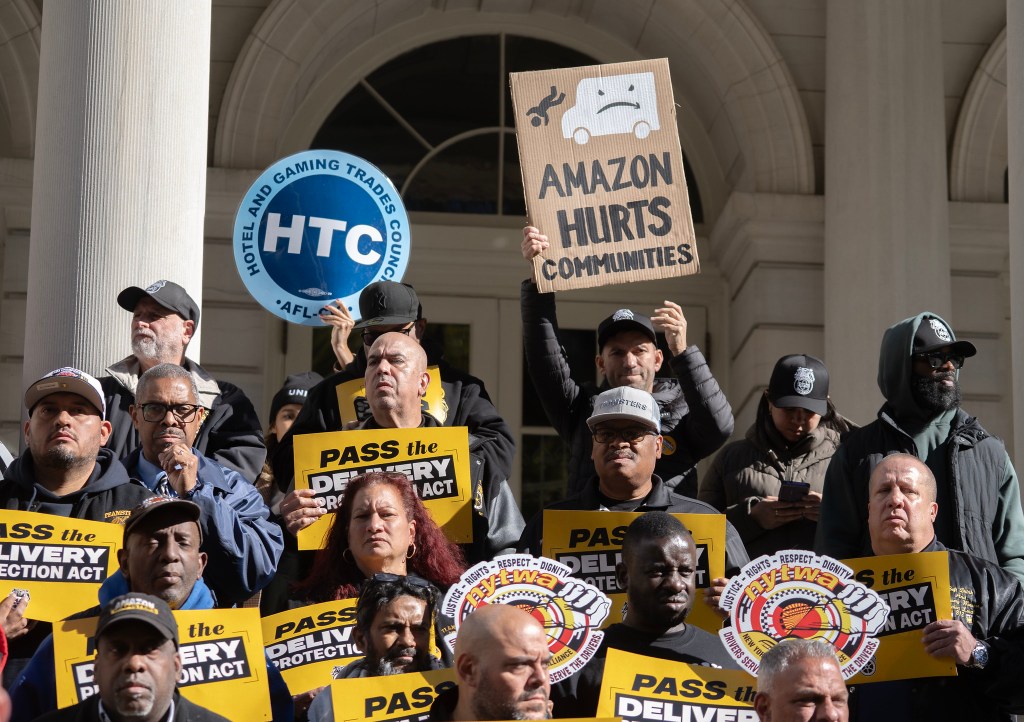
“Sadly, this recall confirms what delivery workers have been warning about for years: unsafe micromobility devices are being sold to workers who depend on them to survive, and the consequences are deadly,” said Ligia Guallpa, executive director of Worker’s Justice Project and co-founder of its Los Deliveristas Unidos campaign. “As low-wage independent contractors, delivery workers are required to cover all of their own operating costs — including the cost of their vehicles —- while app companies impose AI-generated delivery times that demand constant speed. … The result is a predictable and dangerous system in which frontline delivery workers are forced to absorb the risks created by defective products and corporate pressure to move faster.”
Under the terms of the recall, Fly must pay to replace the brake pads or repurchase the moped. The company claims it will send letters of notification to owners of 2022, 2023, and 2024 model numbers on March 15. (Owners may contact Fly customer service at 646-961-5177 or email support@flyebike.com, according to regulatory documents. A shop manager in Flatbush confirmed this week that Fly no longer sells the model 10, though no recall warning was posted in the shop, as required.)
It is unclear if Fly will be able to handle a recall that involves nearly 2,000 vehicles. After going public with a splashy initial public offering on the NASDAQ exchange in June 2024, the company spent much of 2025 under a cloud that moved in after Streetsblog’s investigation defenestrated Fly’s shady business practices and unsafe bikes. (Fly has not responded to dozens of requests for comment from Streetsblog since late 2024.)
Since our story was published, the company has been sued over fraudulent claims about its batteries, has lost a planned partnership with the city Department of Transportation, and effectively had its moped business shut down when the New York State Department of Motor Vehicles, following Streetsblog’s findings, said it would no longer register the devices because they did not meet federal safety standards.
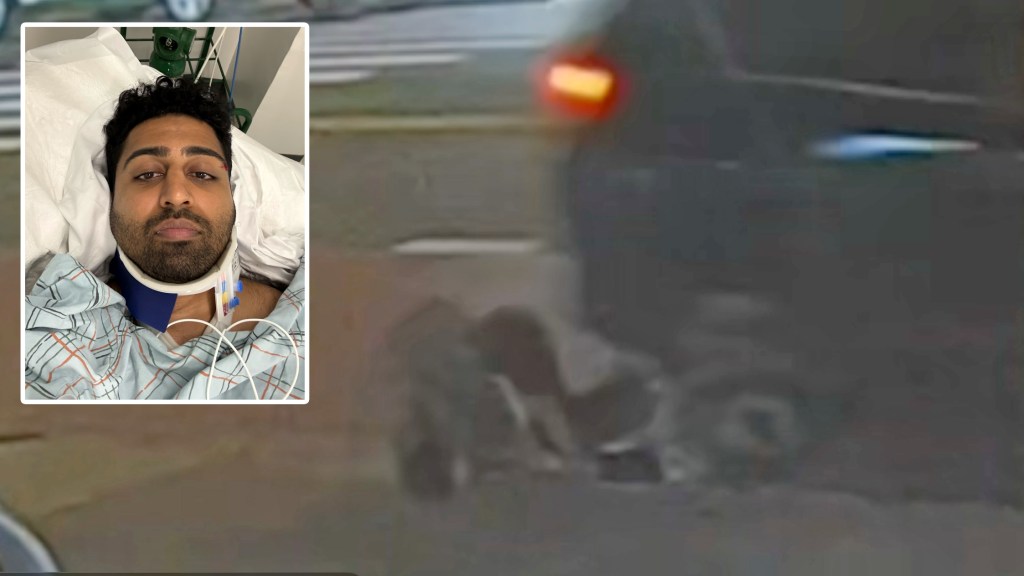
Most of those difficulties stemmed from uncertified batteries, which were linked to three fatalities and 13 injuries at the time of Streetsblog’s investigation. One of those fatalities was Christopher Valentin, a 37-year-old delivery worker whose Fly 10 burst into flames in his sister’s apartment, and ravaged him as he helped his relatives flee the blaze.
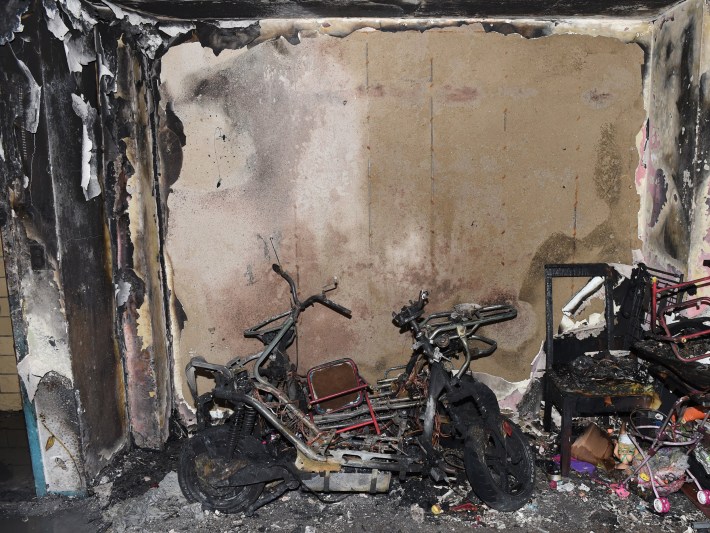
He lived for a week before his wife, Izabelle Gonzalez, took him off life support.
“Every day a different organ died,” she told Streetsblog. “You could already smell his rotting flesh in his room. And I couldn’t keep telling my boys that their father was slowly dying.”
Fly is facing additional troubles. In August 2025, Fly E-Bike was accused by investment analysts of selling stock shares that were being manipulated by scammers.
Fly is “in the end stages of a pump-and-dump scheme, and is at risk of a near-term, severe stock collapse,” Edwin Dorsey of the Bear Cave newsletter wrote.
A month later, a class action suit was filed against Fly in federal court for alleged violations of securities laws on behalf of investors who acquired any Fly-E Bike stock between July 15 and Aug. 14, 2025. (Another stockholder filed a similar suit in October 2025. Another disgruntled investor filed a third suit in November.)
The August date is significant because on that date, after months of “overwhelmingly positive statements to investors” and boasting of Fly’s “strong brand reputation,” the company revealed in a filing a “substantial decrease of 32 percent in net revenues primarily driven by a decrease in total units sold,” according to court papers.
The company attributed the decline to “recent lithium-battery accidents involving e-bikes and e-scooters [aka mopeds],” and anticipated “retail store closures, a further decrease in retail sales revenue in the 2026 fiscal year … as a result of the lithium battery incidents.”
The stock plunged 87 percent in a single day after the filing.

Streetsblog has migrated to a new comment system. New commenters can register directly in the comments section of any article. Returning commenters: your previous comments and display name have been preserved, but you'll need to reclaim your account by clicking "Forgot your password?" on the sign-in form, entering your email, and following the verification link to set a new password — this is required because passwords could not be carried over during the migration. For questions, contact tips@streetsblog.org.