NJ Legislature Poised to Pass Victim-Blaming E-Bike Restrictions
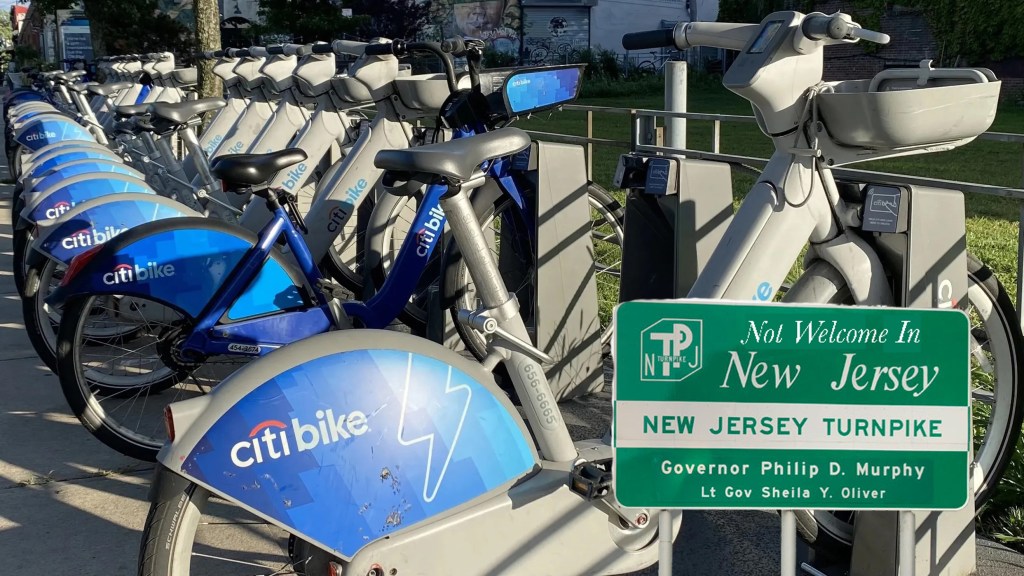
New Jersey politicians want to require all e-bike riders have licenses, registration and insurance — citing several instances of drivers killing two-wheelers to justify making it harder for New Jerseyans to access the benefits of even the lowest-speed e-bikes.
Introduced just last month by powerful Senate President Nicholas Scutari (D-Union County), the bill, S4834, already passed in committee in both the state Senate and Assembly and could come to a vote as early as Dec. 22.
The focus on further regulating e-bikes comes after a year of high-profile Garden State crashes involving electric two-wheeled vehicles. But the crashes, which Scutari mentioned at an October press conference, involved e-bike users hit and killed by drivers: A truck driver struck and killed a 13-year-old boy on an e-bike in Scotch Plains, a driver hit and killed a 22-year-old e-bike rider in Orange and a teenage hit-and-run driver killed two teen girls in October.
“Those cases are totally unaffected by this law,” said Corey Hannigan, the active transportation program manager for Tri-State Transportation Campaign. “But it has created an atmosphere where the Senate president feels he has to do something.”
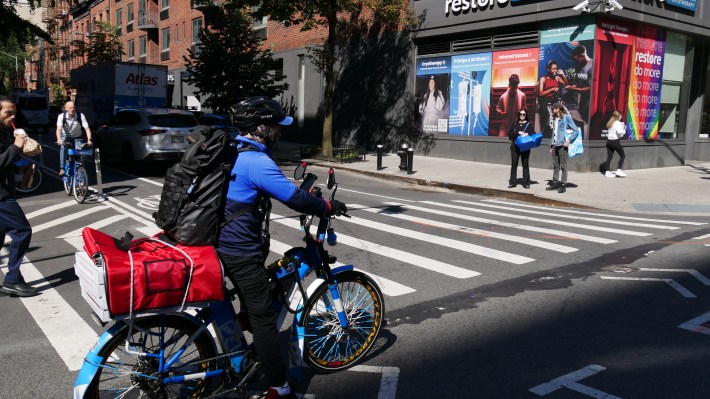
Advocates managed to defeated similar bill last year, making the case that it would discourage cycling. This time, however, the bill has zipped through the legislative process. Now all that’s left is to bring it to a full vote before the end of the year and send it to Gov. Phil Murphy’s desk for his signature.
New Jersey, like New York and most of the country, defines e-bikes in three classes: Class 1 are pedal-assist bikes that go up to 15 miles per hour, Class 2 are bikes with a throttle that go up to 20 miles per hour and Class 3 are throttle or pedal assist that can get up to 28 miles per hour. In New York City, the max speed for Class 3 e-bikes is 25 miles per hour, though the city also has a 15 mph speed limit for all e-bikes, which Mayor Adams implemented this year.
New Jersey takes it a step further, however, grouping Class 1 and Class 2 as “low speed electric bikes” and Class 3 e-bikes and mopeds as “motorized bicycles” requiring a license, registration and insurance. S4834 would add those “low speed” e-bikes to the “motorized bicycle” category, effectively eliminating the three-class system.
Treating all bikes like the fastest and most dangerous two-wheeled vehicles will “backfire” by making it less popular to ride a class 1 or 2 e-bikes and inadvertently pushing more people to choose faster vehicles, advocates say.
“Honestly it is going to backfire, you’re not addressing the safety risk at all,” said Hannigan. “Plus you’re making the safer choice harder to do. All of these devices are alternatives to cars. The sheer accessibility is part of the appeal. You can be an immigrant, you don’t need six forms of ID. If you have to get a drivers license and insurance why wouldn’t you just get a moped. It will just result in heavier and faster vehicles on the roads.”
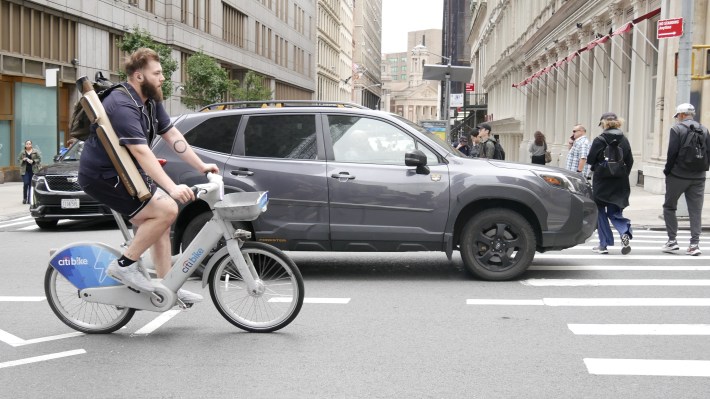
Reps for Lyft, which also operates Citi Bike in Jersey City and Hoboken, testified at a recent hearing that the law would ruin their business and deny Garden Staters the company’s popular e-bike option. According to the company’s data, 76 percent of trips taken by low-income users who qualify for reduced fare are on the ride-share giant’s Class 1 e-bikes.
“The practical effect is clear: dramatically higher costs will force us to either eliminate e-bikes from our New Jersey fleet entirely or cease operations in the state. We’re talking about removing a transportation option that nearly 600,000 trips depend on each year,” said Patrick Knoth, general manager for Citi Bike, at a hearing on December 11. “These aren’t recreational rides. These are people getting to work, reaching medical appointments, and traveling to school. This bill would strip away an affordable transportation option.”
After Knoth’s testimony, Assembly Member Joe Danielsen (D-Middlesex County), seemed puzzled that Scutari seemingly failed to predict this problem with Citi Bike’s electric fleet.
“I am concerned about the effect on [Citi Bike],” said Danielsen. “[The sponsor’s] gotta address the insurance issue. He has got to address the commercial bike share industry. I am surprised he missed this. He’s not going to kill an industry over this bill. I am going to make sure he gets this message.”
One e-bike user, a retired state law enforcement officer from Ewing, New Jersey, testified at the hearing that when he tried to get his Class 3 bike registered – which is already required under state law – the Motor Vehicle Commission wouldn’t even do it.
“There’s a law already on the books, I have five bikes, three are Class 3, and I tried to go to motor vehicles [to register them]. They told me, ‘Oh we don’t do that, it’s not happening,’” said Bruce Fletcher. “If this bill turns into law, it’s going to mess everybody up. The cops need to enforce the laws first. Most of the insurance people, I call them, they say ‘no we don’t ensure e-bikes.’ It’s crazy out here, I agree something needs to be done, but don’t take it out on everybody.”
Paul Mickiewicz, an advocate from the New Jersey Bike & Walk Coalition, echoed Fletcher’s sentiment. There are problems with young kids getting access to illegal e-motos, Mickiewicz said, but grouping all vehicles together is not the answer.
“This is a problematic bill … It’s trying to respond to something I think we’ve all seen — young kids, teenagers, riding electric motorcycles essentially, but they are constantly referred to as e-bike,” Mickiewicz said. “We see it in the news all the time ‘e-bikes,’ but we see pictures of e-motos. It’s understandably confusing but this bill will take everything and lump it together.”
The confusion likely stems from vehicles that look like bikes, are operated like mopeds, but can reach motorcycle speeds. In New York, this confusion played out in the media when the rider of an illegal “e-moto” struck and killed Terri Valenti in October. The headlines said “e-bike” but the person who hit Valenti was using an illegal Movcan V30 — which the manufacturer markets as an “e-bike” but has a maximum speed of 32 mph, making it illegal to ride on New York City streets.
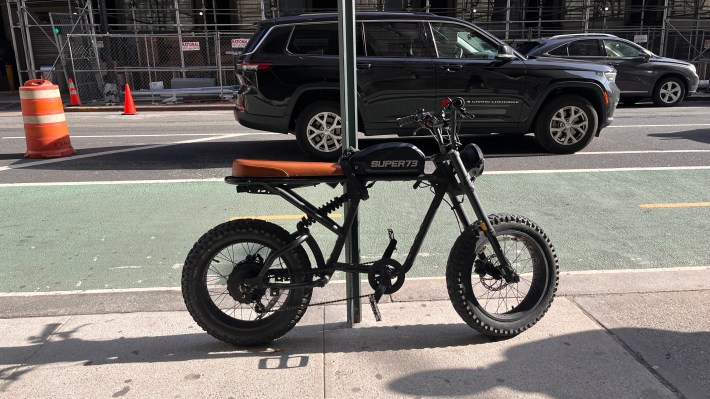
Manufacturers continue to sell these types of illegal vehicles online to consumers all over the country, while marking them as bikes. Most are sold as “Class 2” throttle “e-bikes,” but can easily be updated or switched into a much faster, illegal mode.
“There’s just so much confusion around these classes,” said Hannigan. “There is a reason we require insurance and license for the faster ones versus the slower ones. Instead of increasing costs for the law-abiding low-speed riders that don’t hurt anyone, funding and ramping up the existing mandate is what is required.”

Read More:
Streetsblog has migrated to a new comment system. New commenters can register directly in the comments section of any article. Returning commenters: your previous comments and display name have been preserved, but you'll need to reclaim your account by clicking "Forgot your password?" on the sign-in form, entering your email, and following the verification link to set a new password — this is required because passwords could not be carried over during the migration. For questions, contact tips@streetsblog.org.