STREETFILMS: A Great Day in Harlem as Neighborhood Comes Out for Fun, Safety
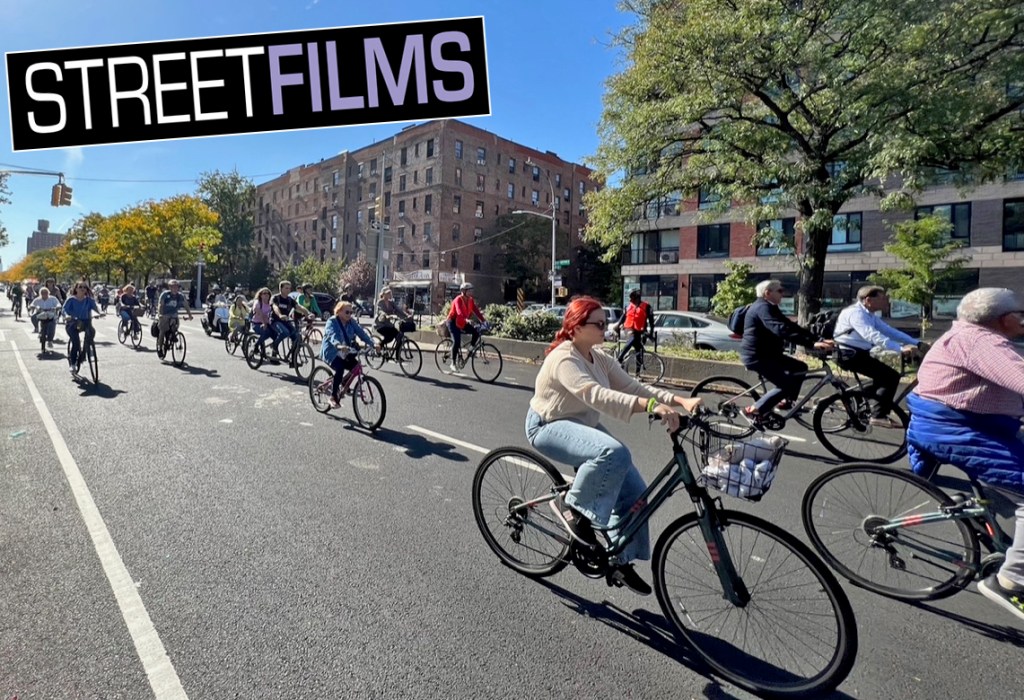
Scores of riders joined Transportation Alternatives on Saturday’s tour of Harlem — and called once again for a bikeway through a neighborhood long neglected for safe cycling infrastructure by city officials.
Clarence Eckerson of Streetfilms was there for the ride, which started on 110th Street and concluded at Jackie Robinson Park about three miles away.
“Central Harlem has the least amount of bike infrastructure in all of Manhattan,” said Shawn Garcia, TA’s uptown and Bronx volunteer coordinator, who has been spearheading a push to get the city to turn the center median of Adams Clayton Powell Blvd (aka Seventh Avenue) into a protected bike lane.
That plan is in limbo, but Garcia obviously did a good job promoting the ride — more than 100 people turned out, as you can see in Eckerson’s video:
Why is such a bike lane so necessary? For starters, Harlem resident Chris Sanders said bluntly, “Black and Brown people would get safe passage to Central Park.” Is safety that necessary? Well, in 2021, the neighborhood experienced 2,299 reported crashes — more than six crashes per day, every day — injuring 207 cyclists, 189 pedestrians and 599 motorists, according to city stats. And two pedestrians were killed.
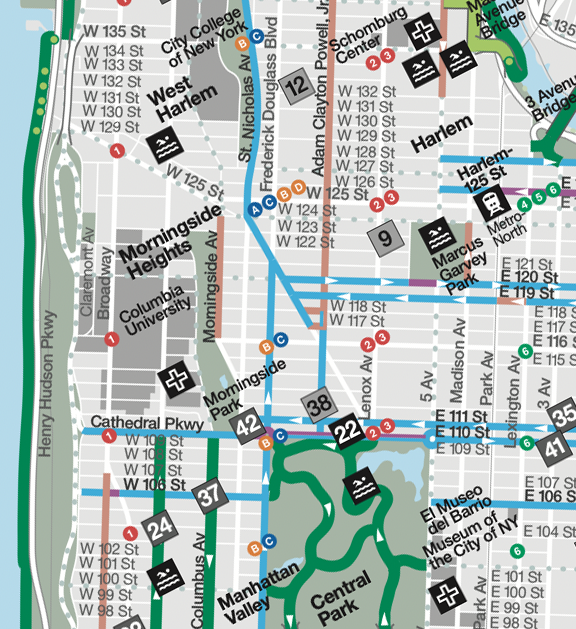
Compare that to the Upper West Side, just one neighborhood to the south. Over the same period, that neighborhood experienced 1,002 reported crashes, injuring 63 cyclists, 89 pedestrians and 205 motorists. So that’s more than half the crashes and 64 percent fewer injuries. The main difference? The Upper West Side has bike lanes galore.
During the de Blasio administration, 1,180 cyclists, 1,758 pedestrians and 4,336 motorists were injured in Harlem (more than 900 people every year), and two cyclists and 13 pedestrians were killed.
Transportation Alternatives crunched other numbers about Harlem that are even scarier: More than 109,000 people live along Adam Clayton Powell Boulevard and less than 23% of these residents own cars. And nearly one-quarter of all traffic-related crashes and deaths in Harlem occur on Adam Clayton Powell. Meanwhile, buses rank in the bottom 11 percent citywide in terms of speed and reliability.
“This is about equity,” said Tanesha Grant of Parents Supporting Parents NY, who commended Council Member Kristin Richardson Jordan. for joining the ride. “This is something that Harlem needs and Harlem deserves.”
Transportation Alternatives has a petition drive to support more bike infrastructure in Harlem. Click here for more info.
Read More:
Streetsblog has migrated to a new comment system. New commenters can register directly in the comments section of any article. Returning commenters: your previous comments and display name have been preserved, but you'll need to reclaim your account by clicking "Forgot your password?" on the sign-in form, entering your email, and following the verification link to set a new password — this is required because passwords could not be carried over during the migration. For questions, contact tips@streetsblog.org.