CYCLISTS AGONISTES: New Video Shows that First Avenue Also Needs Wider Bike Lanes
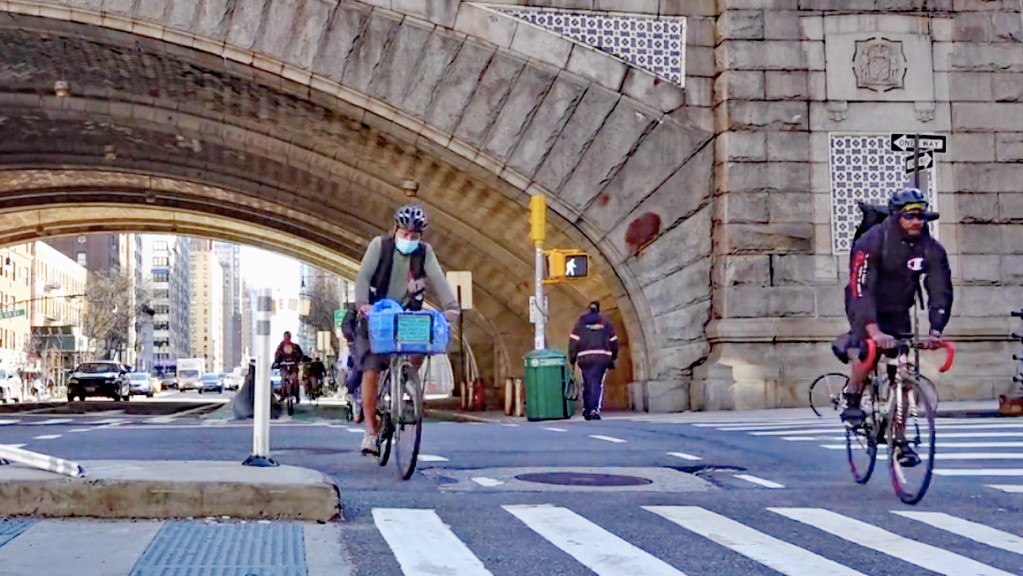
We’re going to need a bigger bike lane.
A new vehicle count on First Avenue showed that cars and trucks barely outnumbered bikes, despite drivers getting almost 12 times as much space on the uptown roadway — the second East Side roadway whose mode split reveals the need for wider bike lanes and less room for cars.
In the latest count — which follows a similar eye-opener from Second Avenue last week — a crew from Streetfilms set up at the intersection of First Avenue and 60th Street for a total of 42 minutes. The results? There were 698 cars, trucks, vans and such, and 561 bikes and scooters.
That’s basically 1.2 vehicles for every bike or scooter — even though the bike lane is roughly 1/12 the width of the entire roadway. (And the flow of two-wheelers will only grow as the weather gets warmer and as more people head back to offices for work.)
Here’s the video (which will surprise only people who haven’t been on a bike in a while or residents of California who testify at community board meetings about how bad New York City is now):
From STREETFILMS on Vimeo.
The latest findings by Streetfilms’ cineaste Clarence Eckerson Jr. follows his video last week on Second Avenue, which similarly highlighted how many cyclists — many of them working delivery cyclists — and other micro-mobility users are traveling along the corridor, despite the fact that bikers are given just half a lane compared to six lanes designated for the movement and storage of cars and trucks.
Upper East Side Council Member Ben Kallos says the city should capitalize on the city’s bike boom that started last year amid the COVID-19 pandemic by quickly building out adequate infrastructure to keep up with the demand, especially as the city prepares to implement the long-awaited congestion pricing scheme, which will restrict the number of cars entering Manhattan’s central business district.
“Meeting current demand and encouraging even more riders to take to the streets means thinking big, like expanding the Second Avenue bike lane as well as its companion lane on First Avenue,” said Kallos. “The significant increase in people getting around Manhattan on bikes is not going anywhere, nor do we want it to. As congestion pricing gets closer to being a reality and improvements like a dedicated bike lane on the 59th Street Bridge come to pass, more and more people will commute by bike. Our city’s cycling infrastructure should always be growing, and it’s an essential part of any forward-thinking recovery from this pandemic.”
First Avenue is a crucial of a pathway because it serves as a direct link to the Queensboro Bridge, which also had its own massive spike in ridership. Weekday bike trips over the bridge through October, 2020 had gone up a whopping 56 percent compared to 2019 — numbers that confirmed the city’s continuous bike boom, but which also contributed to the East River span’s dangerous overcrowding.
Mayor de Blasio announced in January that he would finally fulfill a years-long promise to give more space to cyclists and pedestrians on the bridge by setting aside the south outer roadway for pedestrians so that they no longer need to share a single, bi-directional lane with cyclists on the bridge’s north side.
But that work, which is set to begin this year, won’t be done until 2022, Streetsblog reported.
Last week, amid demands from activists, Mayor de Blasio said that the administration is “open” to widening the Second Avenue bike lane, along with other vital corridors where more people are riding, if the demand necessitates it.
“We’ve been expanding bike lanes intensely all over the city, and if there’s more and more bike usage, it makes sense to meet that and address it,” de Blasio said during his daily press briefing last week. “So, I’m certainly open. I want to see people as much as possible out of their cars, into mass transit, on bikes, as many options as possible for so many reasons, for fighting global warming, for reducing congestion, for so many reasons.”
Read More:
Streetsblog has migrated to a new comment system. New commenters can register directly in the comments section of any article. Returning commenters: your previous comments and display name have been preserved, but you'll need to reclaim your account by clicking "Forgot your password?" on the sign-in form, entering your email, and following the verification link to set a new password — this is required because passwords could not be carried over during the migration. For questions, contact tips@streetsblog.org.