… But Second Avenue’s Temporary PBL Has DISAPPEARED!
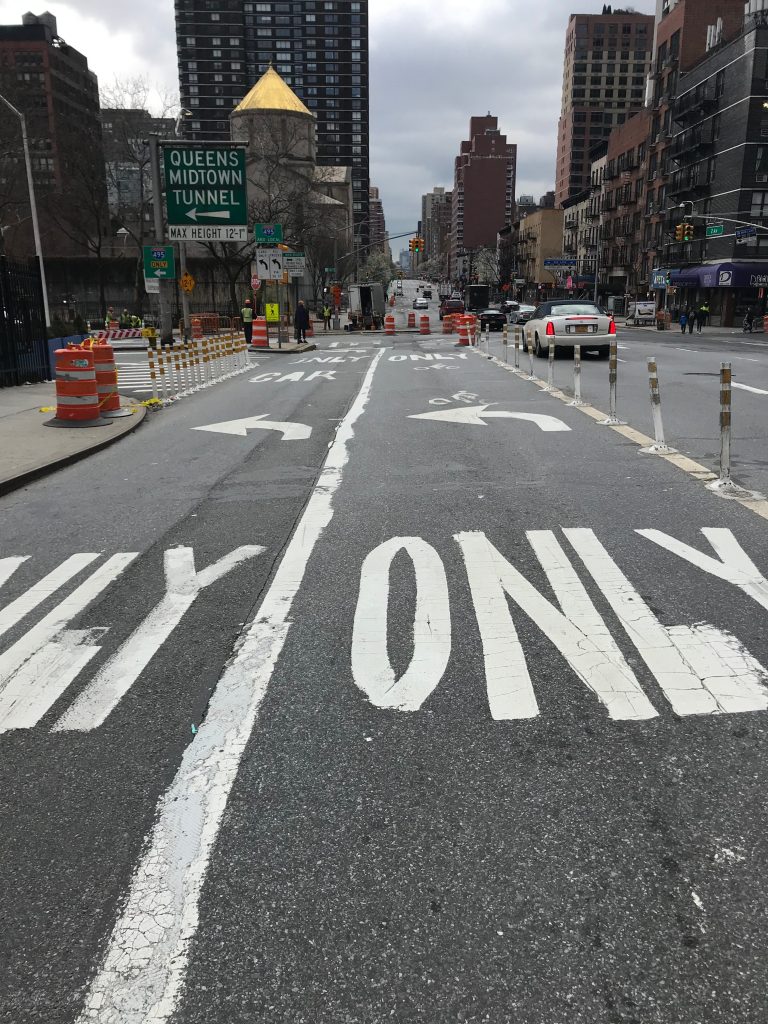
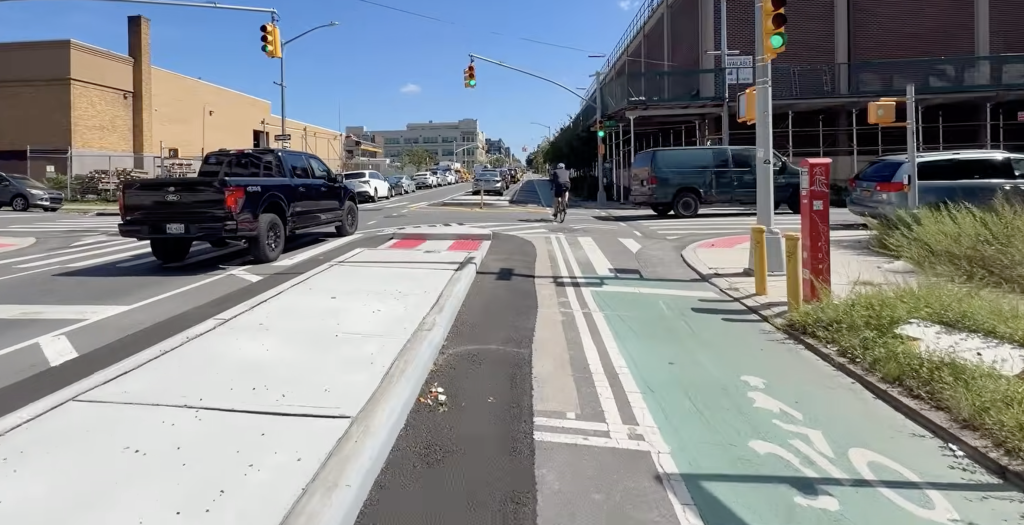
The Department of Transportation has not maintained its own temporary protected bike lane at the notoriously dangerous Second Avenue gap near the Queens Midtown Tunnel in Manhattan, forcing cyclists to ride with drivers racing to turn left into the tunnel.
Mayor de Blasio announced on March 20 that the city would install temporary lanes on two busy corridors, including Second Avenue between 43rd and 34th streets — long-overdue solutions to address the surge in cyclists amid the worsening coronavirus pandemic. (Our positive coverage of the lane on Smith Street is here.)
The first day on Second Avenue was a success, according to video published to Twitter — cyclists had their own separated path thanks to big orange barrels and yellow tape that turned one of the two left-turn lanes near the tunnel at 36th Street into a bike lane. A temporary sign attached to one of the cones clearly directed cyclists to use that lane.
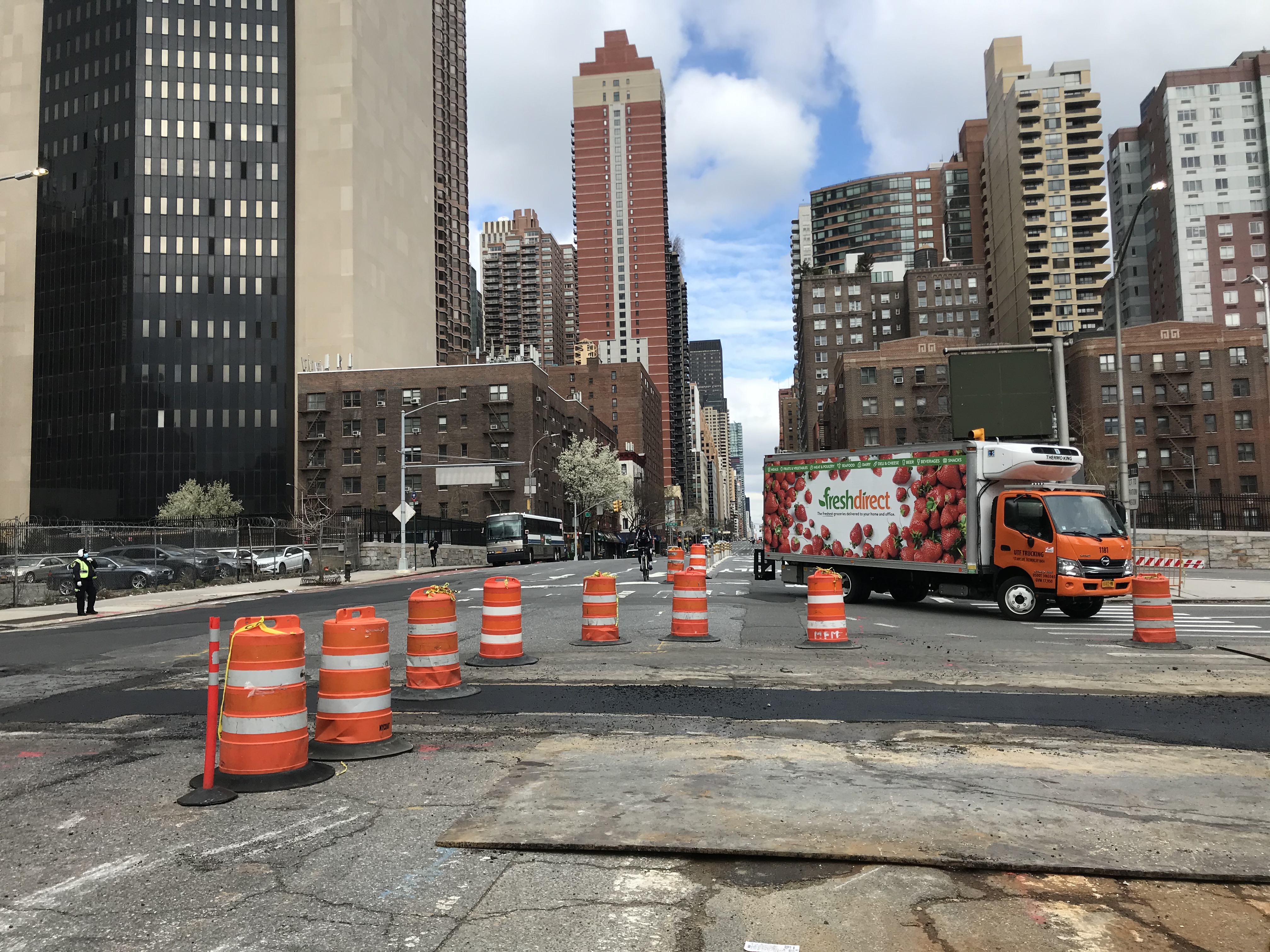
But just a few days later, the orange cones that were supposed to protect bikers from two lanes of speeding cars and trucks had been moved to the sidewalk. The once-filled gap is dangerous yet again. The reason this matters? The Second Avenue gap has long been on activists’ wish lists because it is a notorious crash pad: Between July, 2017, and August, 2019, there were 636 crashes, causing 26 injuries to cyclists and 45 to pedestrians, on Second Avenue between 43rd Street and 34th streets
On Tuesday, Streetsblog rode the treacherous stretch, which is now just as confusing and dangerous as before, and panicked as cars and trucks — albeit fewer of them than on a normal virus-free weekday — passed just inches apart in the same lane. And there was no sign directing cyclists where to go.
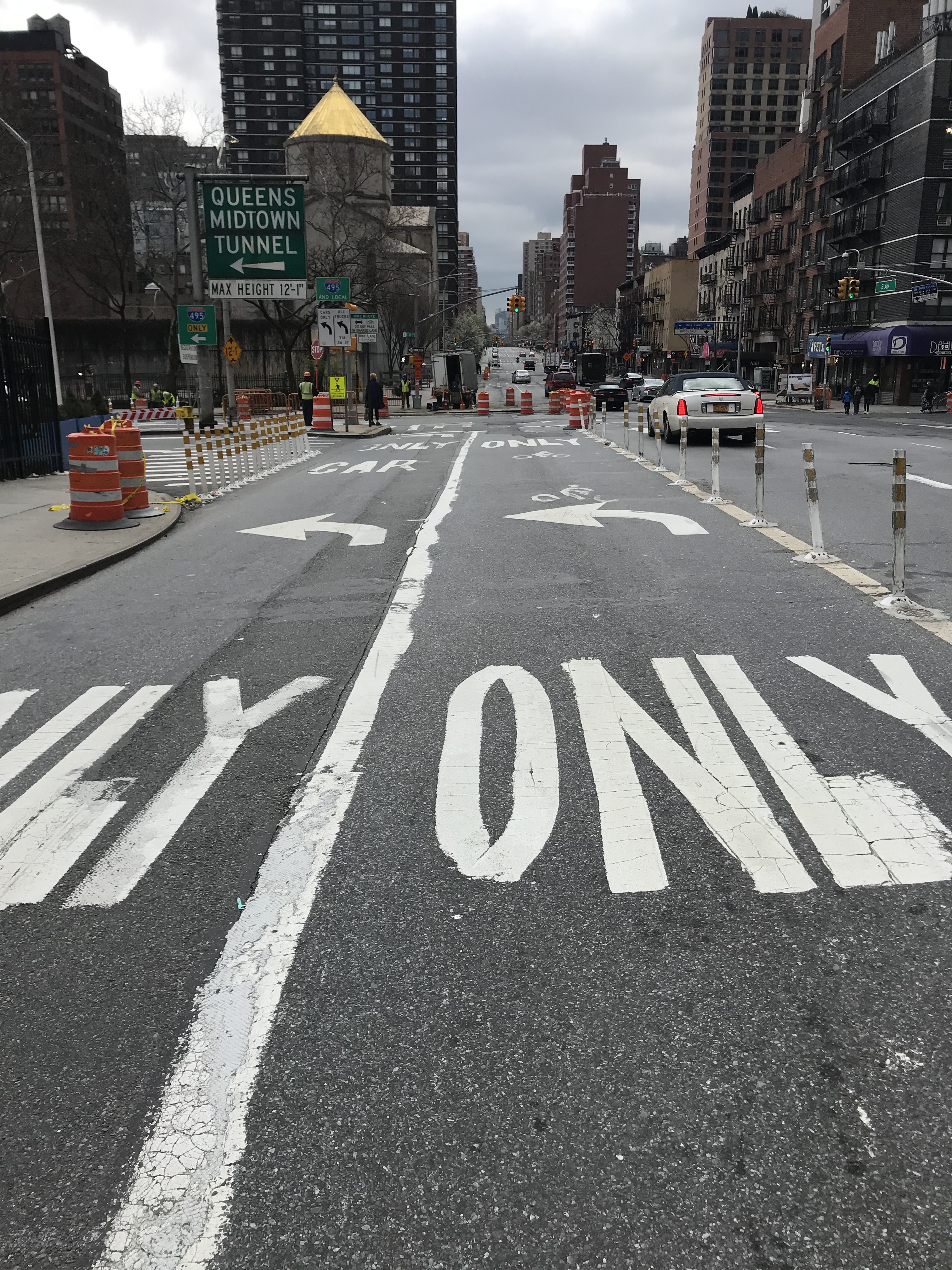
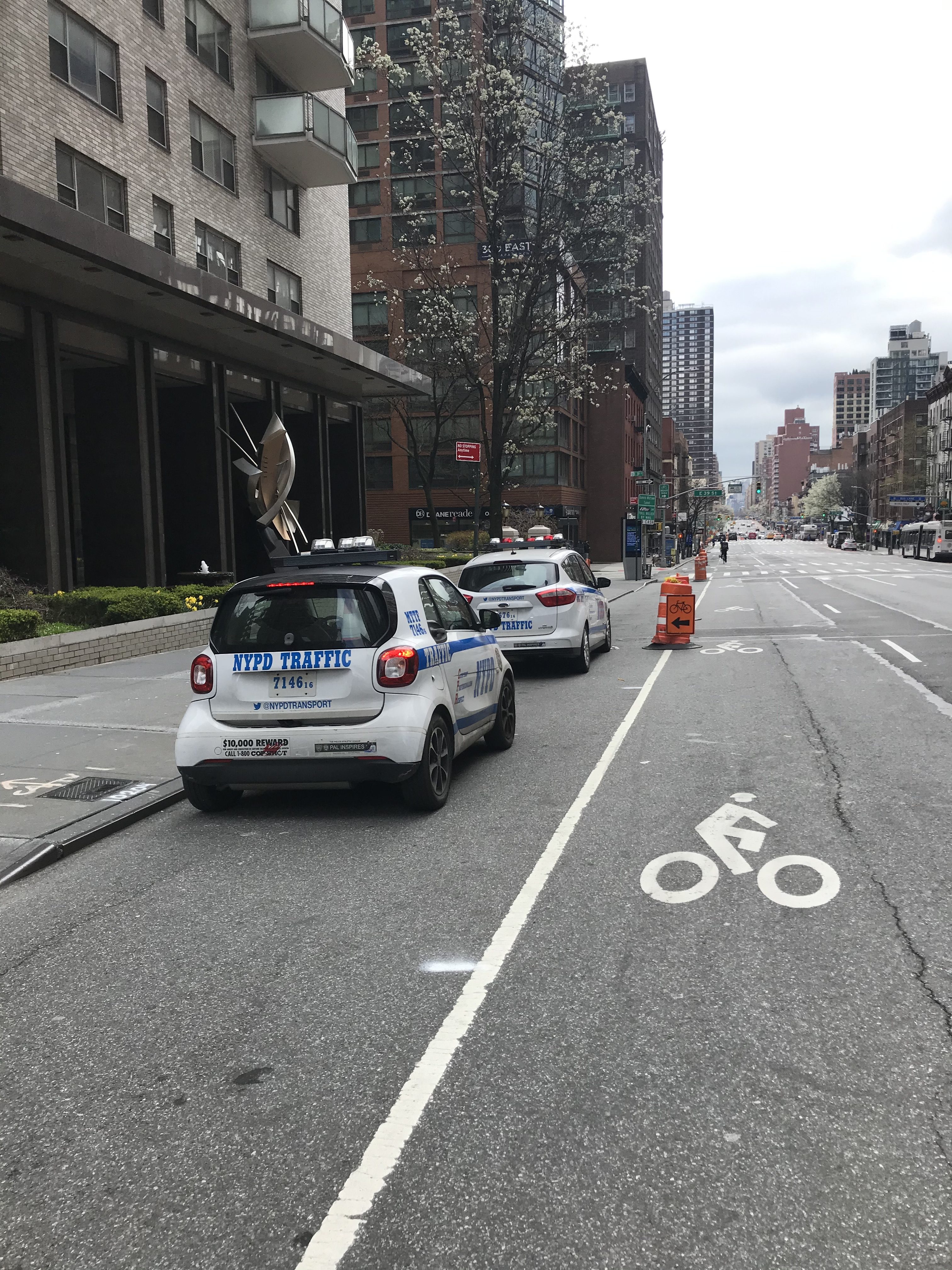
And the rest Second Avenue is no safe haven either — a few blocks uptown at 39th Street, two squad cars were parked, like always, in the temporary so-called protected bike lane.
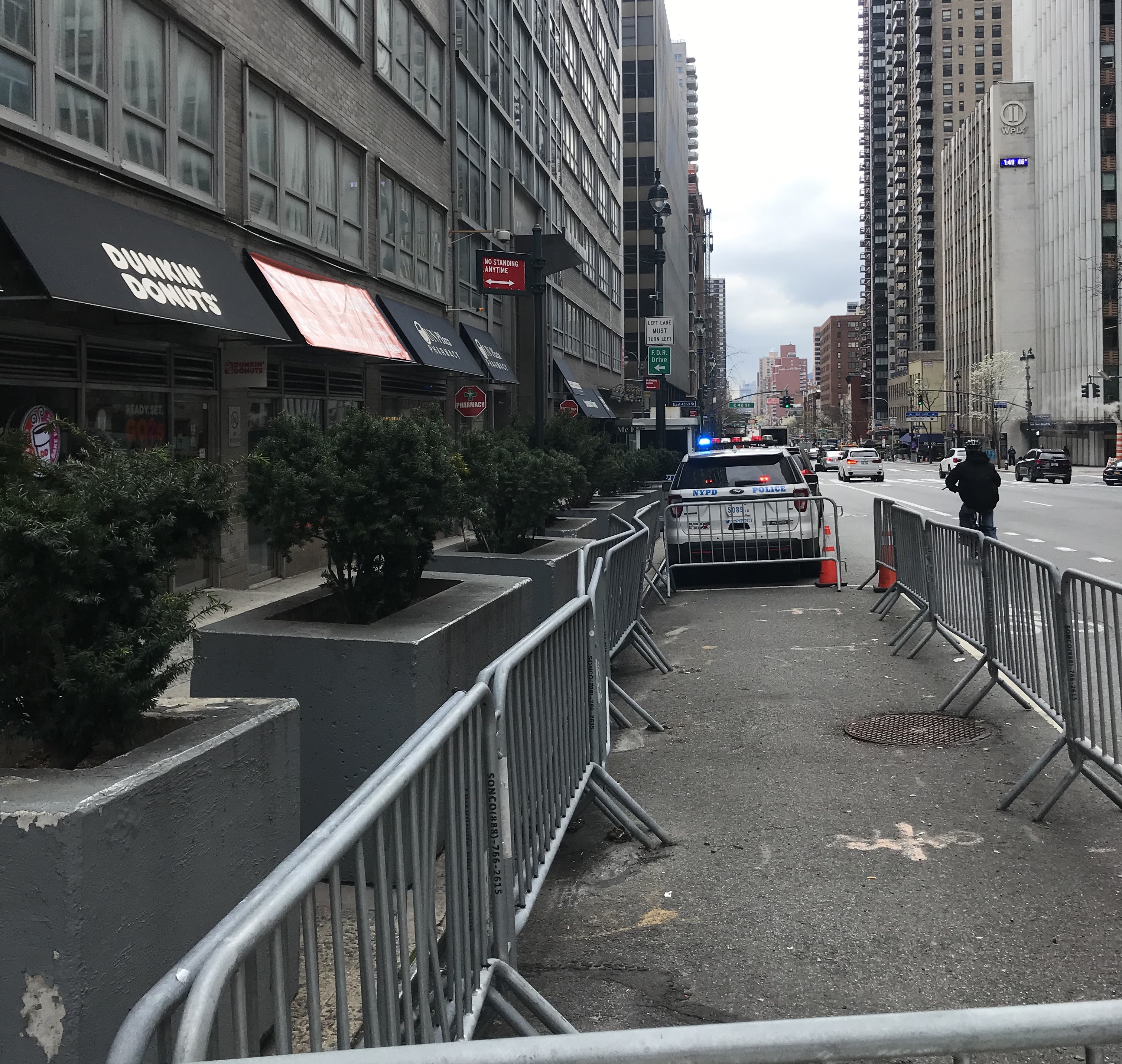
And the temporary lane on Second Avenue never did close one gap that exists for political reasons: The protected bike lane still has a gap between 43rd and 42nd streets to accommodate round-the-clock NYPD protection of a building that houses the Israeli mission to the United Nations — protection afforded for building workers, but not for road users.
Update: After initial publication of this story, the Department of Transportation said that due to coronavirus, the agency does not have the capacity to consistently monitor the temporary lane, but is working on a solution.
“With COVID-19 restrictions changing daily, and with most of our staff working remotely or focused on critical agency functions, we are not able to consistently monitor the temporary lanes,” said DOT spokesman Brian Zumhagen. “However, we are working on tightening up our monitoring plan and are looking into the issue on 2nd Avenue.”

Read More:
Streetsblog has migrated to a new comment system. New commenters can register directly in the comments section of any article. Returning commenters: your previous comments and display name have been preserved, but you'll need to reclaim your account by clicking "Forgot your password?" on the sign-in form, entering your email, and following the verification link to set a new password — this is required because passwords could not be carried over during the migration. For questions, contact tips@streetsblog.org.