City Asks Cyclists Where To Put Protected Bike Lanes; Cyclists Respond, ‘Um, Everywhere!’
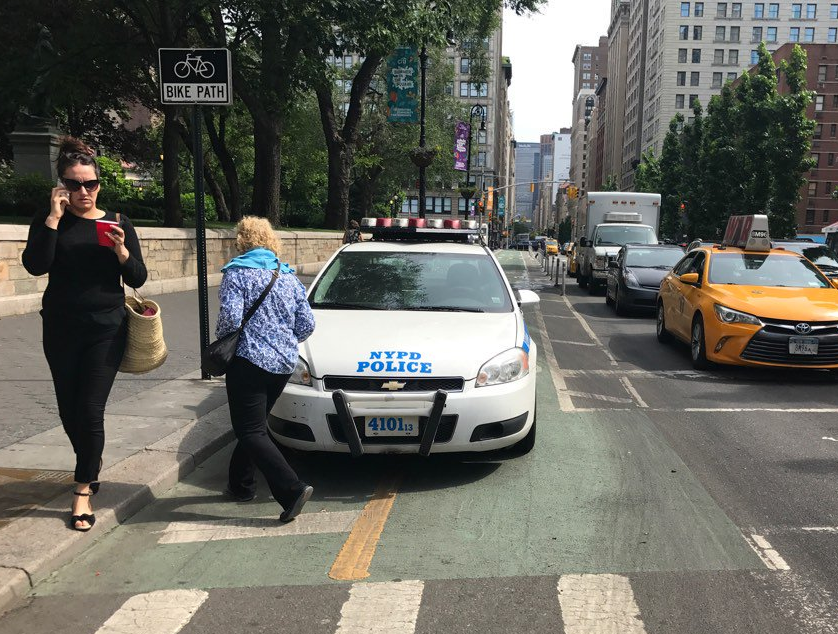
City planners are asking New York cyclists what neighborhoods would be best for protected bike lanes — and cyclists are already responding defiantly: “All of them.”
Last week, the Department of City Planning quietly started circulating a questionnaire — through the Department of Transportation’s NYCycles newsletter — to “increase knowledge and understanding of bicycle use in New York City.”
“We hope to help you enjoy better cycling in this community,” the agency told cyclists. “By filling out this survey, you can help us do so.”
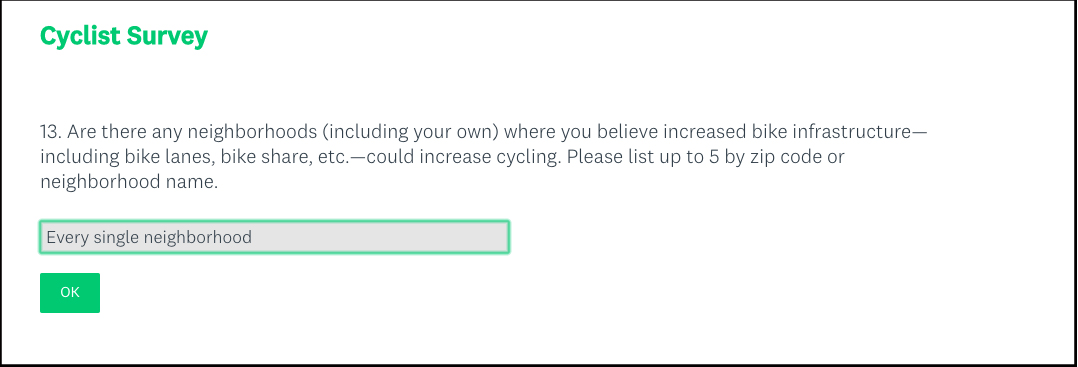
Early response suggests that cyclists are responding aggressively to the survey’s signature question: “Are there any neighborhoods where you believe increased bike infrastructure — including bike share, etc. — could increase cycling.”
The question asks for five specific neighborhoods or ZIP codes, but judging from Twitter, many cyclists have taken the opportunity to go beyond small zones (see examples below):
Other questions seek to understand “why” people ride. The survey lets cyclists pick such reasons as “enjoyment” or because it’s just the best way to get around town (though it’s unlikely cyclists will say they ride because, “There is good bike infrastructure”).
Another question asks “What factors would get you to ride a bike more?” Choices include: “More protected bike lanes” and “safer traffic conditions.”
Though the survey will seem ludicrous to many daily cyclists, there is some good news: Its very existence suggests that the de Blasio administration does want to increase cycling, which has stalled due in part to the blood tide crashing over New York’s streets this year. And the survey doesn’t offer cyclists a real chance to express their opinions about the real problems on the streets of New York, including poor enforcement of basic safety rules by the NYPD and tens of thousands of illegally parked, placard-protected city employees.
Still, the Planning department said it’s a crucial first step.
“The purpose … is to better understand why cyclists choose to ride bikes rather than use automobiles and to find ways to make biking a more convenient and viable alternative to automobiles, increasing sustainable mobility choices,” Department of City Planning spokesman Joe Marvilli told Streetsblog. “This will help the city focus improvements for cyclists across New York City.”
The agency said it would share the survey more widely than the DOT’s obscure newsletter, including more outreach via social media and distribution of physical copies at “heavily used bike parking locations in all five boroughs” (what bike parking locations?)
Marvilli said the agency will share the results when it is finished compiling them.
Fill out the survey by clicking here.

Read More:
Streetsblog has migrated to a new comment system. New commenters can register directly in the comments section of any article. Returning commenters: your previous comments and display name have been preserved, but you'll need to reclaim your account by clicking "Forgot your password?" on the sign-in form, entering your email, and following the verification link to set a new password — this is required because passwords could not be carried over during the migration. For questions, contact tips@streetsblog.org.