Florida DOT Gets Much-Deserved Mockery for Failing to Make Bridges Safe for Cycling

The deadliest state for cycling is Florida. One in five cyclist fatalities in the U.S. happens on Sunshine State roads. While the Florida Department of Transportation is funding research that examines the problem, it’s not doing enough to address known safety hazards.
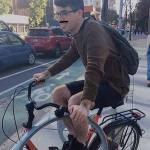
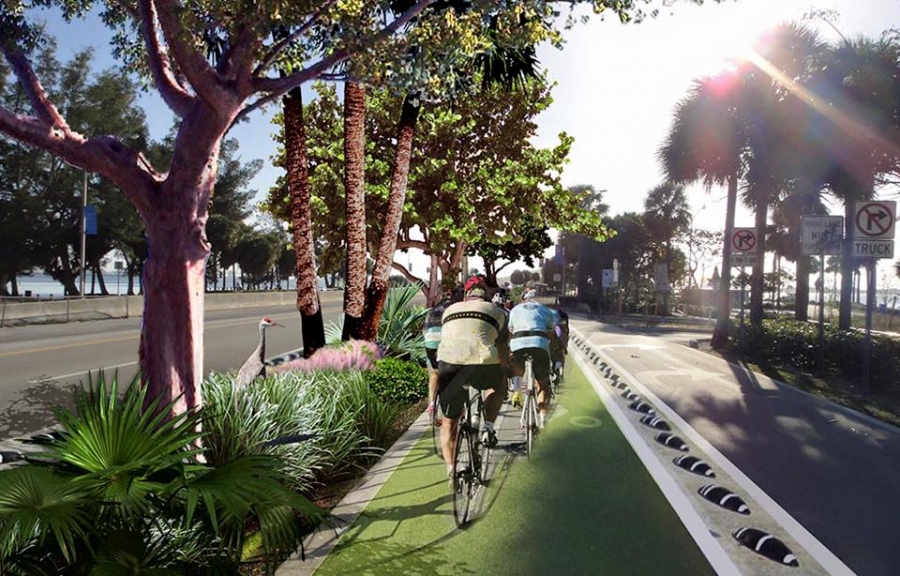
Even when FDOT does pay attention to dangerous conditions, it doesn’t do enough. On the Flagler Bridge between West Palm Beach and Palm Beach, for example, the agency is adding a buffered bike lane but no physical protection. With construction wrapping up, Jesse Bailey at Walkable West Palm Beach went out for a ride and imagined a world where FDOT actually prioritizes safe streets for cycling:
Great news: FDOT has outdone themselves again, as they’ve provided the Holy Grail of bike infrastructure over bridges: A physically protected bike lane. Video is below.
The barrels work well to provide a protective barrier between bicyclists and fast moving vehicles. Although we’d be happy to see the barrels remain in place, we suspect FDOT and Palm Beach are working double time this weekend to install a more attractive permanent treatment in time for Monday’s ribbon cutting event. Dignitaries on hand Monday have much reason to celebrate, as not only will the bridge provide enhancements to traffic movement, better sidewalks, and aesthetic improvements, it will also mark the first (to our knowledge) such protected bike lane design over a bridge in the state.
It’s great progress to see FDOT putting bicyclists behind physically protected barriers over high-speed bridges such as the Flagler Bridge. No doubt this new design will be the new standard across the state and be implemented on such bridges as the Rickenbacker Causeway and the 17th Street Bridge in Vero Beach in order to prevent the needless tragedies that have claimed the lives of so many Florida cyclists. Bravo, FDOT.
Note: At press time, we could not reach an FDOT official to actually confirm the policy change.
How many more people will be killed before we see a real policy like that from FDOT?
More recommended reading today: Carfree America makes the case for Dallas to invest in common sense changes to streets, not big expensive mega-projects. And the Transportist says that if driverless cars are the future, highway expansion projects make even less sense.

Read More:
Streetsblog has migrated to a new comment system. New commenters can register directly in the comments section of any article. Returning commenters: your previous comments and display name have been preserved, but you'll need to reclaim your account by clicking "Forgot your password?" on the sign-in form, entering your email, and following the verification link to set a new password — this is required because passwords could not be carried over during the migration. For questions, contact tips@streetsblog.org.