Get Ready for Uber’s “Flying Cars” Conference to Generate Lots of Dumb Headlines

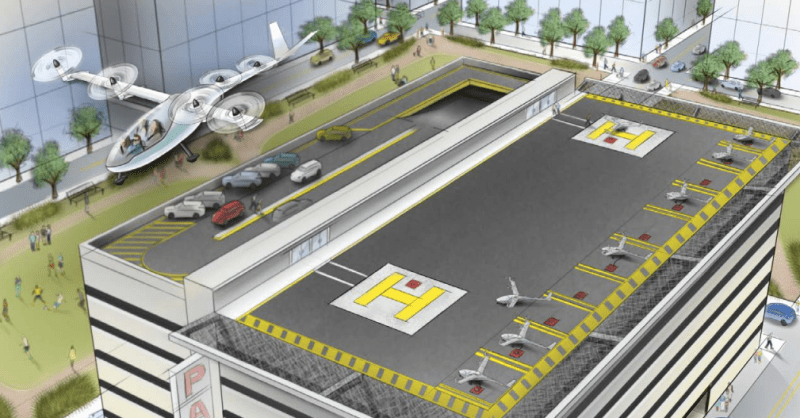
For a supposedly forward-looking company, some of Uber’s visions of the future look an awful lot like the unfulfilled dreams of 1960s space-age technophiles.
In that spirit, the company today is kicking off a three-day conference, dubbed the Elevate Summit, to “articulate Uber’s vision for the future of Urban Air Mobility” — in other words, flying cars. Tech reporters are tagging along to the confab in Dallas, so expect headlines about the new partnerships and technological advances the company is sure to tout.
The conference builds on a white paper Uber released last October in which it laid out a vision of replacing car and transit trips with fast, quiet, cheap, and low-emission on-demand aviation. But as the latest barrage of Uber PR hits the airwaves this week, remember the things that aren’t being discussed.
Whizzing above the city sounds appealing in a Jetsons sort of way, but Uber’s thinking on this technology is completely untethered from its impact on the cities and towns below, where the people are. The cultural fascination with flying cars grows out of a worldview that prioritizes speedy private transportation above virtually all else. It’s the same instinct that plowed expressways through cities and built mushrooming, auto-oriented suburbs, rather than building places around the native “killer app” for human transportation — walking.
Uber’s white paper envisions a future where air travelers walk (or take an Uber car, naturally) to and from heliport locations sprinkled across a metropolitan region. In the beginning the service would compete with choppers for the loyalty of the one percent, but in the long run, Uber is pitching it as “an affordable form of daily transportation for the masses, even less expensive than owning a car.”
Of course, the report fails to address the impact relying on ubiquitous local air travel would have on the built environment, just as our decision to prioritize high-speed car travel has had profound consequences for the design of cities and towns.
Cities are fortunately not on the verge of becoming dystopias in which we hop in an airplane to get a gallon of milk. Silicon Valley is testing “flying car” prototypes, but so far they look more like expensive toys at a rich uncle’s lake house, rather than a meaningful transportation option.
But it’s unsettling how transportation trendsetters in the private sector are thinking first and foremost about the need for speed. Silicon Valley is already designing expensive juicers around the assumption that people have forgotten how to squeeze things. Let’s not design yet another transportation system around the assumption that we’ve forgotten how to walk.

Read More:
Streetsblog has migrated to a new comment system. New commenters can register directly in the comments section of any article. Returning commenters: your previous comments and display name have been preserved, but you'll need to reclaim your account by clicking "Forgot your password?" on the sign-in form, entering your email, and following the verification link to set a new password — this is required because passwords could not be carried over during the migration. For questions, contact tips@streetsblog.org.