Port Authority Will Widen Bike Pinch Points Around GWB Towers
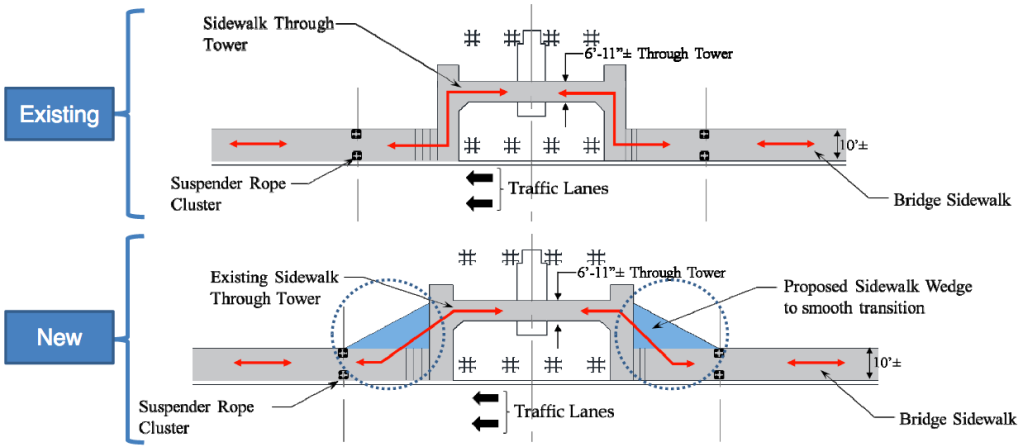
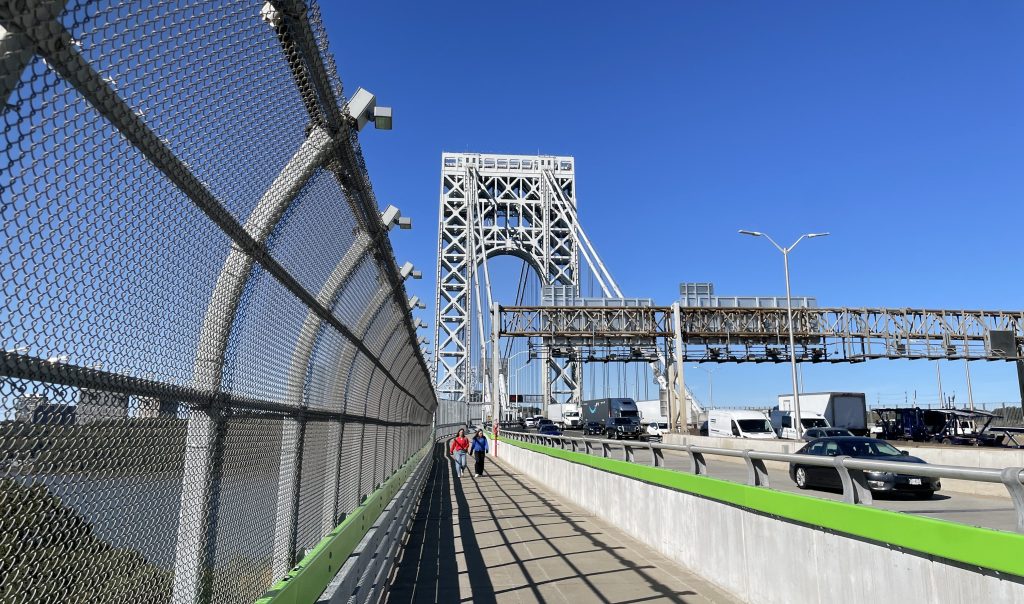
The Port Authority announced plans yesterday to add some breathing room for biking and walking around the towers on the George Washington Bridge [PDF]. Currently the paths narrow and jog around the towers at tight angles — the new “wedges” will make for a more comfortable ride.
But the Port’s $1.8 billion bridge renovation, set to break ground later this year, won’t otherwise widen the paths, which fall short of engineering standards for two-way bike lanes.
The wedges around the towers will “allow the cyclists to traverse the towers without having to dismount,” Port official Libby McCarthy told board members yesterday.
Yesterday’s announcement comes after 252 people contacted the Port with concerns about the bridge paths. Last week, biking advocacy organizations on both sides of the Hudson sent a letter to Port leadership specifically requesting wider paths around the towers.
At the request of Transportation Alternatives and the New Jersey Bike & Walk Coalition, the Port Authority released a plan in 2014 to route pedestrians and cyclists onto separate sides of the bridge (walkers on the south side, cyclists on the north), replace the north path stairs with ramps, and eliminate a hairpin turn on the south path. The advocates also won continuous pedestrian and bike access throughout the construction period, expected to last seven years.
The updated plan still falls short of the “Complete George” proposal put forward by Neile Weissman, who has called on the Port to add wider paths for bike traffic that would run parallel to the current paths. If the paths aren’t widened, Weissman warns, the bridge won’t be able to accommodate the growing number of people who bike across the bridge, especially on weekends.

Read More:
Streetsblog has migrated to a new comment system. New commenters can register directly in the comments section of any article. Returning commenters: your previous comments and display name have been preserved, but you'll need to reclaim your account by clicking "Forgot your password?" on the sign-in form, entering your email, and following the verification link to set a new password — this is required because passwords could not be carried over during the migration. For questions, contact tips@streetsblog.org.