One British City’s Transit Solution: Tax Parking

Raising money for transit by charging more to drive is good public policy but difficult politics. If it was easy, many more cities would have a congestion pricing system in place by now.
But one British city has recently managed to enact a transit funding stream with a fee on cars. The system is easy to administer to boot.
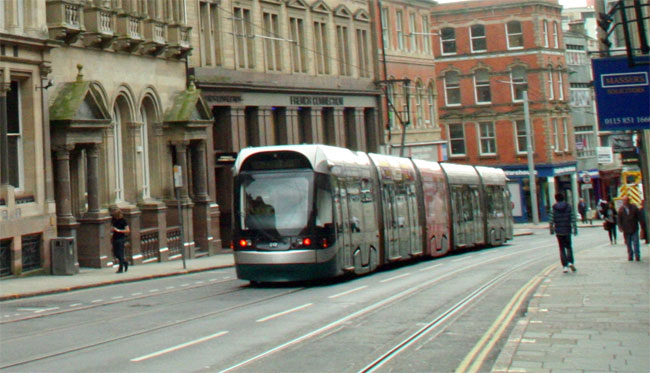
Nottingham, England (population 300,000), is winning recognition around the U.K. for its successful commuter parking program, which charges employers for the spaces they provide to employees and directs the revenue to transit.
The “Workforce Parking Levy” was enacted in 2011 — after an intense political fight. It requires any employer with more than 11 parking spaces to pay £375 per space per year (about $465 U.S. dollars). About 25,000 permitted parking spaces pay into the program, according to a policy briefing by the Campaign for Better Transport, a national advocacy organization [PDF].
When the idea of a parking tax was introduced, business leaders furiously opposed it and some predicted the city would become a ghost town. Those predictions turned out to be wrong. The number of employers moving into the city is rising faster than before, the Campaign for Better Transport reports. And the transportation benefits are substantial.
The Campaign for Better Transport reports that the main effect of the program has not been a direct reduction in car trips. Instead, the transit investments funded by the program are what makes a difference.
In its first three years, the parking levy injected more than £25 million into local transit, funding bus service and two new tram lines. About 40 percent of trips in Nottingham are now by transit, a relatively high share for the U.K., and planners expect a 7 percent reduction in traffic with additional transit investments coming online.

Streetsblog has migrated to a new comment system. New commenters can register directly in the comments section of any article. Returning commenters: your previous comments and display name have been preserved, but you'll need to reclaim your account by clicking "Forgot your password?" on the sign-in form, entering your email, and following the verification link to set a new password — this is required because passwords could not be carried over during the migration. For questions, contact tips@streetsblog.org.