With No Separated Busway on 34th Street, What’s Next for BRT in NYC?


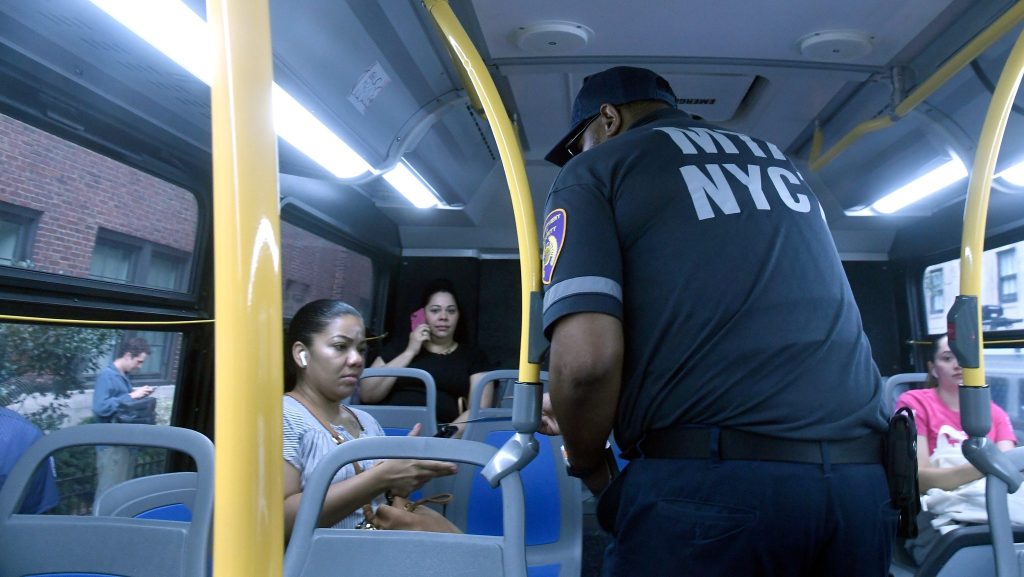
The walkback of the city’s plans for 34th Street from a physically separated transitway to a package of painted lanes and bus bulbs was unquestionably a defeat for bus riders on the extremely congested street. While features like off-board fare payment, scheduled to go into effect this summer, will provide a speed boost to buses, riders won’t be able to go crosstown as quickly as if they had lanes free from encroachment.
What does the city’s decision on 34th Street mean for the future of bus rapid transit across the rest of the city, however? We spoke with two transit advocates to find out.
It seems likely that without physical separation on 34th Street, there won’t be physical separation on any bus lanes implemented before the end of the Bloomberg Administration. (The remaining routes in the city’s first phase of BRT rollout — on the Nostrand Avenue corridor in Brooklyn and Hylan Boulevard in Staten Island — are scheduled to debut in the next two years and do not include physically separated lanes.) Preliminary plans for the 34th Street route were first presented to the public in April 2008, a full three years ago, and the planning process for the project is scheduled to continue through the end of 2011. At that rate, any physically separated bus project would be at least partially under the authority of a new mayor and new DOT.
“A number of the environmental and transportation groups are starting to recognize that the next administration after Bloomberg is going to have to answer to us on where they stand on these issues that have been wildly popular for New Yorkers,” said Kate Slevin of the Tri-State Transportation Campaign.
Though a new physically separated busway is unlikely to be constructed in the next three years, said Joan Byron of the Pratt Center for Community Development, “Planning can happen and dialogue with stakeholders can happen that make it a lot more likely that the next phase is gets built and has those features.” Byron said she hopes that the BRT team at DOT can assemble a coalition along its next routes that can politically lock in full-featured bus improvements. “There are workers and residents and employers in the outer boroughs who would love to have this problem of a Select Bus route running by their door,” she said.
DOT’s plans for 34th Street were scaled back at least in part because of the opposition of powerful Midtown landowners, including Macy’s. Both Slevin and Byron argued that the politics of 34th Street, dominated by large and often iconic institutions, aren’t likely to be replicated on most other routes. “34th Street is a higher profile street than many of the other streets in, say, the outer boroughs,” argued Slevin.
“It’s such a unique case,” agreed Byron. she pointed out that not only does 34th Street have a different set of stakeholders than the proposed routes for the BRT program’s second phase, it’s a physically different kind of street. “It’s a short route,” she said. On a longer route, the total time savings from physical separation are larger, making the case for separation easier to make. Additionally, Byron argued, “there are probably few long routes where you can continuously have physical separation.” Future routes, she predicted, will be more likely to move back and forth from separated to unseparated lanes as the street width, traffic patterns, and adjoining land uses shift, providing DOT with more flexibility in its planning.
While both Slevin and Byron were optimistic that the BRT program will continue to move forward and New York’s bus riders will someday get physically separated lanes, Slevin underlined the fact that such victories aren’t inevitable. Said Slevin, “Bus riders and other people in New York who support improved bus service need to be more vocal. People need to speak out.”

Read More:
Streetsblog has migrated to a new comment system. New commenters can register directly in the comments section of any article. Returning commenters: your previous comments and display name have been preserved, but you'll need to reclaim your account by clicking "Forgot your password?" on the sign-in form, entering your email, and following the verification link to set a new password — this is required because passwords could not be carried over during the migration. For questions, contact tips@streetsblog.org.