Nearly 3,000 Survey Responses Show Brooklyn Wants to Keep PPW Bike Lane

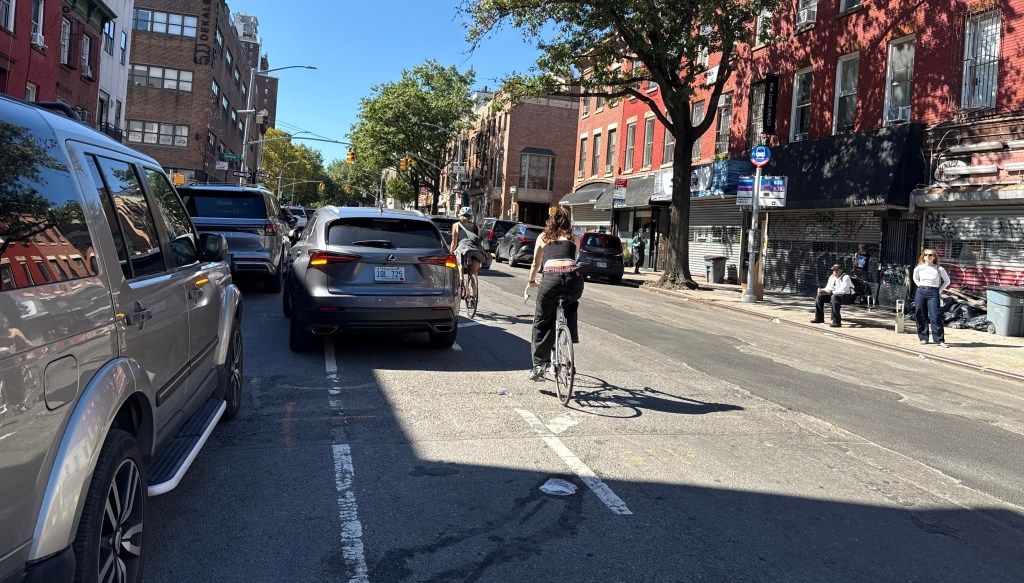
The results are in from Brad Lander and Steve Levin’s survey about the Prospect Park West bike lane, and the data depict widespread support for the re-designed street among Park Slope residents and Brooklynites in general. Of the nearly 3,000 submissions from Brooklyn residents, 78 percent expressed support for the current two-way bike path configuration (54 percent said it’s fine as is and 24 percent want to keep it while making some changes), with only 22 percent saying they want to revert to the previous design with three lanes of vehicle traffic.
The epicenter of the opposition has always been PPW itself, but among residents there the survey reveals an even split between people who want to keep the new configuration and those who want to get rid of it. Add the residents who live on PPW side streets, and support for keeping the re-design came in at 57 percent in the immediate neighborhood.
Big majorities said the project had advanced DOT’s stated goals: 85 percent feel that the re-design has had some effect on reducing speeding (a perception backed up by before-and-after data), and 91 percent said that biking is safer as a result of the project (reflected in a big jump in bike counts after the project was completed). Most respondents also perceived a noticeable improvement in the pedestrian experience, with 70 percent saying the project had made it easier to cross the street.
About a third of the respondents who support the new configuration want to see some adjustments going forward, like reducing the confusion and conflict between cyclists and pedestrians, improving the aesthetics of the street, and keeping cars out of the pedestrian zones separating the bikeway from traffic lanes. The report from the Council members suggests a few ways to modify the design and enforcement of the street to achieve those goals.
“There are deep and passionate feelings about the changes to Prospect Park West – but this survey of more than 3,000 residents reveals strong overall support from community residents,” said Lander in a statement. “Thanks to the extensive response, we have a clearer sense of the concerns, and a set of potential modifications that address them.”
The survey was not collected via scientific random sampling, but Lander and Levin took steps to distribute the survey beyond an internet audience, having staffers canvass Prospect Park West on at least four separate occasions. They also identified responses that may have been duplicates and other “suspicious” submissions. Levels of support for the project held steady regardless of whether those responses were included in the final tally (see slides 40-42 for the breakdown).
Drilling down into the survey data yields several interesting nuggets. A few that leaped out:
- Four of the top six suggestions for modifying the design deal with intersections and how to improve the crossing experience for pedestrians, both by protecting them from auto traffic and getting cyclists to yield more consistently.
- Among those who are dissatisfied with the project, the loss of about 25 out of 323 parking spaces on PPW seems to factor heavily. A little more than 50 percent of PPW residents who filled out the survey use the street to park their car, and 47 percent of overall respondents say it’s become harder to park on PPW.
- Averaging out all responses, the survey found that in general, Brooklynites think there is much less speeding, sidewalk bike riding, and wrong-way riding in traffic lanes since the re-design was implemented.

Read More:
Streetsblog has migrated to a new comment system. New commenters can register directly in the comments section of any article. Returning commenters: your previous comments and display name have been preserved, but you'll need to reclaim your account by clicking "Forgot your password?" on the sign-in form, entering your email, and following the verification link to set a new password — this is required because passwords could not be carried over during the migration. For questions, contact tips@streetsblog.org.