The Price of Parking: Let the Free Market Decide?


The Wall Street Journal ran a piece this weekend by Conor Dougherty on the municipal move toward charging more for parking. It’s available online to paid subscribers only, but here’s a taste:
As anyone who has ever circled the block for a marginally better spot knows, parking is an American obsession. It occasionally boils over into rage, or worse. Since the parking meter was first introduced 70 years ago, in Oklahoma City, the field has been dominated by two simple maxims: Cities can never have too much parking, and it can never be cheap enough.
Now a small but vocal band of economists, city planners and entrepreneurs is shaking that up, promoting ideas like free-market pricing at meters and letting developers, rather than the cities, dictate the supply of off-street parking. Seattle is doing away with free street parking in a neighborhood just north of downtown. London has meters that go as high as $10 an hour, while San Francisco has been trying out a system that monitors usage in real time, allowing the city to price spots to match demand. (A recent tally there showed that one meter near AT&T Park brings in around $4,500 a year, while another meter about a mile away takes in less than $10.) Gainesville, Fla., has capped the number of parking spots that can be added to new buildings; Cambridge, Mass., works with companies to reduce off-street parking.
Economists have long made the case that the solution to the parking crunch many cities face lies not in more free or cheap parking but in higher prices. The idea is that higher prices result in a greater churn — and get more people on buses and subways — which leads to more open spaces. But this notion has often run up against city planners and retailers arguing that cheap and plentiful parking results in more commerce and, thus, higher sales taxes and a vibrant economy.
The article goes on to note the influence of UCLA professor Donald Shoup‘s 2005 book, “The High Cost of Free Parking.” Shoup, who will be in New York City meeting with civic leaders in early March at the invitation of Transportation Alternatives, argues that “ubiquitous free parking helps explain why our cities sprawl on a scale fit more for cars than for people, and why American motor vehicles now consume one-eighth of the world’s total oil production.”
In Los Angeles, where free or cheap parking has been as much a part of the landscape as palm trees, market forces are already pushing parking prices higher, even without the intervention of planners. And some people aren’t happy about it.
Nor are they all happy in Seattle, where the WSJ found one woman who sounded unlikely to be forced out of her car at any price:
“It’s just frustrating that they keep taking free parking away,” says Terry Peterson, a grants and contracts administrator at Fred Hutchinson Cancer Research Center in Seattle. Ms. Peterson has a 15-minute commute to her office, where she parks in one of the area’s free spots.
In spring, the city plans to put in new meters that will cost around $7 a day on average, the result of a recent study that found that most on-street parking in the neighborhood has an occupancy rate of at least 90%. She says she’ll probably end up parking at a private lot, which runs about $1,800 a year.
Whatever the market will bear.
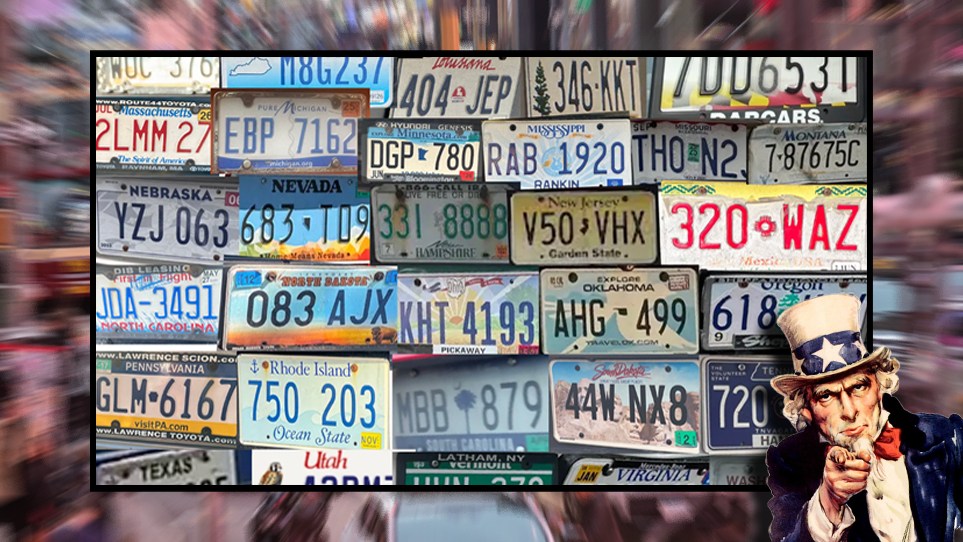
Photo: Yukon White Light on Flickr

Read More:
Streetsblog has migrated to a new comment system. New commenters can register directly in the comments section of any article. Returning commenters: your previous comments and display name have been preserved, but you'll need to reclaim your account by clicking "Forgot your password?" on the sign-in form, entering your email, and following the verification link to set a new password — this is required because passwords could not be carried over during the migration. For questions, contact tips@streetsblog.org.