‘Really Precarious’: Wages Are Up, But Delivery Work Is Still Unsafe and Unpredictable
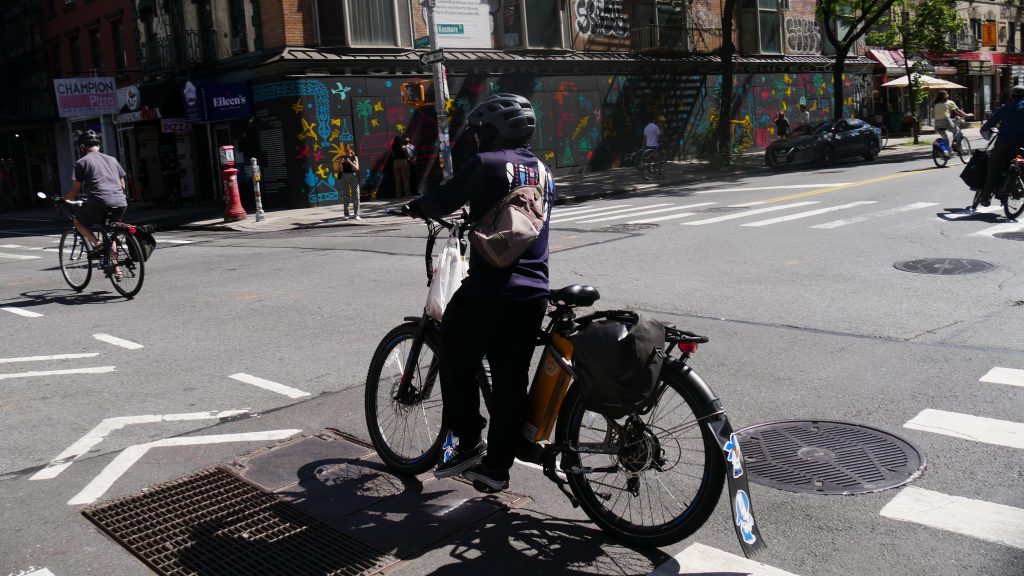
The city’s delivery worker minimum wage law has been successful in delivering higher wages, but didn’t solve poor working conditions and deactivations that keep workers unsafe and unstable, a new city report reveals.
In its twice-a-year report to be released on Wednesday morning, the Department of Consumer and Worker Protection concluded that the minimum pay law, which went into effect in 2023, was successful in raising workers’ wages, but that the New York City’s roughly 80,000 deliveristas still lack concrete safety standards, secure employment, and regular schedules.
“The minimum pay rate was designed to address subpoverty wages for delivery workers, and it achieved that,” said Department of Consumer and Worker Protection Commissioner Sam Levine. “But we know that these have not become dream jobs overnight. As a result, these are still, really dangerous jobs, really unpredictable jobs, and really precarious jobs.”
The minimum pay law requires app companies using contracted delivery workers – like Uber Eats, DoorDash, Grubhub, Instacart and the smaller Hungry Panda and Fantuan – to pay $22.13 per hour for the time spent making deliveries and some portion of the worker’s other time signed into the app. The minimum pay standard changed the nature of delivery work in the city. Instead of having the ability to log in and be available for orders at any time, the apps began scheduling shifts. A crucial aspect of the workers’ instability is the threat of deactivation, which can look like getting permanently barred or being temporarily “locked out” of scheduling shifts. With the possibility of losing their job always over their shoulder, workers rush to make deliveries and take safety risks, the report argues.
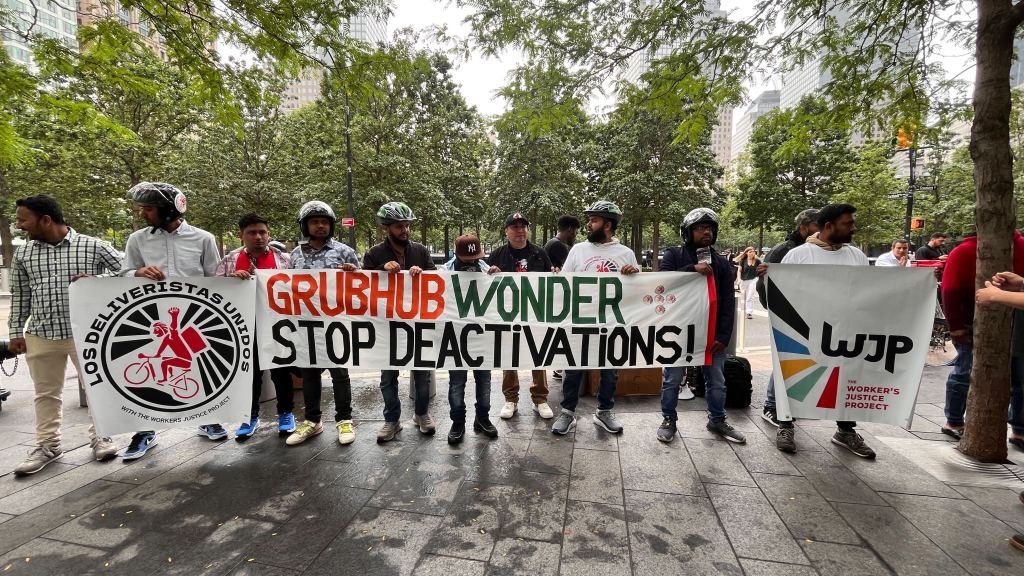
The report calls deactivation protections “essential” for public safety and street safety across the city.
“The safety issues are huge, and number one for us is making sure workers don’t need to choose between their safety and their livelihood,” said Levine.
Last year, the City Council passed a bill meant to protect workers from deactivation and lockouts by forcing app companies to provide a reason for permanently barring a worker from the platform, to give notice, and to create an appeal process. But the legislation was watered down: companies can still do temporary lockouts opaquely. It goes into effect in January.
Levine, who previously served as the director of the Federal Trade Commission’s Bureau of Consumer Protection, said DCWP is ready to enforce the new law and is open to strengthening it through rulemaking or through new legislation. He said he expects the tech companies to continue the pattern of fighting or skirting regulations.
“The pattern we have seen in New York City, and really my whole career, but certainly in New York City, is that every time the city passes a reform to help delivery workers, delivery companies fight,” he said. “I would not at all be surprised if companies tried to find new ways around the deactivation protections. … We’re prepared to respond to that.”
The report compiled workers’ experiences with deactivations. One worker was even shut out of his account on Relay after getting hit by a car and sent to the hospital.
“It is worth mentioning that when I had the accident, I managed to communicate by message to the chat of the Relay application to let them know that I had had the accident, for which they responded that they were sorry for the inconvenience and that they would proceed to deactivate me,” the anonymous worker wrote in a complaint to DCWP. (Relay has since been absorbed into the Wonder/Grubhub conglomerate and shut down as a stand-alone product.)
Another worker who made deliveries by car was told by DoorDash that he “wasn’t driving his car fast enough,” before he got deactivated. Another said he didn’t even get a real reason when he was deactivated from his UberEats account. In his complaint, he begged for help from the agency.
“My account is still permanently deactivated, and it’s unfair because they didn’t give me the opportunity to defend myself. They unfairly took away my family’s daily bread. For God’s sake, I need you to help me,” the worker wrote.
New protections for grocery delivery workers
In total, delivery app companies have paid around $2 million more in wages to workers since the law went into effect. This report is the first that includes Instacart and other grocery delivery apps, which were forced to start following the pay standard after Streetsblog exposed a former loophole.
Take-home pay for grocery delivery workers is higher now that they are covered by the pay standard. Tips have declined by 39 percent as consumer fees, the amount Instacart chooses to charge its customers for the service, were increased by 63 percent. But total grocery worker earnings are up 17 percent on the year, indicating that grocery workers are earning most of their wage from the company, rather than supplementing with tips.
The agency report compared the second quarter of last year to this year. The minimum pay law now covers around 12,000 grocery delivery workers. The amount of workers performing trips decreased around 14 percent, which can signal the workforce is professionalizing.
“I think when you see the number, it’s like, ‘Oh, a factory closed and pink slips were sent out.’ That is not what happened here,” said Levine about the decrease in active grocery delivery workers. The business model of app-delivery services, he said, was “essentially subsidised” by thousands of workers signing on and not getting paid because they weren’t getting orders. What minimum pay did to the restaurant sector, and what it is starting to do in grocery, is force the companies to limit access to the app and actually pay the workers who are signed in.
“What you see now in delivery and what you’re starting to see in grocery is a smaller workforce, but it’s a much more active workforce,” Levine said.

Read More:
Streetsblog has migrated to a new comment system. New commenters can register directly in the comments section of any article. Returning commenters: your previous comments and display name have been preserved, but you'll need to reclaim your account by clicking "Forgot your password?" on the sign-in form, entering your email, and following the verification link to set a new password — this is required because passwords could not be carried over during the migration. For questions, contact tips@streetsblog.org.