Amazon Delivery Drivers Routinely Speed, Block Bus And Bike Lanes
Same-day delivery? More like Hell on Wheels.
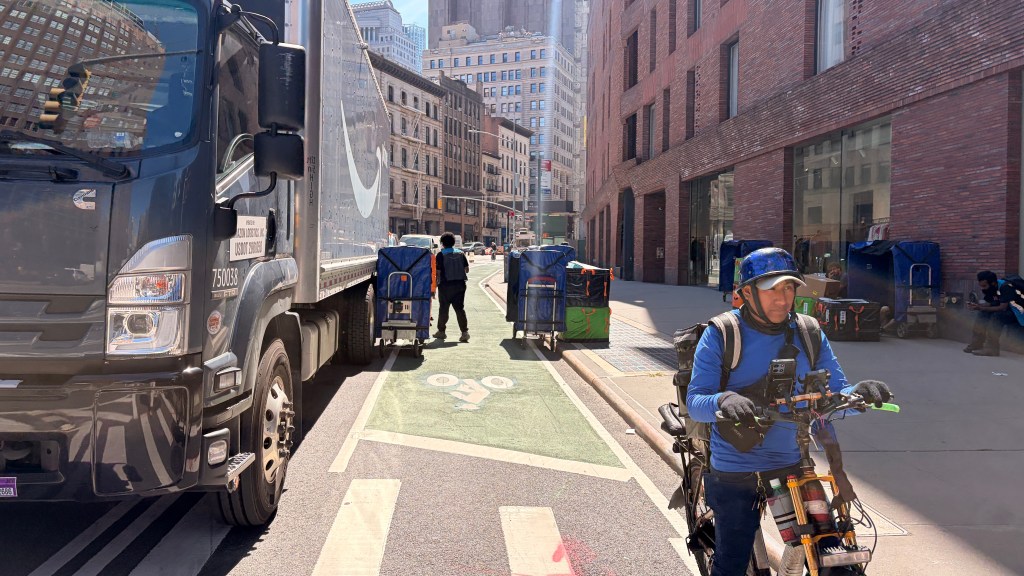
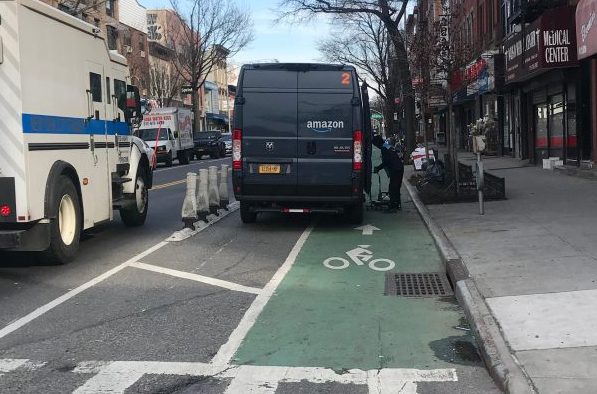
Amazon delivery drivers have spent the last five years racking up thousands of serious traffic violations, including speeding through school zones, blocking bus and bike lanes and parking next to fire hydrants, according city data collected by an organization looking to reform the logistics giant’s hiring practices.
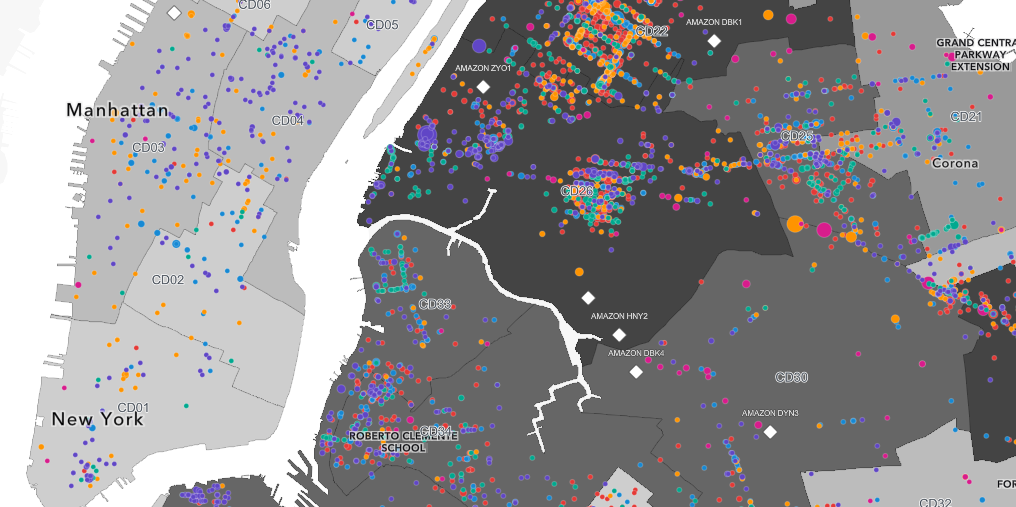
A new interactive tool from the labor-aligned Alliance for a Greater New York details the many thousands of traffic infractions drivers for Amazon collected between July 2021 and June 2025. The interactive map, called Amazon Delivers Dangers, shows that Amazon-associated delivery vans drew 14,290 tickets from cameras and traffic enforcement agents over the five-year period.
The map sorts the tickets into the following categories:
- 3,602 citations for blocking bus lanes, bus stops, or other public-transit access
- 2,689 citations for obstructing curb access
- 2,366 citations involving traffic and intersection safety
- 2,162 citations for speeding in school zones
- 2,051 citations for obstructing emergency-response access
- 1,340 citations for blocking pedestrian or cyclist space.
Between 2019 and 2024, the number of packages delivered in New York City jumped by nearly 40 percent, from 1.8 million per day to 2.5 million per day. That trend has driven many more delivery vans onto city streets.
The map shows that Amazon delivery drivers’ dangerous habits are not limited to a single corner of the city or a few bad-apple drivers. The company’s drivers have received tickets in every last one of the city’s 51 City Council districts, and the 10 plates with the most combined citations accounted for only 904 of the 14,920 tickets.
The map is the latest lob in the fight between labor organizers and Amazon over the Delivery Protection Act, a bill proposed by Council Member Tiffany Caban (D-Queens). That bill requires the operators of “last-mile” warehouses to directly hire anyone doing deliveries out of that warehouse, which would effectively require Amazon to directly hire the delivery drivers who work for the company dropping off packages around the city.
Currently, Amazon relies on subcontracting its deliveries out to companies known as Delivery Service Partners, which are local independent logistics companies that lease Amazon trucks and uniforms from the online retail giant. By hiring DSPs as subcontractors that pick up deliveries from its warehouses around the city, critics say Amazon is able to skirt any regulations or responsibility for how those drivers behave on the road, despite the fact that Amazon is the company that tracks delivery times and sets routes for drivers.
Caban’s bill would also mandate safety training for drivers and ensure that Amazon proper — and not an ever-changing roster of DSPs — is liable for the traffic violations by delivery drivers.
“Amazon’s business model is built on the routine violation of traffic laws,” Matt Multari, a former Amazon delivery driver, said in a press release announcing the new mapping tool. “Amazon surveils you and tracks you to the minute, forcing you to go faster. You don’t have time to look for parking. If Amazon’s AI notices that you are going slower than what they expect, you can get penalized, or eventually terminated.”
A majority of the City Council supports Caban’s bill. Amazon has spent $5 million lobbying against the legislation, and warned supportive Council Members that the company would stop using electric cargo bikes to deliver packages if it becomes law. It is unclear why Amazon would abandon its micromobility practices if the city required it to directly hire the people who ride company-branded cargo bikes.
“Companies like Amazon are using subcontractors to shield themselves from their responsibility to keep workers and New Yorkers writ large safe,” Caban said in a press release. “That’s why I’m proud to be the lead sponsor of the Delivery Protection Act, which would create a licensing system for last-mile deliveries, force companies to take responsibility for their drivers, protect against unfair retaliation and firing of workers, and require real training for workers.”
A spokesperson for Amazon claimed the company’s violations are a “tiny fraction” of its total deliveries, which “does not suggest a systemic issue” — and pointed to the company’s e-cargo bikes as evidence of Amazon trying to address the issue.
“Safe and responsible delivery practices are always a top priority. Delivery Service Partners are local, independent businesses, responsible for their own operations and for following the traffic and parking laws in the communities where they operate, including addressing any citations,” the rep, Leigh Ann Gullett, said in a statement.
“We work closely with them to promote safe delivery practices, from hands-on driver training to in-vehicle safety technology, and we continue to invest in solutions like our e-cargo bike and on-foot delivery programs that reduce the need for vehicles on city streets and help us be a good neighbor in the communities we serve.”

Read More:
Streetsblog has migrated to a new comment system. New commenters can register directly in the comments section of any article. Returning commenters: your previous comments and display name have been preserved, but you'll need to reclaim your account by clicking "Forgot your password?" on the sign-in form, entering your email, and following the verification link to set a new password — this is required because passwords could not be carried over during the migration. For questions, contact tips@streetsblog.org.