Memo to Mamdani: Queens Deserves a Busway on Austin Street
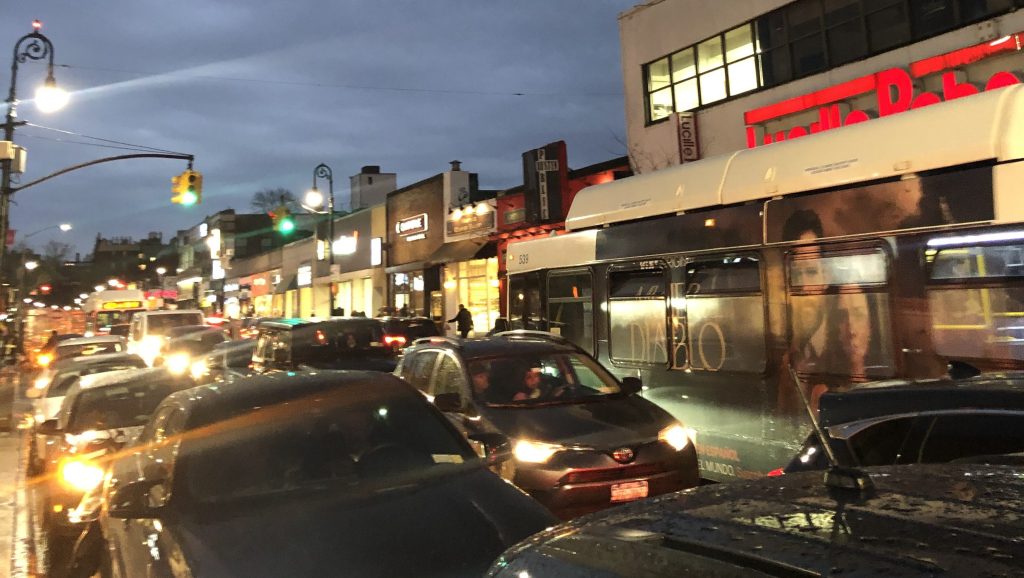
The MTA’s decision to reroute the Q23 in Forest Hills was an admirable attempt to address the impact of Austin Street’s bumper-to-bumper car traffic on bus riders in the face of the city’s inaction — but it was a mistake, and Mayor Mamdani can fix it.
The route change was meant to speed up the Q23 bus — but after a year, the MTA’s own data show an insignificant average increase of 0.7 mph, while also causing significant downsides. And bus riders still need to get to the shops and amenities on Austin Street.
A lot of traffic on a particular street is a sign that a lot of people want to be on that street. Yet on Austin Street, the least efficient mode of transportation that carries the fewest people, the private car, monopolizes precious road space, slowing down buses that bring way more people to the corridor.
The logical conclusion is quite simple: if there’s a lot of traffic on your bus routes, you should move the traffic, not the bus. Austin Street should be a busway.
At the end of the day, moving the bus off of Austin Street didn’t fix the congestion on Austin Street, didn’t speed up the Q23 and pushed bus riders away from a commercial strip onto a corridor — Queens Boulevard — already served by other buses and the subway.
The Q23 before the redesign
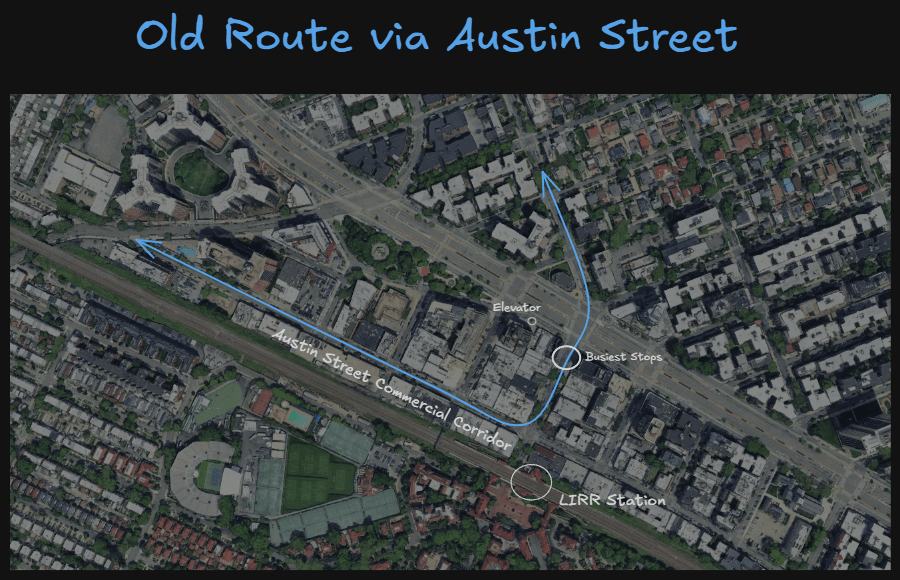
Before June 29, 2025, the Q23 came north up Yellowstone Blvd and turned right on Austin Street. It then followed Austin Street until 71st Avenue, turned left, then continued up through 108th Street. The busiest stops were at 71st Avenue and Queens Boulevard, by the subway.
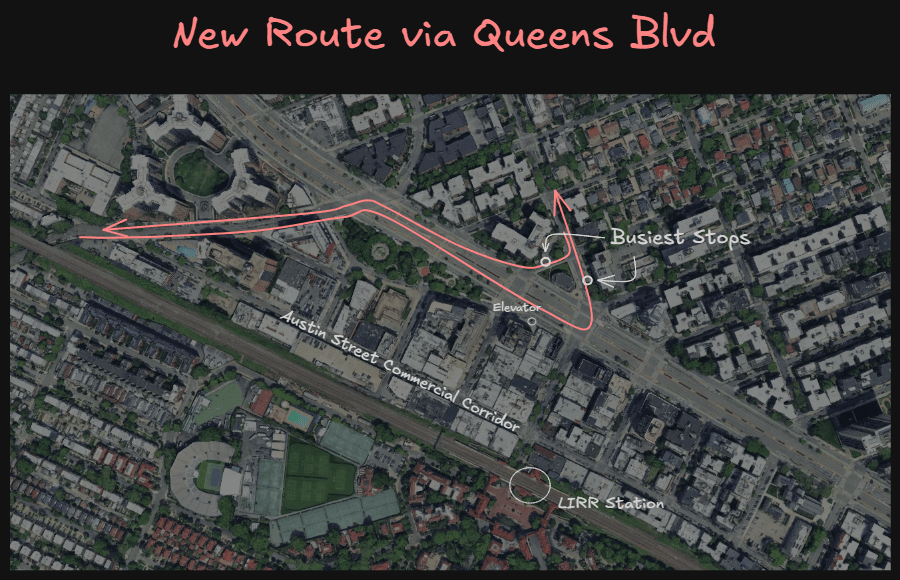
On June 29, 2025, the MTA implemented the first phase of its redesign of the Queens bus map. This redesign included a big change to the Q23 bus around Austin Street and Queens Boulevard: in short, it would no longer run down Austin Street.
The MTA didn’t make this change arbitrarily; Austin Street traffic has been notorious for many decades, and it was a major bottleneck for the Q23.
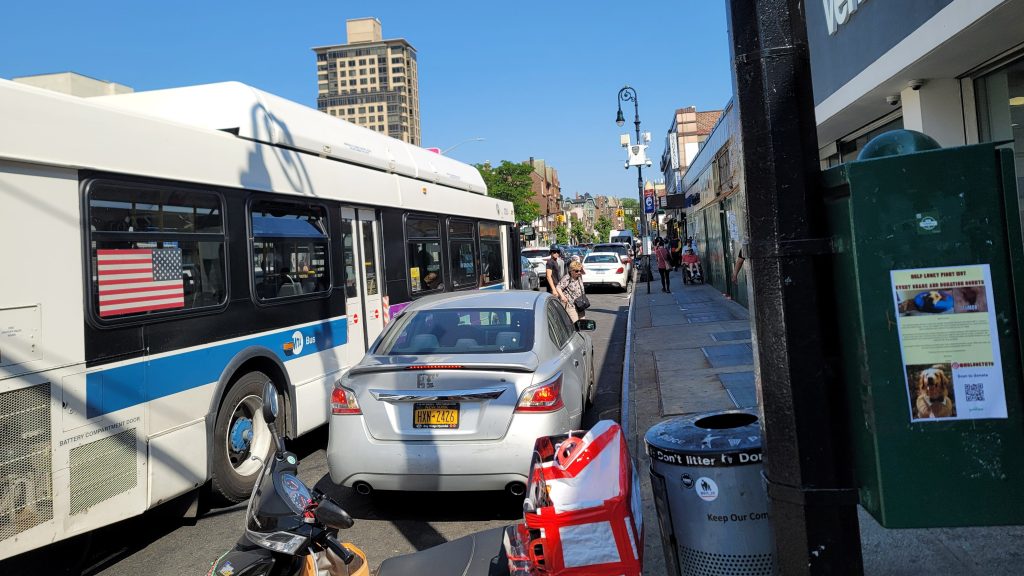
Austin Street, as well as Corona Plaza at Roosevelt Avenue, made the Q23 so slow and unreliable that it was named the Slowest Bus in Queens in 2022. Something needed to be done, and the Queens bus network redesign provided the opportunity to do so.
As a rule of thumb, however, if your buses are getting stuck in traffic, move the traffic, not the bus.
That all said, the MTA does not control the streets, so they can’t move the traffic; only Mayor Mamdani and the Department of Transportation can. This meant that after years of complaints from local residents, the MTA was left with the only solution they could offer: moving the bus.
The idea to move the bus to Queens Boulevard didn’t come out of nowhere; many community members had asked for it because the Q23 already used that route on concert days at Forest Hills Stadium, when the city closes 71st Avenue to traffic between Austin Street and Queens Boulevard. And after decades of inaction from DOT, people wanted something, anything, to change. But this change has had significant drawbacks; drawbacks that could be ignored during the concerts, but not when it is 24/7.
The new Q23 has a lot of downsides
The main selling point of the route change was that it would be faster. And if a pure improvement of speed was the goal (the route change did increase the bus speed by an average of 0.7 mph), then mission accomplished. But there were also many unexpected negatives that more than cancel out the measly increase in speed:
Worse connections to other transit
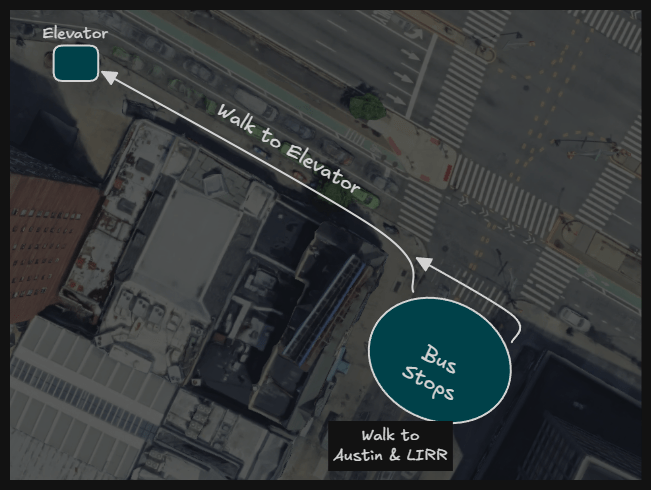
The most obvious change was the moving of the bus stops; more specifically, the “central bus stops” where most people get on and off the bus. Before the redesign, the central bus stops were on 71st Ave near Queens Blvd, on the south side. These stops, being on the south side, provided many advantages, such as easy access to the Forest Hills-71st Ave subway station elevator and quick access to the Austin Street shopping district and the LIRR station.
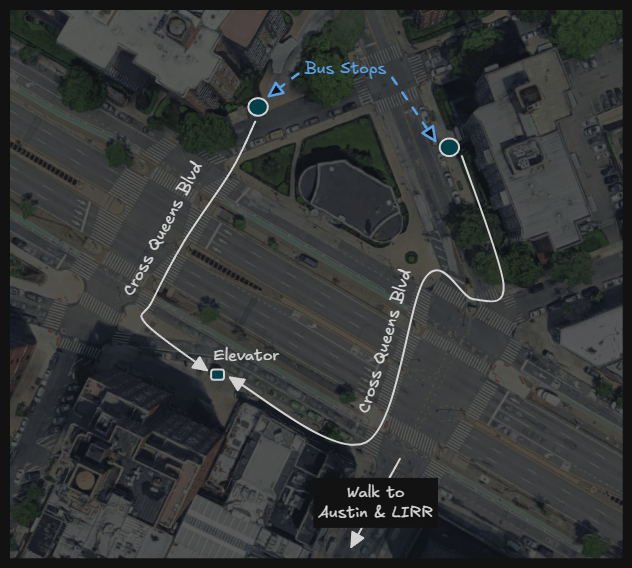
After the redesign, these stops are now on the north side, with the northbound one on 108th and the southbound one on 70th Rd. This change now requires bus riders to cross Queens Blvd to access the Forest Hills-71st Ave subway station elevator, Austin Street, and the LIRR station. And since senior citizens and disabled New Yorkers disproportionately use buses in NYC due to how inaccessible most subway stations are, this is a big issue for our neighborhood, which has a disproportionate share of residents over 65.
Lower-quality bus stops
The second big change was the quality of the bus stops. While the Q23 had several unsheltered stops along Austin Street on narrow sidewalks, the busiest stops at 71st Avenue and Queens Boulevard had large sidewalks and sheltered bus stops on both sides of the street.
After the redesign, the new “main” bus stops are on 108th St between Queens Blvd and 70th Rd (northbound) and on 70th Rd between Queens Blvd and 108th St. Not only are the two stops on different blocks (which can lead to confusion), but they are on way narrower sidewalks!
As a result of this crowding right next to residential buildings on very narrow sidewalks, residents of those buildings have filed complaints with the local community board.
Move the bus back to Austin Street, and make it a busway!
It is clear that the changes led to a drop in bus riders’ quality of life, with the disabled and seniors most affected, all for a pretty insignificant speed increase. But we also can’t just move the bus back to Austin Street and go back to the way things were.
But there is a way to bring the Q23 back to Austin Street, make it faster, and improve Austin Street overall: a busway!
Neighbors for A Safer Austin Street, a local street safety group I helped found, has advocated for a safer, better Austin Street for many years. One proposal we came up with years before the Queens Redesign was implemented called for a busway on Austin Street and general pedestrian improvements around the area. In 2023, Queens Community Board 6’s transportation committee and local City Council Member Lynn Schulman followed our group’s lead and requested a pedestrian safety study of Austin Street, which DOT has failed to provide.
With Mayor Mamdani’s promise of fast buses and streets that are “the envy of the world”, now is the time for DOT to come to the community with a plan for Austin Street that works for bus riders and pedestrians.

Read More:
Streetsblog has migrated to a new comment system. New commenters can register directly in the comments section of any article. Returning commenters: your previous comments and display name have been preserved, but you'll need to reclaim your account by clicking "Forgot your password?" on the sign-in form, entering your email, and following the verification link to set a new password — this is required because passwords could not be carried over during the migration. For questions, contact tips@streetsblog.org.