The Dark Web: The City Can’t Control Online Sales Of Illegal E-Scooters And E-Motos
It’s an online bizarre.
City law enforcement officials have made strides towards stopping the sale of illegal electric scooters and bike-style e-motos from brick-and-mortar locations, but online sales remain a Wild West where anyone can buy anything — and officials offer no clear path to addressing the challenge of retailers who sell the kind of fast, heavy devices that killed two men on the Queensboro Bridge last month.
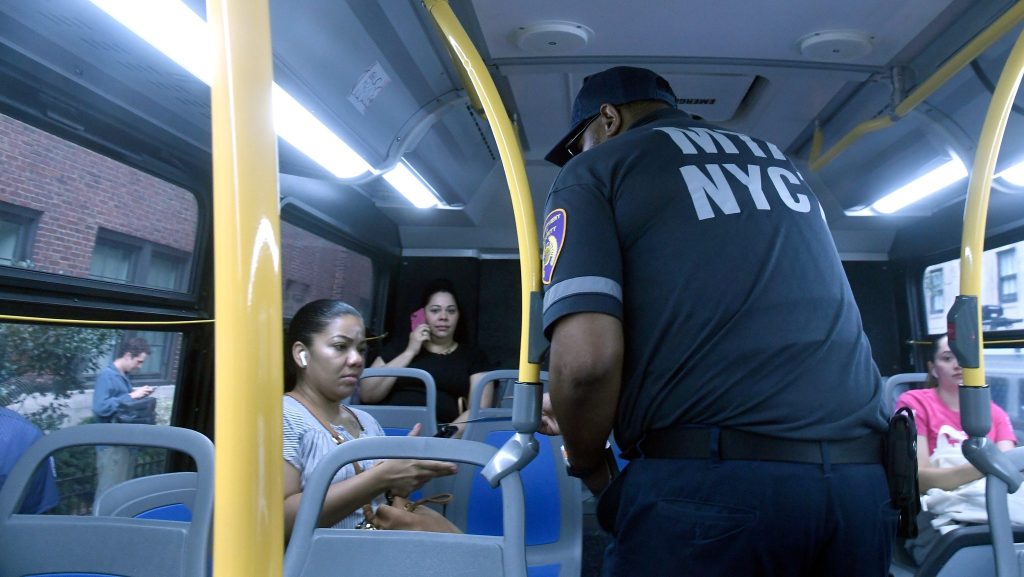
In January, after Mayor Mamdani took office, the NYPD and the Department of Transportation identified 74 stores that sold illegal electric two-wheeled vehicles, according to a city source. The agencies did outreach and, by April, ultimately needed to write just six criminal summonses for retail violations, an NYPD spokesperson said.
Cops found a “high level of retailer compliance,” after its “enforcement,” the spokesperson said, declining to respond to follow-up questions seeking to determine the types of violations that were issued.
Yet these illegal devices persist because of online sales, which no city agency is monitoring. The NYPD claimed it is focusing on “addressing online sales of non-compliant devices through coordination with other city agencies and the Mayor’s Office,” but the agency gave no definition of “addressing” or “coordination.” And City Hall declined to comment.
The good news
Streetsblog visited two electric scooter retailers in the city, INOKIM, which only sells its own brand of scooters, and NYC PEV, which sells other brands at its two locations.
It seems that the city’s brick-and-mortar outreach is working. Neither stores sell any scooters that can exceed 20 miles per hour. A manager at NYC PEV said the shop previously sold illegal scooters, but now only handles repairs for customers who had bought the illicit wheels.
The Department of Consumer and Worker Protection usually handles “micromobility device store” inspections and has continued its enforcement even as the NYPD conducts separate sweeps. So far this year, DCWP made 107 unique visits and issued 29 violations, according to the agency. The department typically checks for compliance with battery safety standards, charging practices, and device compliance, so it is unclear if any of those 29 violations stemmed from the sale of illegal devices or just battery issues.
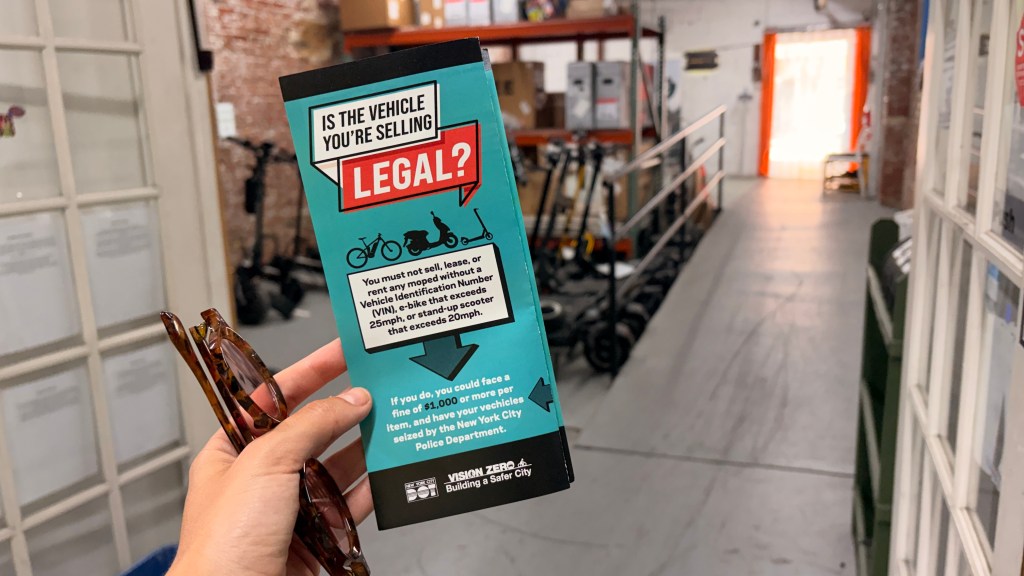
NYC PEV used to sell faster, heavier scooters. But the Department of Consumer and Worker Protection came by about a year ago and told the company that it would be fined $1,000 per non-compliant scooter. Then the NYPD visited the shop on E. 25th Street between First and Second avenues and dropped off informational pamphlets about what was and wasn’t legal to sell around a month ago, the manager said.
The bad news
There are cracks in the city’s enforcement.
A DCWP spokesperson said that the NYPD is no longer participating in joint inspections and has not asked the agency for any referrals of shops that are not complying.
And, of course, online sales flourish.
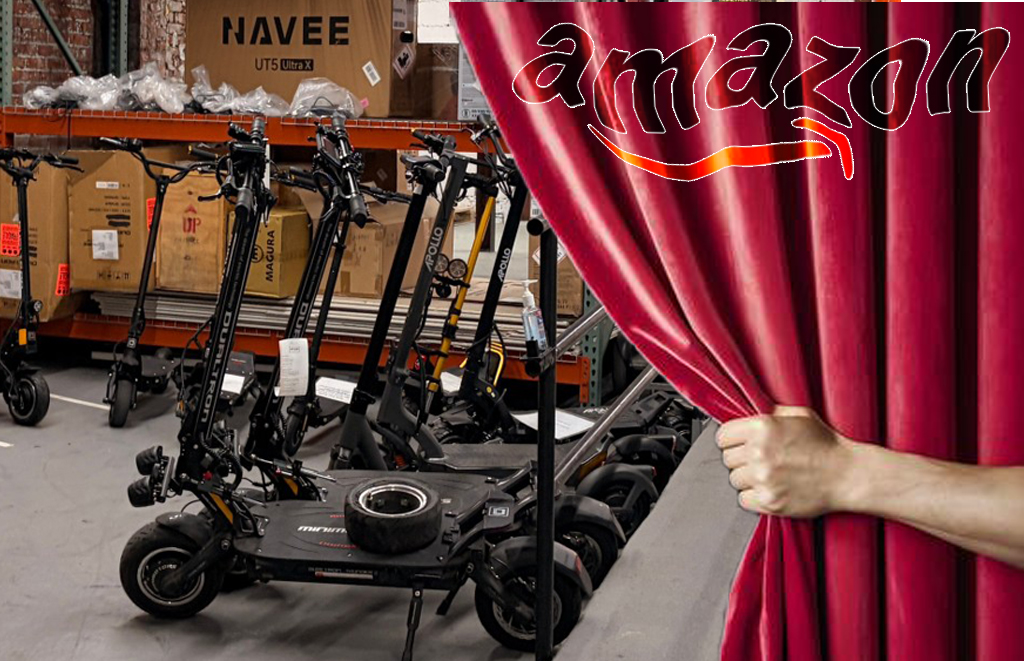
“I can’t stop people from going online. Even on Amazon you can buy these, and they face no consequences,” said NYC PEV manager, Raphael Brandt. On the NYC PEV website, the company calls itself the “official distributor” of Dualtron Electric Scooters. That company’s website advertises its scooters as being able to reach speeds of up to 68 miles per hour, but the NYC PEV website says the scooters are sold with speed limiters that keep them locked at 15 miles per hour in New York City.
“Our electric scooters are limited to 15 mph by a speed limiting wire to comply with DOT regulations and insurance requirements,” NYC PEV says on its website. “Tampering with the speed limiting wire is discouraged and may be unlawful.”
If New York wants to rein in online sales, it needs to look west.
In California, Attorney General Rob Bonta warned online retailers about selling non-street-legal electric two-wheelers with a stern consumer alert on April 14 that clarified in plain language that any retailer selling an electric bike that exceeds the state limit is not legal. The memo also warned consumers about purchasing after-market modification kits to alter otherwise legal e-bikes and scooters.
“Sometimes, what looks like an e-bike or is marketed as an e-bike is not a bike at all,” Bonta said in a press release. “With the popularity of e-bikes booming, I highly encourage manufacturers, retailers, and especially parents to review the consumer alert today and ensure they and their kids are complying with California law.”
In May, Amazon took down listings for illegal e-bikes in California.
New Jersey took a different approach, albeit regarding the same issue of parents unwittingly buying children illegal e-bikes. The Garden State passed the most restrictive e-bike law in the country in January, requiring a license and registration for most legal e-bikes, instead of addressing the problem of devices that are already illegal.
In New York, some legislators are proposing similar legislation at both the state and city level. But adding more restrictions to legal e-bikes does not address the proliferation of e-scooters and e-motos that are already illegal and causing injuries.
Currently on Amazon, a New York City resident can order many different e-motos or e-scooters that exceed the city’s 15-mile-per-hour speed limit on e-bikes and stand-up scooters.
One e-moto vehicle by Sutyztsis has four models of varying speeds and power. The 1,500-watt, and 1,000-watt models can be ordered in New York City, but the 3,000-watt model is blocked “due to local laws or Amazon policy,” the listing says.
But actually, all of those models are illegal in New York City because e-bikes can’t have a motor stronger than 750 watts.
Illegal vehicles are available on countless other sites.
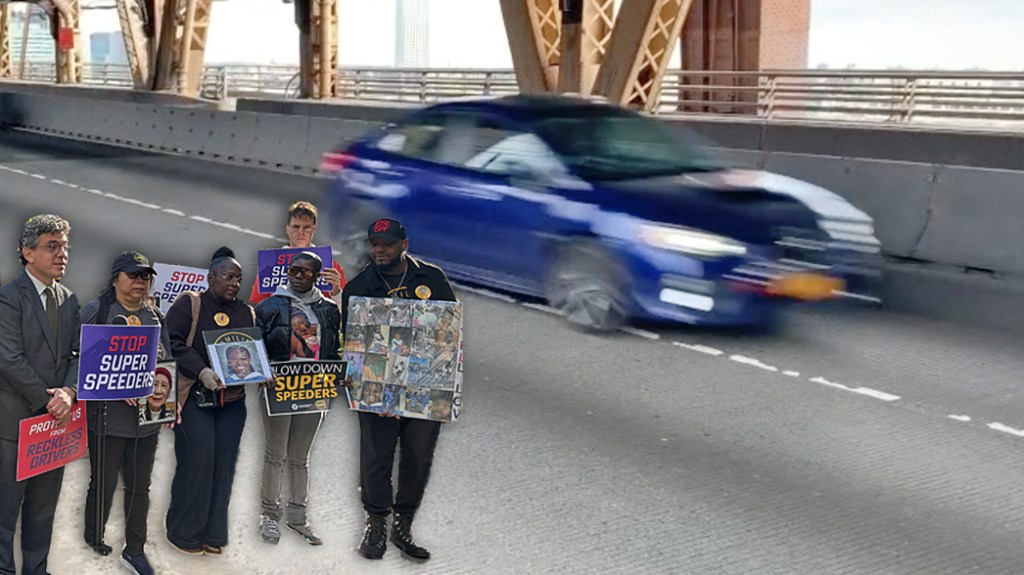
A recent deadly crash on the Queensboro Bridge bike path highlighted the need to get these illegal vehicles under control. On May 28, cyclist Dmytro Stechenko was killed when the rider of an illegal Teverun Blade GT II electric scooter with a top speed of 53 miles per hour crashed into him head on. The scooter rider, Frances Delvalle, also died. The scooter can still be ordered online, although that exact model is sold out.
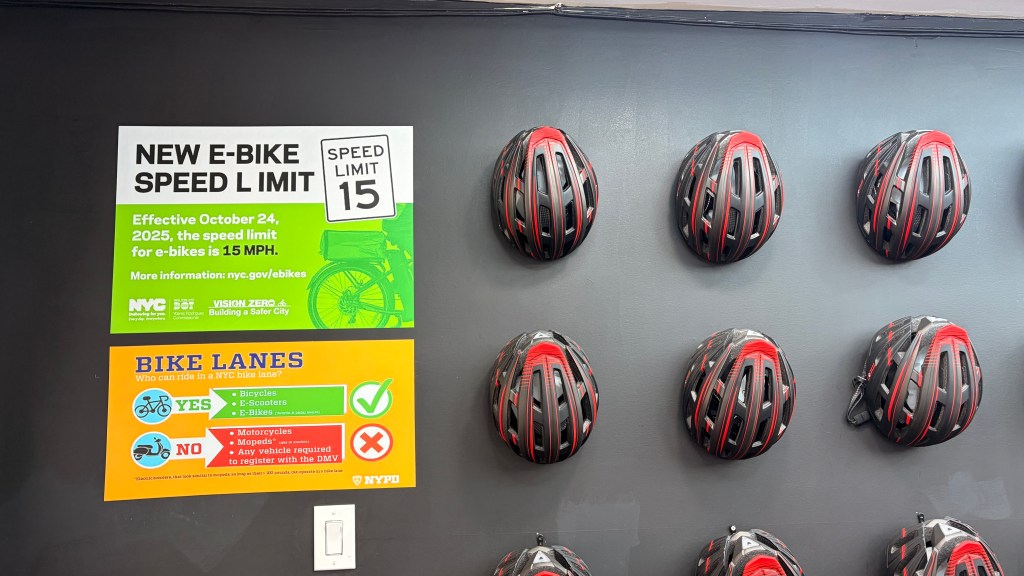
At the other brick-and-mortar scooter store, Inokim, the walls are lined with safety notices that informed customers about the 15-mile-per-hour speed limit for e-bikes and e-scooters, which went into effect at the end of last year. The company’s owner, Max Beck, told Streetsblog that safety was the first priority and that the company does not sell any scooters in New York that are capable of going over 20 miles per hour. His website advertises some scooters as having faster speeds, but only models with a speed-limiter are shipped within New York City, he said.
Beck was heartbroken over the recent Queensboro Bridge Crash.
“I’m very against those big scooters with fast motors and fast speeds,” Beck said. “I see what’s going on. I saw what happened with the accident, with a bicycle, and my heart is breaking because I’m also Ukrainian, and the guy was Ukrainian.”
Stechenko’s best friend, Alex Pawlowski, who was with him the day of the deadly crash, is calling on the city to do more to rein in these illegal devices. Pawlowski wants the city to start testing the speed of scooters and e-bikes on the street to figure out which are compliant and confiscate the illegal vehicles.
“We have to start enforcing [the regulations],” Pawlowski told Streetsblog last week. “Something like in the EU where they take the scooters and they test the top speed. Something like that needs to happen. New York is a busy city, people are rushing everywhere so probably that somewhat partially explains it, but I think it’s unreasonable to expect culture to change. That’s why we don’t live in a utopia — you have to make bad behaviors difficult to do.”

Read More:
Streetsblog has migrated to a new comment system. New commenters can register directly in the comments section of any article. Returning commenters: your previous comments and display name have been preserved, but you'll need to reclaim your account by clicking "Forgot your password?" on the sign-in form, entering your email, and following the verification link to set a new password — this is required because passwords could not be carried over during the migration. For questions, contact tips@streetsblog.org.