Opinion: Common Ground For Street Safety
Editor’s note: The following is an opinion piece that seeks to find common ground on basic street safety measures with all New Yorkers of good faith. The Streetsblog Editorial Board is printing it simply to share a wide range of views, even those with which we disagree. We remain unconvinced that common ground exists, given how our reporters and the livable streets movement leaders we cover have been treated by expletive-hurling anti-bike activists over the last few months. But some cyclists still hold out hope.
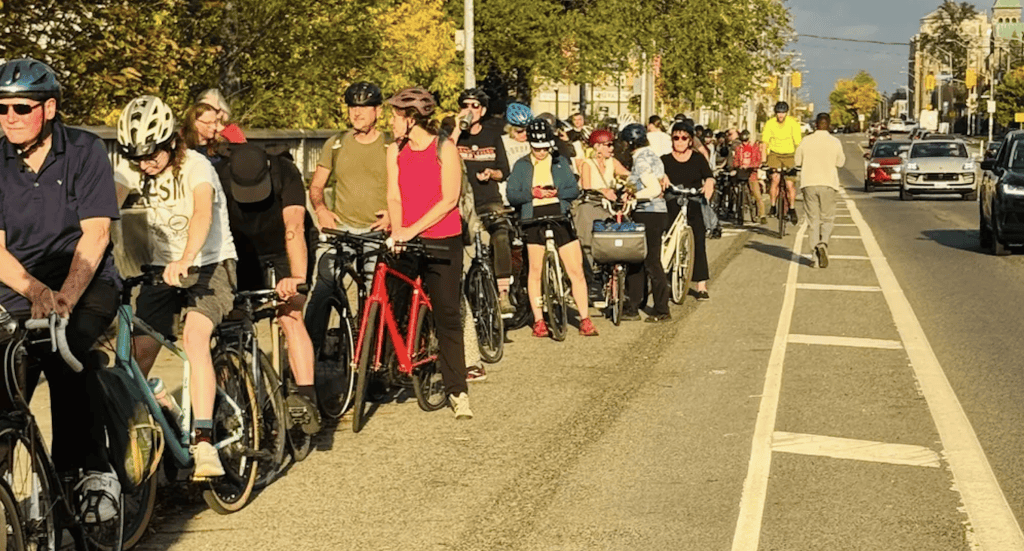
The war between cyclists in the safe streets movement and anti-bike advocates who also claim to champion safety helps nobody. We need to seize the areas where all of us have common ground.
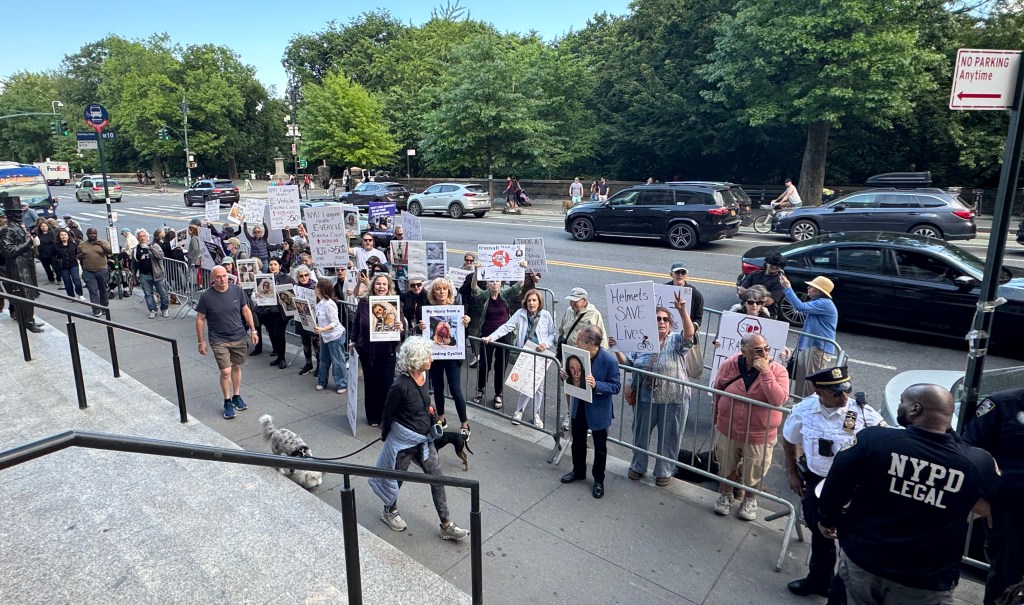
I recognize that this assertion will be jarring for some in the street safety movement, especially given the way some anti-bike activists behaved over the last few days. On Monday night, attendees at Transportation Alternatives’ Streets for the People gala were heckled — and stalked — by people claiming to support street safety.
TA Executive Director Ben Furnas was called a “murderer” for his and his organization’s decades of work in making our streets safer. TA’s successes in reducing injuries and fatalities on our roads through street safety redesigns and boosting transit are the opposite of what you could call “murderous.” The group and its offshoot, Families for Safe Streets, have literally saved thousands of lives, advocating tirelessly for policies that have driven street deaths to all-time lows in New York.
The next night, some of the same anti-bike activists shouted obscenities including at a Streetsblog reporter as they opposed a bike lane project on W. 72nd Street. (See MYTHS BUSTED: Five Lies From This Week’s Community Board Meetings for David Meyer’s critique in Streetsblog of arguments bike lane opponents made at the CB7 meeting.)
But two recent tragedies reinforce that there is still much work to be done, and plenty of room for the anti-bike crowd to join forces with the safe streets movement to achieve street safety wins that all of us support.
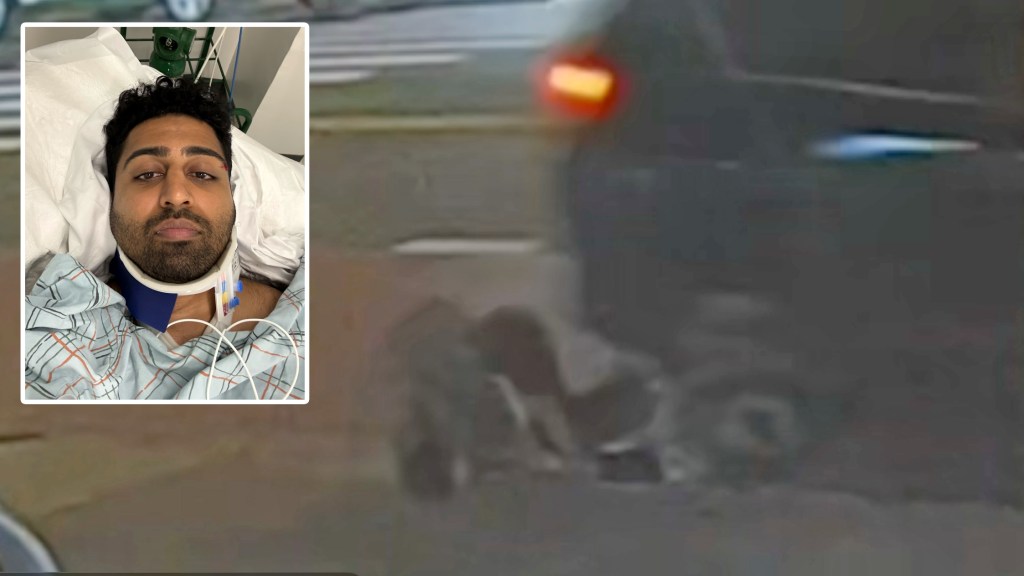
Several weeks ago, just blocks from my apartment, a drunk driver going an estimated 80 miles per hour on Amsterdam Avenue killed two pedestrians on the sidewalk. And last month, someone riding an illegal scooter with a top speed over 50 miles per hour collided with a cyclist on the Queensboro Bridge, killing both.
Clearly there is an urgent need for everyone who professes interest in safe streets to stop fighting. The pro-cyclist part of the safe streets movement — which comprises members of Transportation Alternatives, readers of Streetsblog and every day cyclists — and the anti-e-bike E-Vehicle Safety Alliance can be allies on areas of common ground.
These include advocating for a crackdown on illegal vehicles (as Streetsblog has long done), calling for sustained year-round enforcement of ghost and obscured plates, working to make delivery platforms liable for deliveristas, calling for NYPD to focus efforts on street users most likely to kill, and design changes to make our streets safer.
Unfortunately, the two groups too often are in an Animal Farm-esque battle (“four wheels good, two wheels bad” and vice versa) to our mutual detriment.
Everyone points fingers
In my three-plus decades of caring about safe streets in the city, I have observed two cardinal rules: 1) nobody — not pedestrians, cyclists, e-bike riders, motorists, police, dog owners, etc. — follows laws nor thinks they should; 2) everyone thinks it is an absolute disgrace that nobody else follows the laws and that there isn’t more enforcement against those people.
The cyclist/safe streets movement needs to accept that many in the anti e-bike community are vulnerable pedestrians terrified of the explosion of motorized two-wheeled vehicles that are causing harm on our streets, sidewalks, and bike lanes. Last week’s Queensboro Bridge tragedy was a horrible reminder of this.
When we in the safe-streets movement speak out that car drivers are a much greater threat, or that the many vehicles that people call “e-bikes” are already illegal, or that e-bikes are beneficial because they help reduce air pollution and congestion, it does nothing to alleviate their fear.
At the same time, the anti e-bike community could learn valuable lessons from the 50-plus years of experience of the safe streets movement, especially regarding what does and doesn’t work in our city.
Existing laws aren’t working
We already have countless laws regulating both cars and other vehicles, but unfortunately enforcement falls far short and these laws are often ignored, with rogue operators unimpeded as they endanger us.
I have recently conducted research on enforcement of recidivist speeders. After analyzing reams of public data, I concluded that enforcement works reasonably well for generally law-abiding car drivers, but has very little impact on repeat offenders most likely to endanger New Yorkers. For example, 86 percent of drivers who get one-to-three speed-camera violations don’t speed again. However, the 1 percent of extreme recidivists with 16 or more violations are undeterred by automatic enforcement, keep speeding, and many don’t even pay the fines.
The Department of Transportation has found that they are far more likely to seriously injure or kill. But these vehicles are less likely to get ticketed by NYPD. In fact, as J.K. Trotter recently wrote in Streetsblog, one of the worst offenders appears to be an active-duty NYPD officer whose agency we count on to enforce the laws he was apparently breaking. (Interestingly, while his pickup truck received 187 camera-issued tickets in 2025, he did not get a single NYPD-issued ticket last year.)
License plates are not a panacea
EVSA has focused much of its advocacy on a proposal to require license plates on all e-bikes. And sure, this call for accountability or trackability or simply making e-bike ownership more inconvenient feels like it will make roadways safer. But let’s have no illusions: It will have little if any impact, especially on the worst offenders.
For instance, at a recent CB7 meeting, one woman said she saw an e-bike rider endangering elderly people who were getting onto a bus. “If he had been licensed, I would at least have been able to get a license plate and maybe report him,” she said.
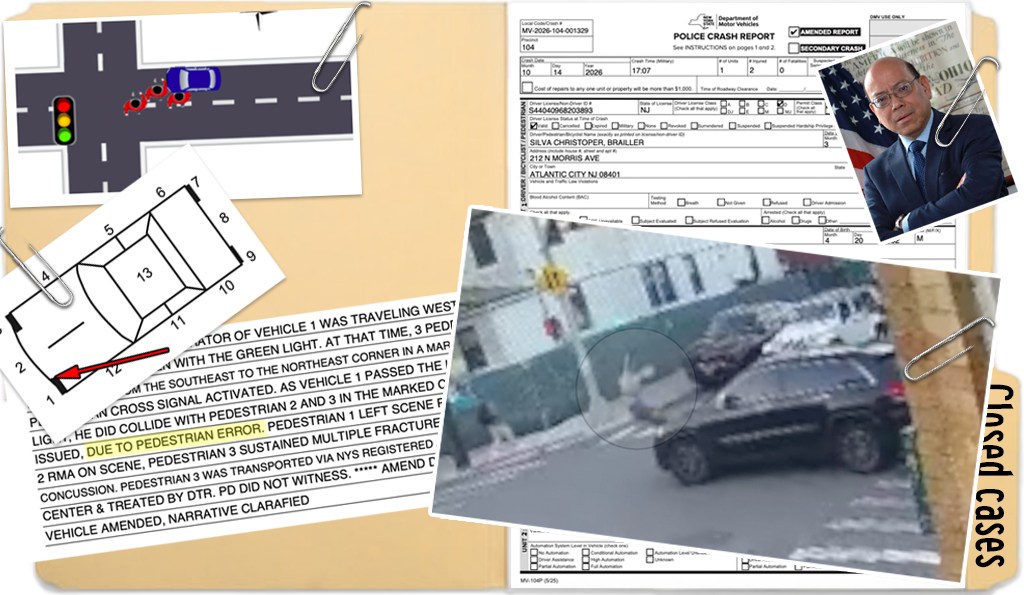
The very next morning, I experienced first-hand the false optimism of her testimony: I was crossing W. 104th Street with a “Walk” signal when a woman driving an SUV ran the red light.
I captured her plate — MBZ5165 – but to whom, exactly, was I supposed to report this? In reality, there is no way to report licensed vehicles to anyone in law enforcement. And there are countless stories of people who alert a police officer after an incident only to be told by the cop that nothing can be done because he didn’t witness the incident.
NYPD enforcement is extremely limited for cars, motorcycles, mopeds, and illegal motorized bikes and scooters. It would require a massive, unaffordable increase in the police force to ensure that every legal e-bike has license plates. And, of course, illegal vehicles such as the one in the Queensboro Bridge tragedy can’t be licensed, but should be a priority for enforcement (though it would require a massive increase in police).
Automated enforcement also has severe limits. License plates would in theory enable camera enforcement of e-bikes. Yet speed cameras are greatly restricted under state law and cameras can only issue tickets if the scofflaw is exceeding the speed limit by 11 miles per hour or more. This means an e-bike rider would have to be going 36 miles per hour to get a ticket — a speed that already far exceeds what legal e-bikes are able to reach. And deploying a new set of DOT cameras to patrol e-bikes on sidewalks would be a massive expense.
Plus, DOT cameras can’t read fake, obstructed, or missing plates — and much publicized efforts to crack down on “ghost plates” on cars have gotten a miniscule fraction of them off the road. Owners of legal motorcycles and mopeds often obstruct their plates with tape or by bending them, yet according to public data, very few are currently ticketed.
Some might argue that we should still pass laws, even if we know people will ignore them. But licensure as proposed by EVSA, and CB7’s e-bike resolution, would cost the state tens of millions of dollars and likely have no impact on safety.
Areas of common ground
I am not saying that rogue e-bike riders aren’t an issue. But there are many areas of lower-hanging fruit – solutions that actually make our streets safer – on which the anti e-bike and the cyclist/safe streets communities could join forces. Many crash victims who support EVSA were injured by vehicles that are already illegal. And Priscilla Loke, in whose memory the proposed e-bikes registration proposal is named, was killed by someone riding a Citi Bike, which already bears a registration number. (The killer remained on the scene and was questioned by police, who released him, so it’s unclear how the so-called Priscilla’s Law would have made any difference in this case.)
As the Queensboro Bridge tragedy (and the resulting Streetsblog article) made clear, Mayor Mamdani must crack down on illegal vehicles by increasing enforcement and banning their sale. The city has simply failed for far too long to stop the widespread use of these high-speed vehicles. Prioritizing getting all illegal vehicles off our roads is a shared objective for the cyclist and anti e-bike communities.
We should also collaborate to push DOT to require Lyft to require more visible ID on electric Citi Bikes, and for Citi Bike to implement a reporting and discipline system for the most reckless riders, as the company Revel had done. New York City should also regulate JOCO bikes, which currently do not have any visible ID nor meaningful discipline system for errant riders (though the company’s bikes are capped at 18 miles per hour). Forcing these corporations to regulate their users would impact a large percentage of e-bikes on our streets without costing the state tens of millions of dollars.
Even on the issue of delivery workers, there is potential common ground. The anti-e-bike movement raises concerns about deliveristas, but it is unrealistic to expect that undocumented, underpaid deliveristas will go to a government office and pay hundreds of dollars to license their bikes. But as I learned during my brief experience delivering for DoorDash, there should be consensus that the delivery platforms must be held liable. This will require classifying deliveristas as employees rather than independent contractors who are forced to absolve the platforms from any responsibility.
The very limited NYPD enforcement we have should be focused on road users most likely to kill. Yet to date in 2026, my local precinct, in which the drunk driving tragedy recently occurred, has issued 60 moving violations to riders of traditional bicycles, but has made only eight DWI arrests!
To the extent that police resources are devoted to bikes and e-bikes at all, certainly we should all agree that the cops should target reckless riders on sidewalks, which should be a safe haven for New Yorkers and especially the elderly, rather than issuing tickets for cyclists rolling slowly through red lights when no pedestrians are present because they are easier to catch.
The cyclist and EVSA communities should also join together to advocate for road design changes that make our streets safer for everyone, and especially vulnerable pedestrians. For example, daylighting intersections enables pedestrians to better see all oncoming traffic, whether it’s a truck, car, motorcycle, moped, e-bike, or bicycle. And lowering the speed limit on city streets would apply not only to cars, but also to motorcycles, mopeds, e-bikes, and bicycles. The fact that EVSA hasn’t supported these efforts to date and often opposes any street safety changes that remove parking spots raises the question of whether the group’s members actually stand for safe streets, or rather are just anti-bike and e-bike. And some members of EVSA oppose lowering the speed limit for cars, even as they have embraced lowering the speed limit for bikes.
Nonetheless, there are plenty of areas of common ground on which we can work together to save the lives of pedestrians and cyclists.

Read More:
Streetsblog has migrated to a new comment system. New commenters can register directly in the comments section of any article. Returning commenters: your previous comments and display name have been preserved, but you'll need to reclaim your account by clicking "Forgot your password?" on the sign-in form, entering your email, and following the verification link to set a new password — this is required because passwords could not be carried over during the migration. For questions, contact tips@streetsblog.org.