I’ve Fought City Hall for Safer Streets. Now I’ll Fight Washington.
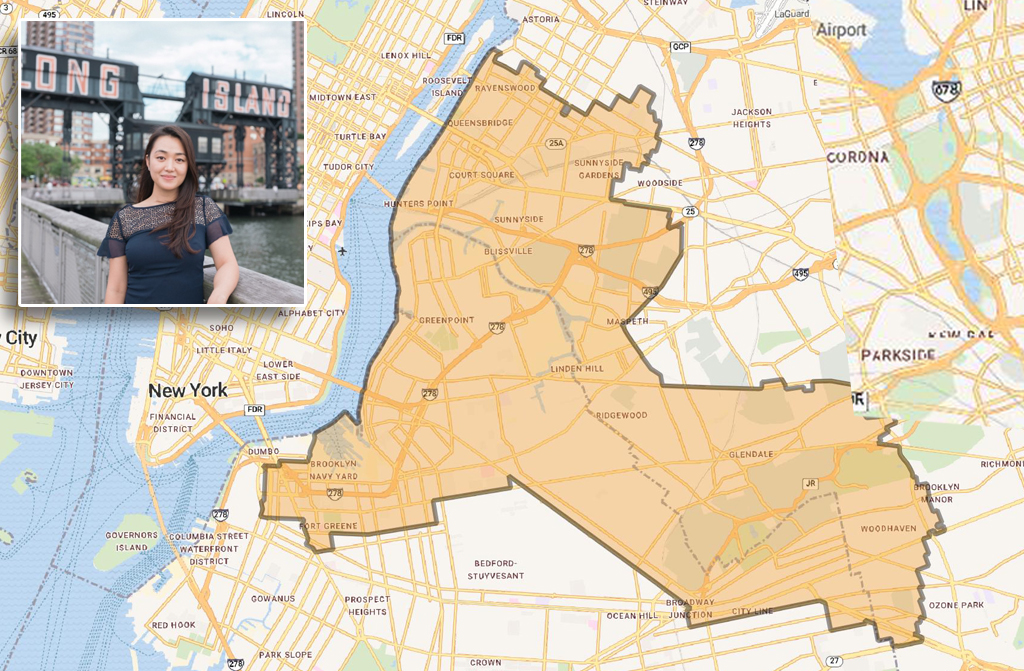
Editor’s note: Streetsblog recently published the federal transit agendas of Assembly Member Claire Valdez and Brooklyn Borough President Antonio Reynoso, both of whom hope to replace U.S. Rep. Nydia Velázquez in New York’s Seventh Congressional District. Today, we’re publishing a plan from a third contender: City Council Member Julie Won, who represents several neighborhoods in western Queens and has pursued a significant number of livable streets initiatives.
Just after dismissal on the last day of school, Jael Zhinin was walking her younger sister home when a turning truck struck them both. The older girl was killed. The younger sustained injuries that will follow her the rest of her life.
This story is not an outlier. In NY-7, nearly 5,000 people were injured and 20 were killed in traffic violence in the past twelve months alone. Four children have died at intersections in my City Council district since 2023. Our government — from Washington to New York City — created the conditions that caused these deaths.
I have spent four years fighting for safer streets in this district. In Congress, I will restore Safe Streets funding the Trump administration has gutted, fight to hold transit investment gains set to expire this year, and force the federal government to design streets that won’t kill us.
‘Accidents’ are the result of national car-centered policy decisions
The federal government has spent decades funding a transportation system designed around cars. 80 percent of federal surface transportation funding goes to highways, while the crumbs go to public transportation. In a city where 66 percent of NY-7 commuters get to work by bus or subway, the majority of our public funds are spent on car infrastructure that most of us never use.
The inequity goes beyond just funding. Federal design guidelines — the rulebook local governments must follow to receive federal dollars — were written with a central focus on cars. They were not written through the lens of a pedestrian crossing Queens Boulevard, or a toddler stepping off a curb into a sightline blocked by a parked SUV, or the senior in a wheelchair who cannot run back to safety when a driver cannot see them. Those guidelines are still used as the bible of the roads, meaning cities that want to build safer streets often have to fight Washington for permission to do it.
Not to mention, the vehicles themselves are also a federal policy failure. In the past two decades, cars and trucks have gotten dramatically larger and taller. A child who might have been visible next to a sedan twenty years ago is hidden behind the hood of today’s average pickup truck. Europe has required vehicles to meet pedestrian safety standards for years. The National Highway Traffic Safety Administration has the authority to set those standards here, but has deliberately chosen not to.
Traffic safety is personal – for me, my children, and my aging parents
In 2020 I was hit by a car while biking back from Brooklyn to Queens. If it weren’t for the delivery workers who stopped to help me up onto the curb, I could have been run over by another passing vehicle while I was still on the ground. My mom was hit by a reckless driver while in a crosswalk, which left her with medical debt because the driver was underinsured. My mother-in-law was in a coma for over three weeks and almost passed away from a car crash. Now, as a mother, I teach my children to be extra careful when crossing the street to make sure they never experience what many of their family members have in traffic violence.
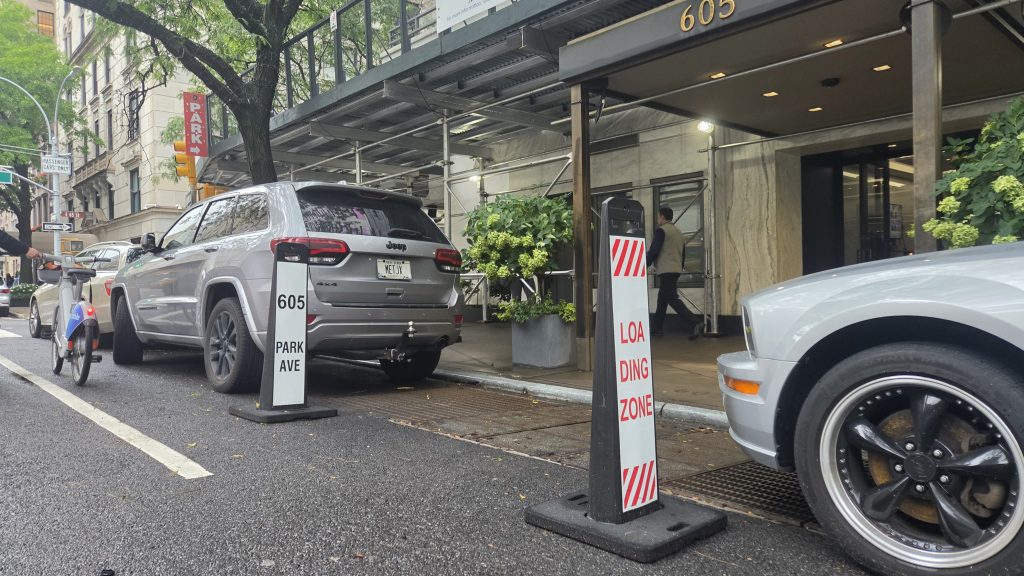
After four children in my district were killed at intersections blocked by parked vehicles, I introduced legislation to require universal daylighting across New York City: clearing the space near crosswalks so drivers, pedestrians, and cyclists can actually see each other. Daylighting is already law in 43 states, including New York State. New York City should not be exempt from complying with the existing daylighting law. The Federal Highway Administration’s own research finds daylighting can reduce crashes by up to 30 percent.
Hoboken has had zero traffic deaths for more than eight years, credited in large part to universal daylighting. My bill last session had 41 co-sponsors, support from 90 elected officials, resolutions from 23 community boards, and backing from 164 community organizations. We held the bill when the new mayor took office, believing he would deliver on his campaign promise of universal daylighting. Instead, his DOT adopted the same position as the administration before it. In other words, we’re back to square one — but we will keep fighting until every intersection in this city is safe.
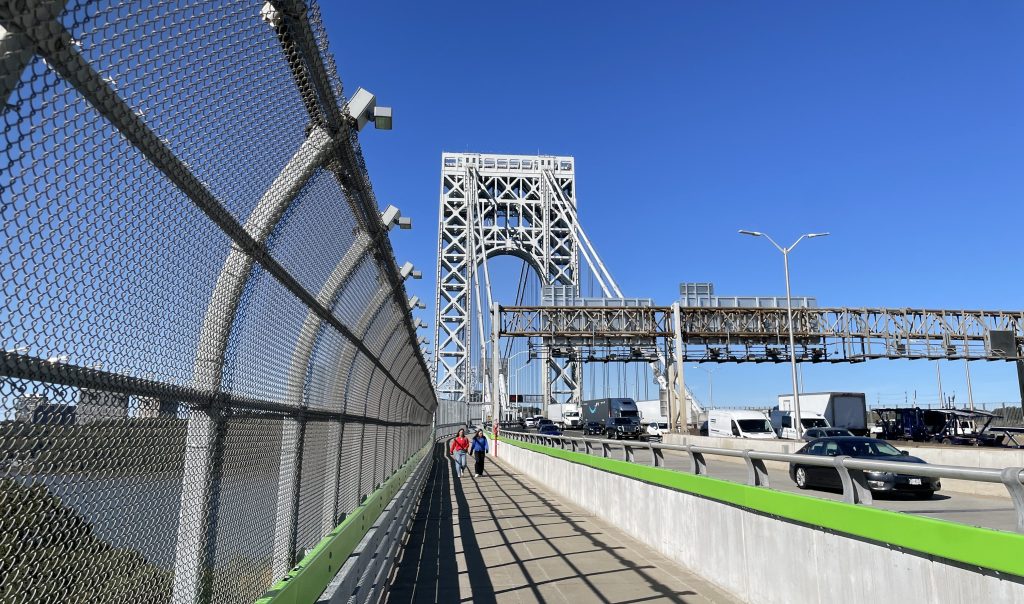
I fought the Adams administration to open a dedicated pedestrian and cyclist roadway on the Queensboro Bridge so that everyone can commute across the bridge safely. I allocated capital funding for the Queens Boulevard bike lane, which reduced traffic fatalities on that corridor by 68 percent as well as the Northern Boulevard bike lane. I negotiated $79 million to relocate a DOT operations yard sitting under the Queensboro Bridge and replace it with a waterfront esplanade and bike path. I secured $97 million to turn parking lots and city yards under that same bridge into over ten acres of public open space.
Now I want to rewrite the federal design guidelines in Congress so that our streets are made for the safety of people, not just vehicles.
Here is what I will do in Congress:
1. Defend and expand Safe Streets for All: The Trump administration has redefined this $5 billion program to exclude projects deemed “hostile to motor vehicles.” The administration has been processing safety grants at roughly 10 percent of the pace of the prior administration. I will fight to restore full SS4A funding, insulate it from executive clawback, and expand it so more communities can redesign dangerous streets now, rather than waiting for federal guidelines to catch up.
2. Fight for a real Surface Transportation Reauthorization: The Infrastructure Investment and Jobs Act expires on Sept. 30, 2026. The IIJA provided a 67 percent increase in transit funding over prior law. I will fight to hold that floor, and to protect the longstanding state flexibility that allows federal highway dollars to be redirected toward transit. Losing it would mean less transit investment in cities like ours for a generation.
3. Require safer vehicles: The federal government sets vehicle safety standards. It has failed to keep pace with the reality that today’s vehicles are increasingly lethal to people outside them. Taller front ends mean lower visibility. Heavier vehicles mean deadlier crashes. These are engineering problems with engineering solutions, and they require federal action because no city or state can regulate vehicle design on its own. I will push the NHTSA to update design standards to keep pedestrian safety in mind .
4. Rewrite federal design guidelines that are forcing cities to build streets for cars by default: Local governments know which intersections are killing people and should not need a federal waiver to fix them as they do today.
For too long, federal transportation policy has been written for people who move through the world in cars. In NY-7, most of us don’t use cars: we ride the subway, we take the bus, we walk, we bike. We deserve a federal government that respects, protects, and enhances these modes as well. I know what it takes to fight bureaucracy for safer streets and win. I am ready to bring that fight to Washington.

Read More:
Streetsblog has migrated to a new comment system. New commenters can register directly in the comments section of any article. Returning commenters: your previous comments and display name have been preserved, but you'll need to reclaim your account by clicking "Forgot your password?" on the sign-in form, entering your email, and following the verification link to set a new password — this is required because passwords could not be carried over during the migration. For questions, contact tips@streetsblog.org.