Two Little Too Late: Mamdani Shifts Private Carting Reforms Toward Safety for Remaining Pair of Contracts
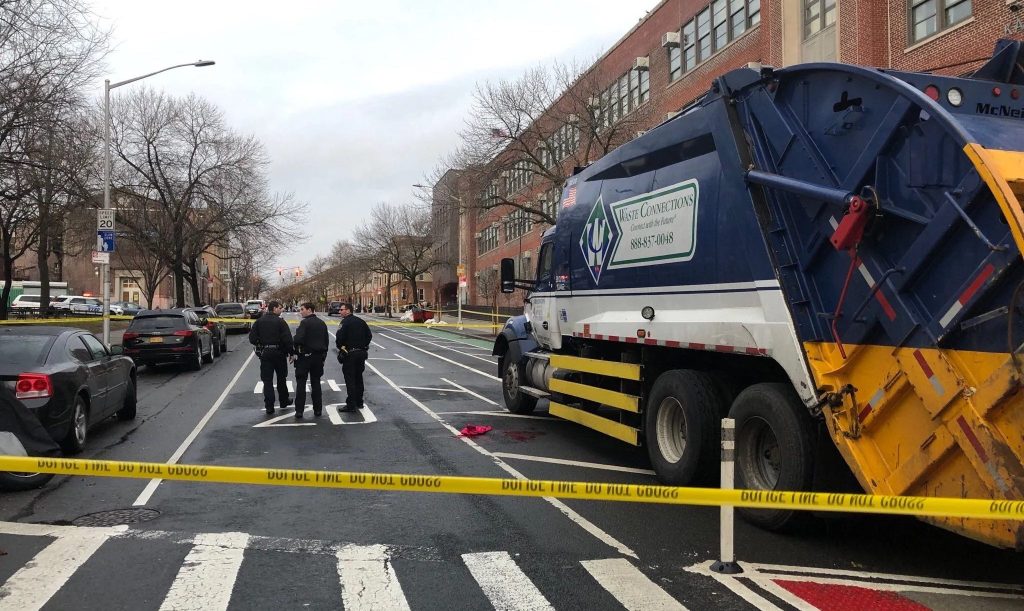
Mayor Mamdani will prioritize safety and mileage when deciding who to award the city’s two remaining commercial waste zone contracts after his predecessor Eric Adams handed out bids to private carters with deadly driving records.
As the Department of Sanitation wraps up long-awaited reforms to divide trash collection from businesses into 20 zones and rein in the chaotic carting industry, officials plan to take a closer look at the driving records of potential contractors and how far they have to travel to their assigned zones — emphasizing factors that prompted the reforms in the first place.
“We’re looking at, specifically, what is your safety record,” DSNY Commissioner Gregory Anderson told Streetsblog. “[We’re also] looking at how close are your garage and proposed transfer station to the zone in question.”
DSNY under Mayor Adams put prices above safety in selecting trash haulers for the 20 commercial waste zones created by reforms passed by the City Council back in 2019.
But under the agency’s latest request for proposals, safety and vehicle miles traveled will now combine to account for 35 percent of the scoring for potential applicants, the largest share, followed by 25 percent for price and 20 percent each for operational capacity and technical proposals. Previously, how much businesses would pay for trash collection occupied the largest share at 40 percent, while safety and vehicle miles were both wrapped into the “capacity” category.
But the new criteria will only apply to two unassigned contracts for zones in Midtown and around the West Village and Soho, after New Jersey-based Filco Carting was sold to New Jersey-based Action Carting in December, prompting DSNY to re-bid its franchises.
The two Manhattan zones already have two assigned contractors, Action Carting and Bronx-based Waste Connections, both of which had awful safety records, according to a comptroller’s report published last year.
Former Comptroller Brad Lander described Action’s safety track record as “egregious” in his office’s report, with the Garden State company racking up nearly 2,000 safety violations, more than any of its competitors, even as it received the largest number of contracts. An Action trucker killed cyclist Neftaly Ramirez in Greenpoint in 2017.
Waste Connections, meanwhile, came in second almost 500 safety violations. A a trucker for Queens-based Royal Waste – which Waste Connections owns – killed a 19-year-old woman earlier this month within its DSNY-assigned Queens West collective zone, although that sector has yet to come online under the phased rollout.
Pressed on the two companies’ records, Anderson waved away their behavior, arguing that since Action and Waste Connections were the two largest operators in the Five Boroughs, it was “not surprising” that they registered the most violations.
The zone program will allow the agency to hold companies accountable for unsafe driving through fines or contract revocations, the DSNY commissioner said.
“That’s the whole point of the commercial waste zones model, is that we can continue to evaluate their performance over time,” Anderson said. “At the end of the day, if a carter is not meeting our standards, we can take their award away.”
Each zone is supposed to have three companies under the seven-year-old law that aimed to reduce truckers criss-crossing the city, which polluted neighborhoods and caused deadly crashes. The author of that legislation said it was about time that the city’s process for assigning carters to zones focused on safety and driving miles.
“Commercial waste zones were always meant to be a safety and sustainability measure, and it’s a shame that these considerations were deprioritized over cost,” said Brooklyn Borough President Antonio Reynoso. “You can’t put a price on a life saved, and I’m glad that DSNY is course correcting under Commissioner Anderson and Mayor Mamdani.”
The agency began implementing zones in late 2024 starting in central Queens, and will roll them out in 10 phases with full completion scheduled for the end of 2027.
The Adams administration picked 18 contractors for the zones more than two years ago, then slow-walked the roll-out while obsessing over keeping prices down for businesses who use the haulers to collect their trash.
Anderson criticized the previous mayor’s pace, but not the focus on cost.
“Look, I’m not going to defend the process that the Adams administration went through to get there, the fact that they — and this was orders from on high to extend the RFP delay, the process, delay implementation — like, I’m not going to defend that kind of action,” he said. “But I think the fact that they saw that pricing could be a real challenge for this program. … I think that was a wise decision at the time.”
Having two contractors in place allowed in the upcoming Manhattan zones them to focus less on price for the remaining third bidder, the trash chief added.
“We were able to de-emphasize price because there’s sort of a baseline price already set in those zones, and so we have a lot less uncertainty about how much do we think carters are going to propose to charge businesses,” Anderson said. “We really want to focus on achieving one of the core priorities of the program, which is to reduce the overall amount of truck traffic that’s generated by the commercial waste collection industry.”
The agency leader declined to say whether they would keep valuing safety and driving miles higher, if they need to find another contractor or when they have to renew the agreements when they expire in 10 years.
“We have a lot to learn between now and then,” he said. “When we think about re-procuring the zones in the future, I think we can certainly take a different approach.”

Read More:
Streetsblog has migrated to a new comment system. New commenters can register directly in the comments section of any article. Returning commenters: your previous comments and display name have been preserved, but you'll need to reclaim your account by clicking "Forgot your password?" on the sign-in form, entering your email, and following the verification link to set a new password — this is required because passwords could not be carried over during the migration. For questions, contact tips@streetsblog.org.