Waymo Means Way Mo’ Cars, According To Uber Docs
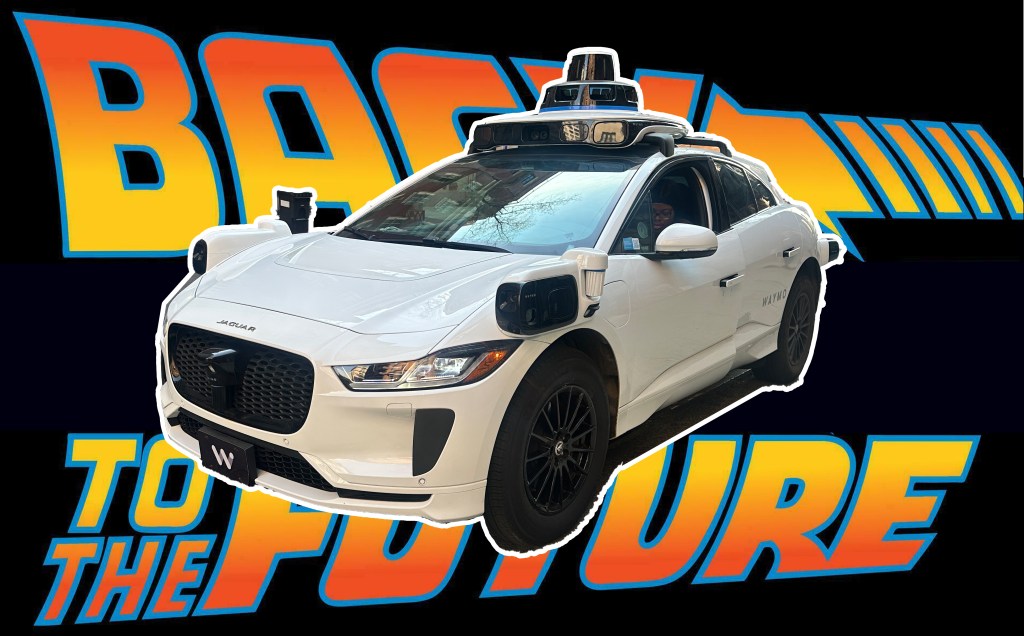
Uber says that it is not worried about Waymo cutting into its business because the self-driving taxi startup is driving a massive expansion in all app taxi use, not just driverless.
During Uber’s last quarterly earnings call, the company told shareholders that the company is still positioned to dominate the market even though Waymo has become the household name of autonomous taxis in the U.S.
The tech-giant’s presentation to shareholders was revealing, however, for those who are looking to understand how a company like Waymo would affect New York City.
“Our network benefits from every incremental unit of supply added in a city. As supply increases, customers find more value because rides become more affordable with faster ETAs,” the Uber-penned docs read. “This fact alone gives us considerable conviction that AVs (as a new form of supply) will expand — not shrink — our total addressable market.”
Between Uber and its competitor Lyft, there are around 80,000 licensed app-based taxis currently in New York City. It’s clear from Uber’s investor materials that the company sees autonomous taxis entering the market as a chance to expand its footprint.
In other words, Waymo means way mo’ cars.
Uber used its investor presentation to explain that in Austin and Atlanta — cities where Uber has a partnership with Waymo to offer driverless Waymo cabs from the Uber app — the company’s overall trip numbers have “grown significantly.” And that not just for the growing for the self-driving Waymos, but for Uber, as more people are tapping for an old-school cab with a human driver.
Austin and Atlanta have become “among [the] fastest-growing” areas for Uber in the U.S., the company said.
In San Francisco, where Waymo has been operating as a stand-alone app since June 2024, “the addition of AV supply to the market has grown the category [cab] overall,” the Uber document states. As a result, not only are residents choosing Waymo, but they’re also expanding their use of Ubers. In other words, the addition of Waymo to a city where Uber already operated did not replace Uber trips, it did the opposite, according to the company. Uber is planning its own self-driving taxis in San Francisco within the year, according to its investor presentations.
Cyclists in San Francisco are already losing some of their car-free spaces, the city has just begun to allow Waymos, and Uber and Lyft black car services, back onto Market Street, which has been closed fully or in part to cars since 2020.
“This administration is making the choice to prioritize the more expensive and inaccessible transportation modes at the expense of people using the most affordable transportation modes,” said Christopher White, executive director of the San Francisco Bike Coalition.
White added that there is no delusion that the robotic taxis will reduce overall car use — a frequent claim of Waymo executives.
“I don’t think anyone buys the argument that it will reduce vehicles on the street,” said White.
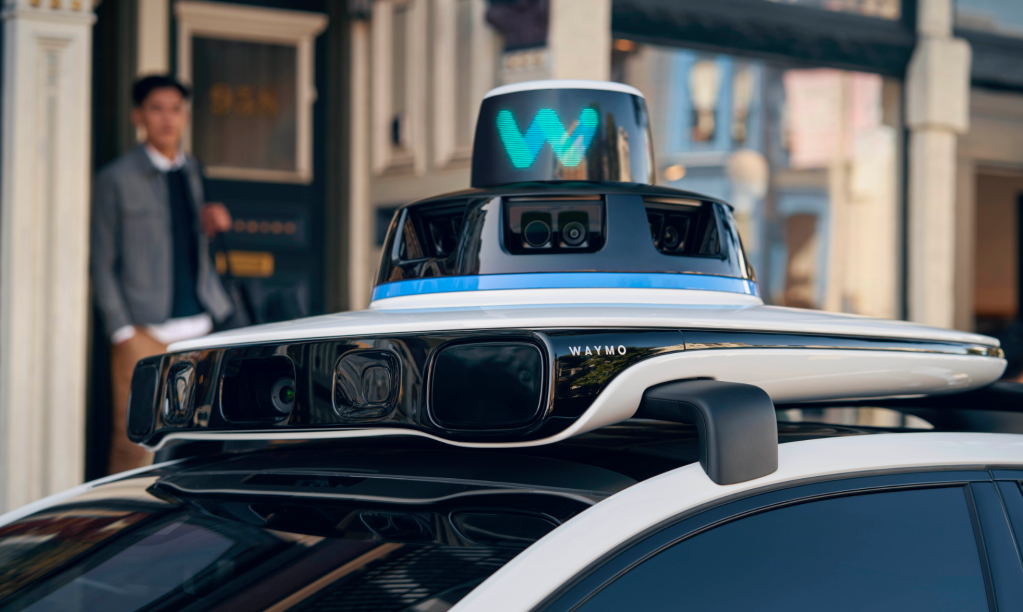
Uber doesn’t disagree.
“We do believe that autonomous vehicles have the potential to expand the overall rideshare market, not simply replace existing trips,” Josh Gold, Uber’s senior director of public policy told Streetsblog. “We also believe AV technology has the potential, over time, to be safer than human driving. That’s a big part of why there’s so much long-term optimism around the space.”
The company’s only competition in New York City is Lyft and old-school yellow cabs, and Uber is by far the dominant force. Uber was dispatching 505,963 trips per day in February of this year, Lyft had 203,883, and yellow cabs had just 117,694, according to city stats. Gold urged city regulators to “engage seriously in the broader implications” of driverless ride-hailing.
“If AVs both scale supply and improve safety, they won’t just be a marginal change; they could reshape urban transportation systems. That raises important questions around labor displacement, congestion, accessibility, and how to ensure service is distributed equitably across communities,” he told Streetsblog.
And Waymo agreed. At the first “Future of Transportation” conference at the Roosevelt House Public Policy Institute at Hunter College, Anthony Perez, a former DOT borough planner and current northeast policy manager at Waymo, said that Waymo grows the sector overall.
“We’ve been in Phoenix for five years and guess what, the drivers didn’t disappear,” Perez said in response to questions about labor.
Later in the panel, Perez made promises and projections that Waymo will not pull people from transit, but be an integral “last-mile” partner and discourage people from owning personal cars and taking a Waymo instead.
“The way we view it is that we want to be an alternative for personal car usage,” he said. “Instead of me having to own this car and to pay insurance, to pay a monthly loan or whatever it is to pay for gas. … You want those folks to say, ‘Hey, it’s easier, cheaper, more efficient to use a vehicle that is automated and through a service like Waymo.'”
Such predictions will give many New Yorkers déja-vu, since Uber and Lyft made the same promises. In fact, the introduction of ride-share apps did not quell car ownership and in fact increased the overall vehicle miles traveled in New York City, causing congestion and the carnage that comes with it.
Panelists on the next panel after Perez’s panel lambasted him for not sticking around before they lamented his company’s likely place in history.
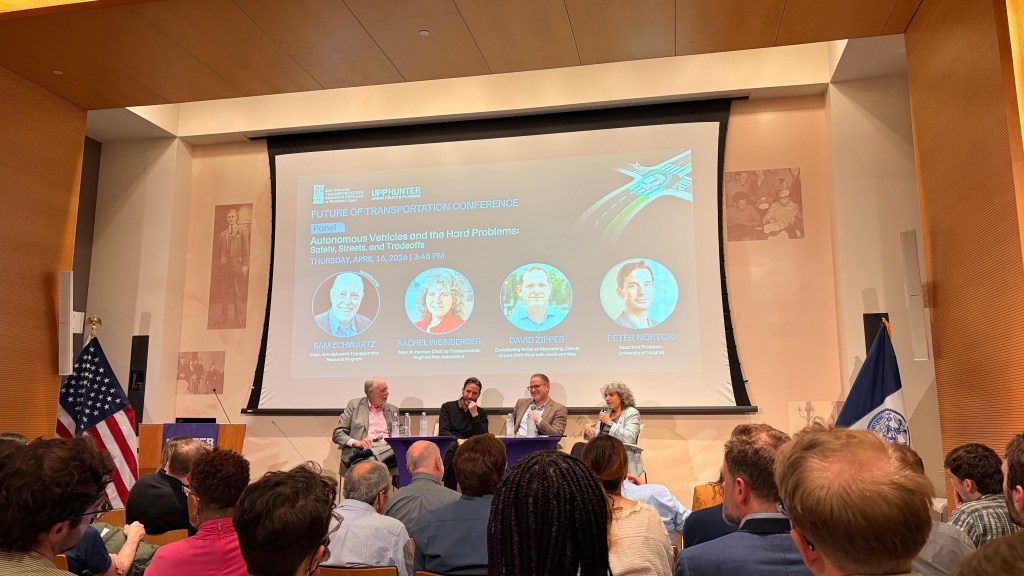
“I do have that feeling of watching helplessly while we repeat history,” said Peter Norton, whose book, “Fighting Traffic: The Dawn of the Motor Age in the American City,” tells the tale of how urban streets were radically redesigned in the 1920s and 1930s to accommodate the car, a disastrous decision that we are still living with today.
To transportation policy experts, Waymo and other self-driving ride hailing apps put a magnifying glass to the question of what is a city for?
“For the past 100 years, we really have been accommodating the city to individual transport,” said Rachel Weinberger, the vice president of Research Strategy at the Regional Plan Association. “The opportunity here is to actually figure out what we want our city and streets to look like. How do autonomous vehicles fit into that? What function do they serve within that? But if we’re just thinking about them as a one for one replacement for the vehicles that we currently have, we actually are going to get a two for one type replacement. We’re going to get more reliance [on individual transport] and we’re further down this track.”

Read More:
Streetsblog has migrated to a new comment system. New commenters can register directly in the comments section of any article. Returning commenters: your previous comments and display name have been preserved, but you'll need to reclaim your account by clicking "Forgot your password?" on the sign-in form, entering your email, and following the verification link to set a new password — this is required because passwords could not be carried over during the migration. For questions, contact tips@streetsblog.org.