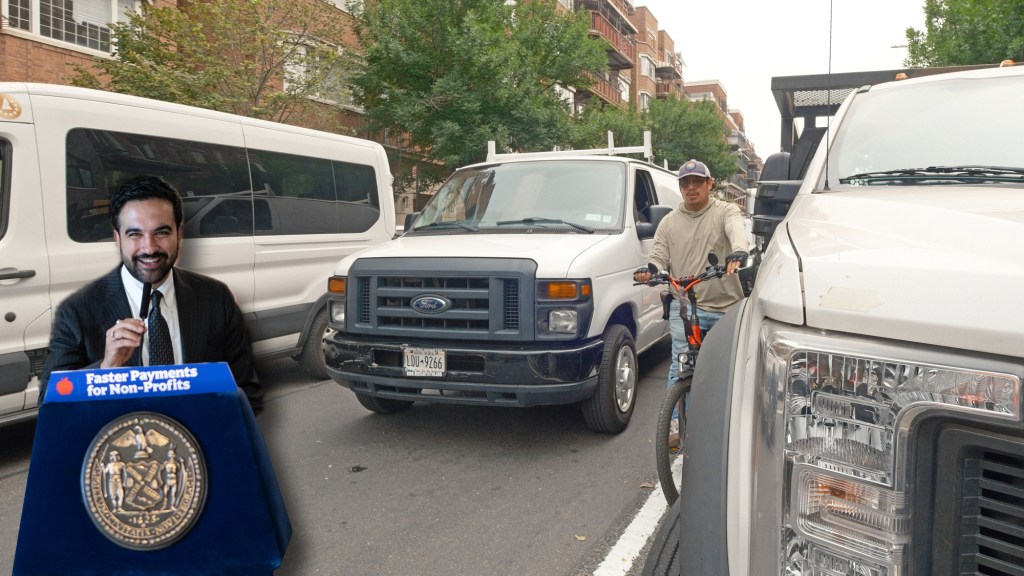
To Save Lives — And The Theater — Let’s Ban Cars From Broadway
It broke my heart to hear about the killing of Wenne Alton Davis, the esteemed “Marvelous Mrs. Maisel” actor who was fatally struck by a car driver in December.
But it didn’t surprise me.
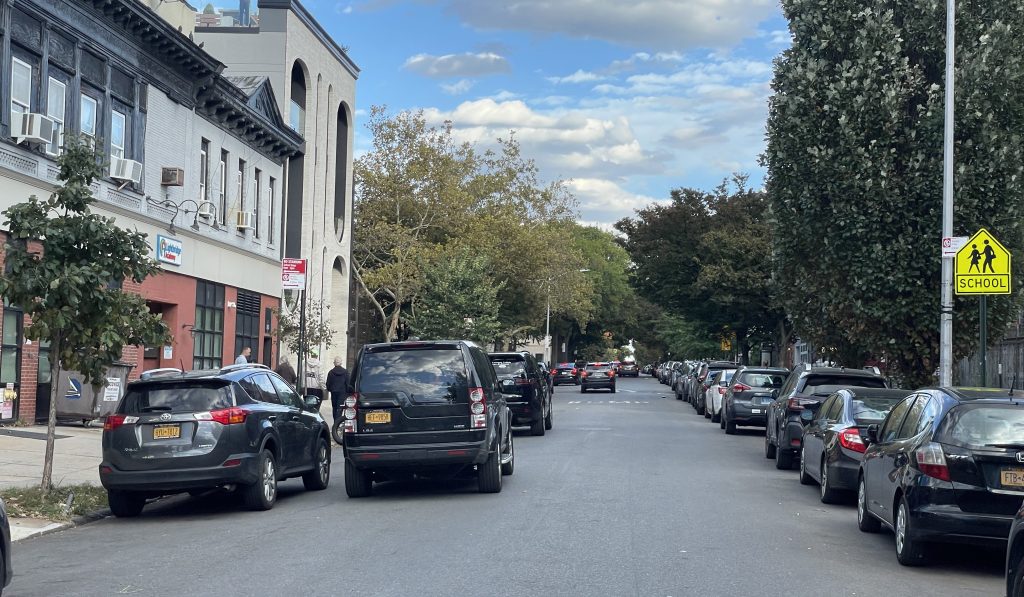
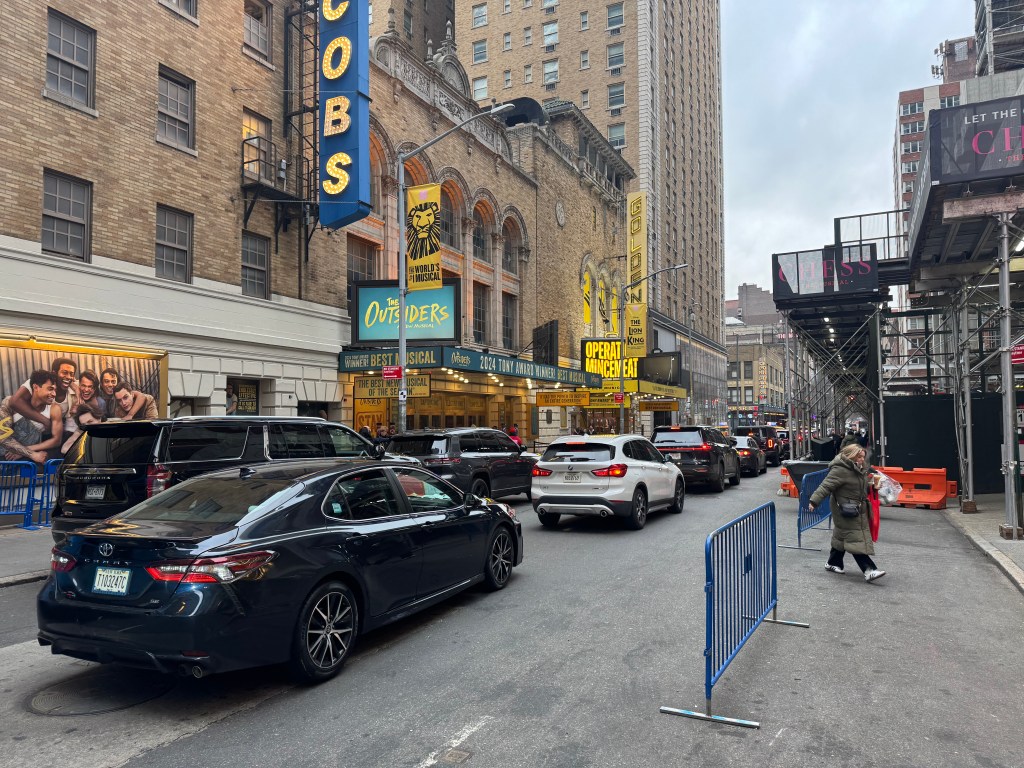
New York City, and the Broadway Theater District in particular, is swarmed with dangerous motor vehicles.
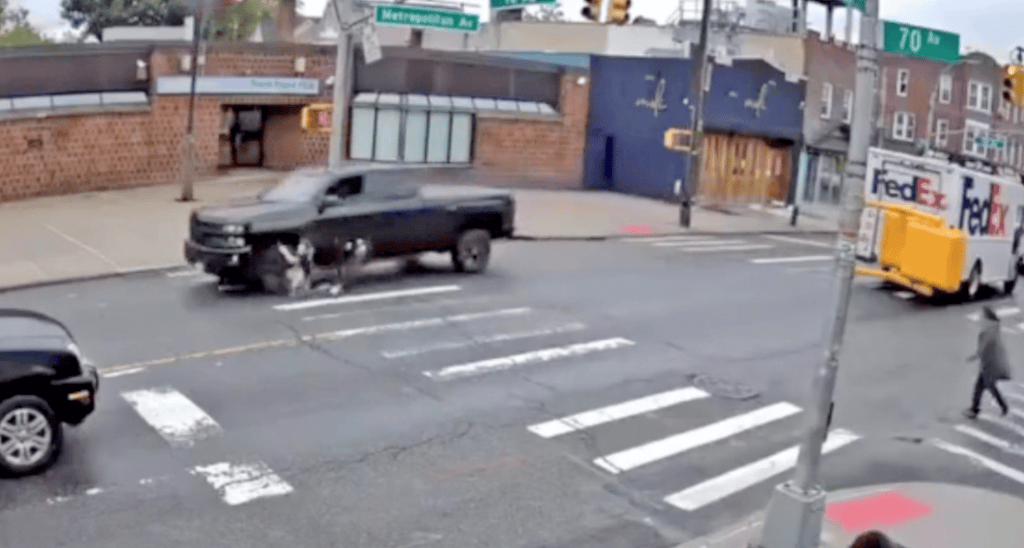
As a result, someone’s death at the hands of a car driver in this area was not only possible, but predictable. That’s what makes Davis’s killing an injustice, and a similar injustice will befall someone else in the near future unless something is done to prevent it.
That’s why we should ban private motor vehicles from the Theater District.
That area — which stretches from 41st to 54th streets between Sixth and Eighth avenues — has the most public transit access of any 30-square-block area in the United States (possible exception is Lower Manhattan). And driving a car through it is actually less convenient than walking through it, or crawling even.
And few do it: According to Broadway League statistics, just 15 percent of theatre-goers arrive by personal car, with the vast majority arriving either by foot, subway, commuter train, or other forms of public transportation.
But even if it were convenient for people to drive a car through Broadway, they still shouldn’t be allowed to. For starters, in that small 30-block zone last year, there were 486 reported crashes, injuring 76 cyclists, 108 pedestrians (one fatally) and 67 motorists, according to city stats. That’s more than a crash every day, injuring more than 250 people.
In one year. Since 2020, 1,315 people — the majority of them pedestrians and cyclists — have been injured in 2,716 reported crashes. Seven pedestrians have been killed.
Car drivers don’t just kill innocent people. They choke us with their exhaust pollution. They chip away at our sanity with honking and revving. They force thousands of us to cram into sidewalks so a handful of cars can occupy all the street space. They uglify the landscape. And in so doing they demolish the beauty and splendor of the outside streetscape that should mirror the beauty and splendor inside the theaters.
Cities can be beautiful; they just aren’t when every street is lined with two lanes of stationary vehicles.
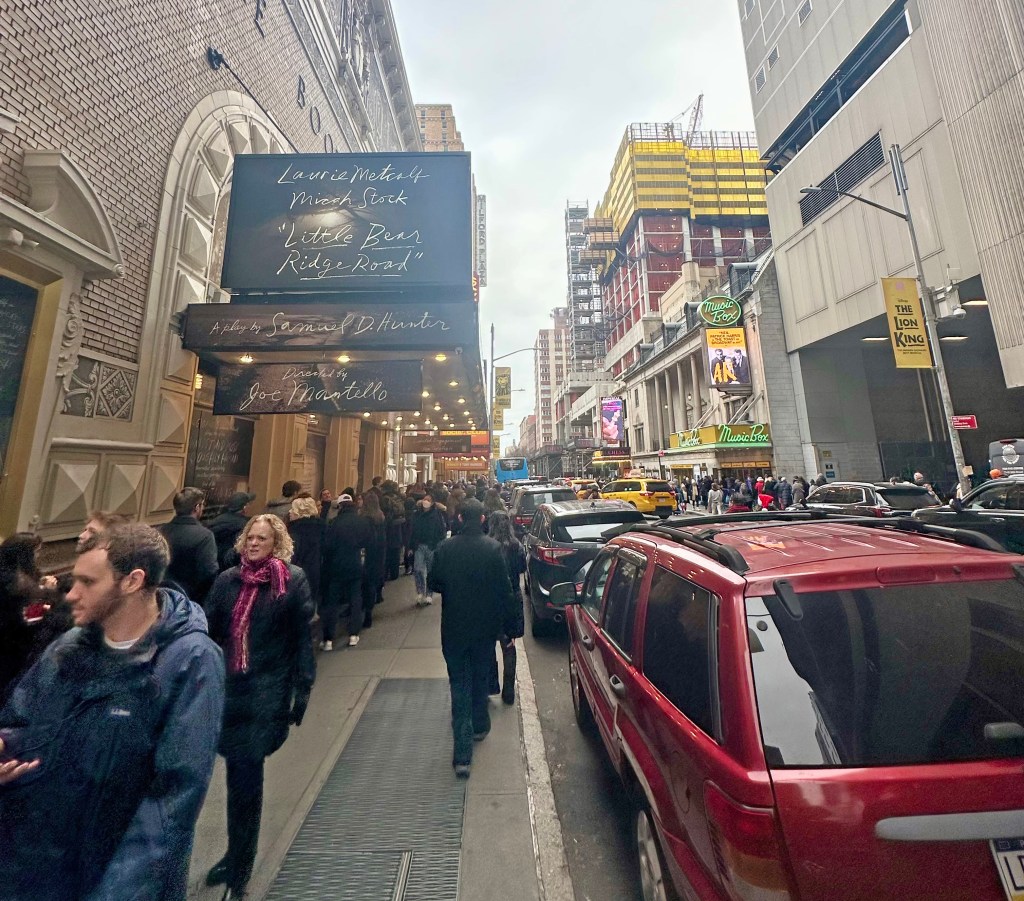
I will never forget the first time I saw a Broadway play. I was maybe 14, and my gay brother made me go see “The Color Purple” starring Cynthia Erivo and Jennifer Hudson. I felt as if I were eaten alive by the theater. For those two and a half hours, I, a middle class white boy from upstate New York, was in fact a teenage black girl in rural Georgia enduring an abusive husband.
And before I knew of such concepts as car-dependency or urban blight, I knew for some reason that, as soon as I left the theater, the outside streetscape violently shattered the magical feeling inside.
Of course, a similar sensation would occur regardless of cars, but the sheer mass of motor vehicles makes the Theater District uncommonly jarring and unpleasant. Why not try to make the area — a tourist Mecca — more welcoming?
Unfortunately, the area’s leadership isn’t interested in change. Tom Harrison, president of the Times Square Alliance — the area’s business improvement district — lamented Davis’s killing as a “tragedy,” but insisted that the streets need to accommodate the folks who come by car.
“What we need is balance. The streets need to accommodate the hundreds of thousands of pedestrians visiting the area, but they also need to accommodate the people who come by private vehicle,” said Harrison, who has not explained how that balance will be achieved given his accommodation of car drivers.
Harrison claimed that 67 percent of public space in the “bowtie” area — meaning 42nd Street to 47th Street, including Times Square and parts of the Broadway corridor — used to be reserved for vehicles, but now it’s been flipped to 67 percent in favor of pedestrian space. (It is unclear where he is getting that statistic.)
“I think we’re at the sweet spot now, and would be cautious of any increased pedestrianization in the area,” he said.
Few would call Times Square a “sweet spot” when tourists, residents and even actors themselves are being hit and killed by cars in broad daylight. And anyway, what Harrison is saying is an “argument to moderation” logical fallacy, which assumes that the best solution to a problem lies in the middle of two opposing extremes. But if there are 100 wolves eating people alive on the streets of Broadway, the solution is to get rid of all of them, not 67 percent of them.
There’s reason to think banning most of the cars from the Theater District would benefit its economy, too. Statistics from the Broadway League seem to indicate that congestion pricing, which reduced motor vehicle traffic in the Theater District, boosted Broadway’s ticket sales, which rose year-over-year in both the third and fourth weeks of January.
MTA Chief for Policy and External Relations John McCarthy seemed to confirm this idea as well when he said:
“And the 2025 Tony for most time saved by theatergoers goes to … congestion relief.”
“Most take subways, buses, bikes, cabs or walk to Broadway shows,” McCarthy added. “The relatively few who drive are seeing much less traffic. So, no surprise that attendance and ticket sales are way up.”
Additionally, studies show a clear correlation between open streets and thriving businesses. And Broadway, which is famously facing a financial and perhaps existential crisis, needs all the help it can get.
According to an investigation by The New York Times, of the 46 musicals that have opened since the pandemic, only three have been profitable. Broadway tourism remains below pre-pandemic levels, and the Trump administration’s hostility to our overseas allies has encouraged many tourists to spend their money elsewhere.
So while there is no one answer to Broadway’s financial maladies, I am certain that closing the Theater District to cars, and opening it up to more people, would enormously benefit the Broadway economy.
But here’s another certainty: if nothing more is done to rein in the tyranny of cars in Times Square, someone else will die. Maybe it will be another famous actor, or maybe it will be a child. But that person will die a horrible, outrageous, easily preventable death — an unjust, unnecessary sacrifice of life in order that a couple of rich people in a couple of cars can avoid rubbing shoulders with us common folk.
And when that happens, blood won’t just be on the hands of the driver who killed them. It will be on the hands of us all who, knowing full well the threats posed by cars, did nothing to prevent them from killing another innocent person.

Read More:
Streetsblog has migrated to a new comment system. New commenters can register directly in the comments section of any article. Returning commenters: your previous comments and display name have been preserved, but you'll need to reclaim your account by clicking "Forgot your password?" on the sign-in form, entering your email, and following the verification link to set a new password — this is required because passwords could not be carried over during the migration. For questions, contact tips@streetsblog.org.