Thursday’s Headlines: The AV Future Edition
The future is here, but our heads are still stuck in the sand (among other places).
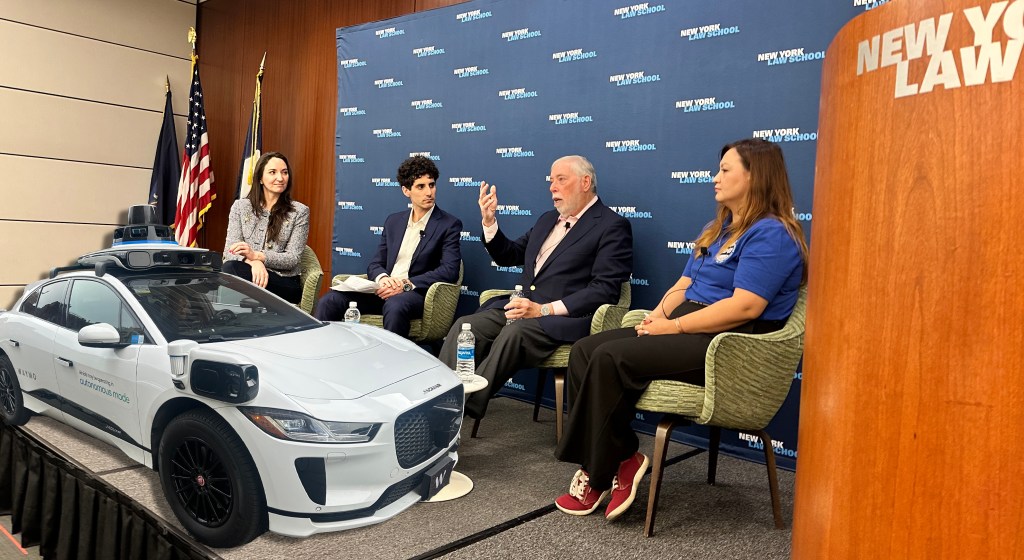
That was the unmistakable conclusion from yesterday’s panel discussion,
“The Road To Driverless Cars: Debating a Safe and Fair Autonomous Vehicle Future in New York City,” at New York Law School. I swung by for the mini-croissants, but stuck around to hear “Gridlock” Sam Schwartz, now of Roosevelt House at Hunter College; Sara Lind of our parent company Open Plans; and taxi driver Dinara Zhanpeissova (who also represents the Uber-backed Independent Drivers Guild) offer their take on the seemingly inevitable incursion of driverless cars in our city.
And here’s the problem with that: Certainly, driverless cars will end up being much safer than cars with human drivers, who can fall asleep, get distracted by all their screens or get drunk, but not enough people are asking the obvious (at least to Streetsblog) question: “Yeah, and then what?” The “safety argument” will no doubt convince many people to turn more of our streets over to car drivers — which is exactly what happened during the first mobility revolution at the dawn of the Automobile Age.
And how did that work out for cities? As Schwartz made clear in a brief presentation, AVs will inevitably result in more vehicle miles traveled, which will cause more congestion, which is the main way cars undermine the quality of life of all New Yorkers, especially the majority of us outside the car. And since politicians drive or are driven everywhere, they’ll respond like they typically do: by trying to find ways to appease car drivers.
And that’s to say nothing of the fact that pedestrians themselves will increasingly become seen as “in the way” of progress — quite literally. If autonomous vehicles are programmed not to hit pedestrians, they’ll never get anywhere, which will likely prompt calls for more restrictions … on walkers.
There is another way: Schwartz and Lind are pushing regulations to manage the coming AV revolution so that we’re not hoodwinked again (remember when Uber and Lyft said their taxis would reduce car ownership and traffic? Again, how did that turn out?).
There’s plenty of time to get this right, but anyone downing mini-scones yesterday would be forgiven for feeling a bit pessimistic. If you want to watch the 90-minute discussion, check it out here:
In other news:
- Who needs to “defund” the police when cops seem to be doing it themselves? (Gothamist)
- The MTA has a new app. (Curbed, amNY)
- And the MTA’s other shiny new thing — fare gates — seem to be working, amNY and Gothamist reported (but the Post objects).
- After Streetsblog reported on the Department of Transportation’s big bike lane project below Union Square, amNY followed.
- Like Streetsblog, the Post covered the hit-and-run death of an East Side senior on Second Avenue early on Wednesday.
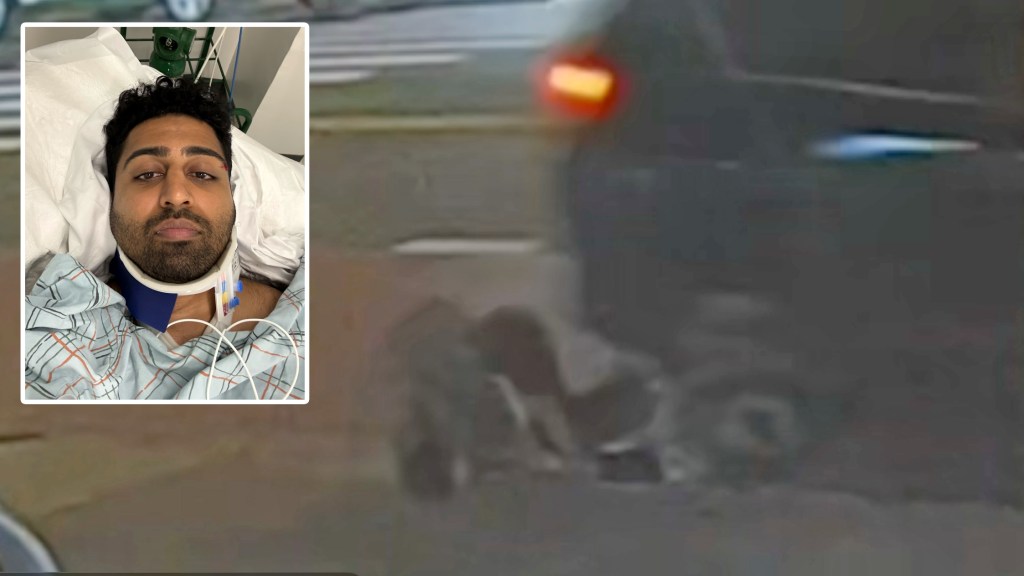
- A 16-year-old victim of road violence made more sense in a single amNY op-ed than Gov. Hochul has offered in three months of shilling for Big Tech and the insurance industry. “That’s why so many street safety groups are speaking out,” wrote Marilena Athineos. “Because this plan doesn’t protect people like me. It protects insurance companies.”
- There’ll be a “No Kings” rally on Saturday in Midtown. (amNY)
- Virtually all employees at Streetsblog are Mets fans (not that there’s a litmus test!), so despite what Hell Gate says about long-suffering boosters of the Amazin’s, we’d actually like the team to win this year.
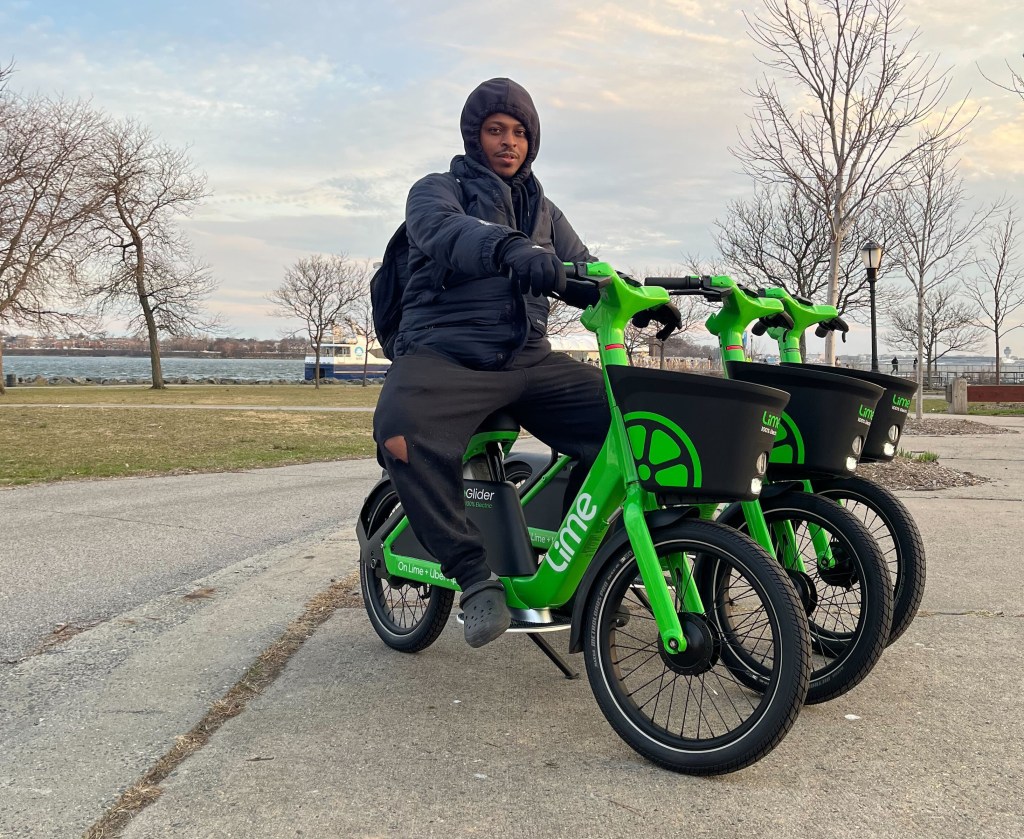
- And, finally, after last night’s Yankee win, all eyes are on the Mets as they open their season at Citi Field today (please don’t call me between 1:15 and 3:15). And if you’re heading out to the game, the scooter company Lime will be showing off its latest form of micromobility: the Glider. Available in the Bronx and Queens starting today, the pedal-less throttle-controlled device is basically a scooter you can sit down on, but stable like a bike. And before everyone freaks out, its top speed is just 15 miles per hour — like a Citi Bike electric bike. The company touted its last-mile street cred: “It can turn a 20- to 30-minute walk to the subway or bus into a five- to 10-minute Glider experience, making for easier and more enjoyable commutes as well as expand the ability to be car-free in New York.” They’re playing our tune.

Read More:
Streetsblog has migrated to a new comment system. New commenters can register directly in the comments section of any article. Returning commenters: your previous comments and display name have been preserved, but you'll need to reclaim your account by clicking "Forgot your password?" on the sign-in form, entering your email, and following the verification link to set a new password — this is required because passwords could not be carried over during the migration. For questions, contact tips@streetsblog.org.