EXCLUSIVE: City Will Let Mopeds Use Queensboro and Brooklyn Bridge Roadways
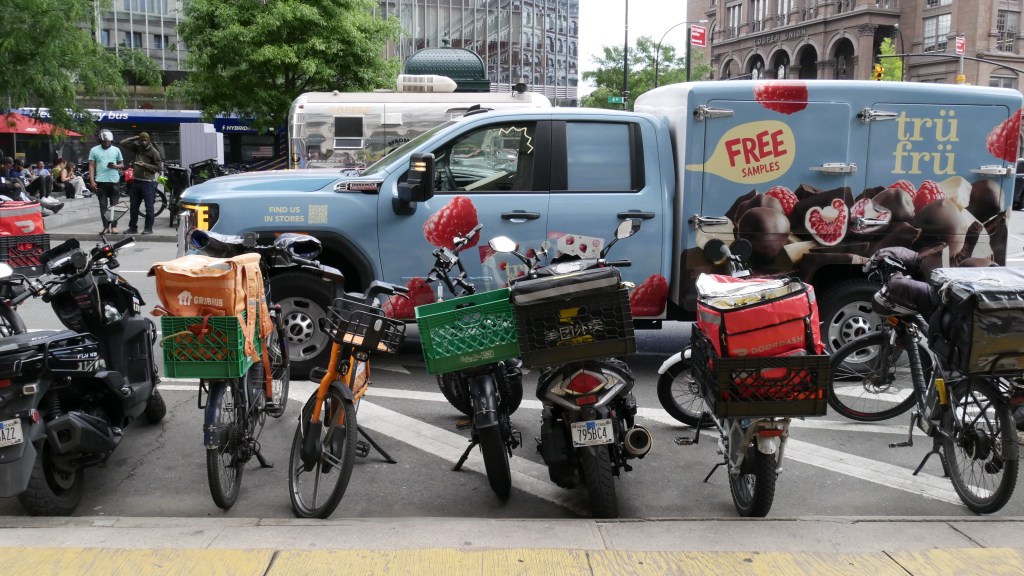
The city will let moped riders use the roadways of the Brooklyn and Queensboro bridges in a bid to steer the motorized vehicles away from cyclists and pedestrians, Streetsblog has learned.
Mopeds pose a frustrating and growing challenge to safety on the four East River bridges into Manhattan’s central business district. City rules prohibit the devices from the bridge roadways entirely, so many riders opt to illegally ride on bike paths — creating hazardous conditions for slower-moving cyclists.
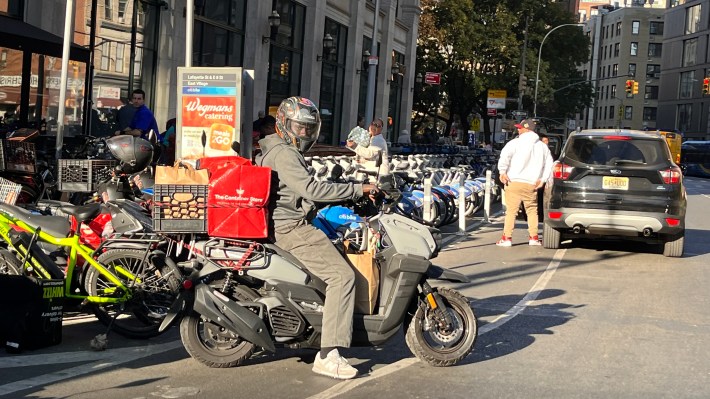
Moped use has grown dramatically in the last five years thanks to companies like Fly E-Bike that import the devices and market them to delivery workers facing tech industry pressure to work fast.
Mopeds on omnipresent on Manhattan streets, but their owners can only access the central business district through a time-consuming detour or by taking their mopeds on the subway (unless it’s gas-powered, in which case it cannot be brought on a subway). Most moped riders opt for an illegal route in.
“New York City’s transportation network is always evolving, and this proposed rule change is about expanding safe, practical options for moped users,” DOT Commissioner Ydanis Rodriguez said in a statement.
“For far too long, moped users have had to take longer, inconvenient routes and costly detours, often riding in bike lanes creating an unsafe mixing of modes,” Rodriguez said. “By allowing mopeds in the motor vehicle lanes of the Brooklyn Bridge and the lower roadway of the Queensboro Bridge, we are creating a more accessible and connected city while maintaining safety for all road users.”
Officials chose the Queensboro and Brooklyn spans based on traffic data showing lower speeds on the Brooklyn Bridge and Queensboro Bridge’s lower roadway compared to the Manhattan and Williamsburg bridges, DOT said. Mopeds will remain prohibited on the Queensboro’s upper roadway.
Advocates say mopeds have no place in bike lanes, but also think the DOT could do more to make roadways safer for mopeds.
“Non-pedaled vehicles, whatever you call them, don’t belong on bikeways,” said Jon Orcutt, advocacy directory of Bike New York. “If the city can lower and enforce speed limits on its bridges, allow them there.”
But DOT will not lower speed limits as part of the new policy, officials said. The speed limit is 35 mph on the Queensboro Bridge and 30 mph on the Brooklyn Bridge, but average daytime speeds run even lower — around 20 to 25 mph, according to DOT.
Mopeds speeds reach up to 40 mph depending on class; all mopeds must be licensed and registered with the state Department of Motor Vehicles.
Getting clear data on moped crashes is difficult because NYPD often misclassifies vehicles because of confusing options on department forms.
NYPD’s collision database has options for moped, escooter, e-bike and motorcycle. These vehicles are classified differently in state law and have to follow different rules, but their differences can be hard to pinpoint visually.
According to the city’s data, in 2024 there were 1,496 total injury-causing collisions involving “mopeds,” 150 of those collisions resulted in a pedestrian injured, 29 resulted in a cyclist injured, and 1,342 resulted in a motorist injured (drivers and moped riders are classified as motorists). Just one of the recorded injury-causing crashes occurred on an East River Bridge, the Queensboro Bridge lower roadway, according to NYC Open Data.
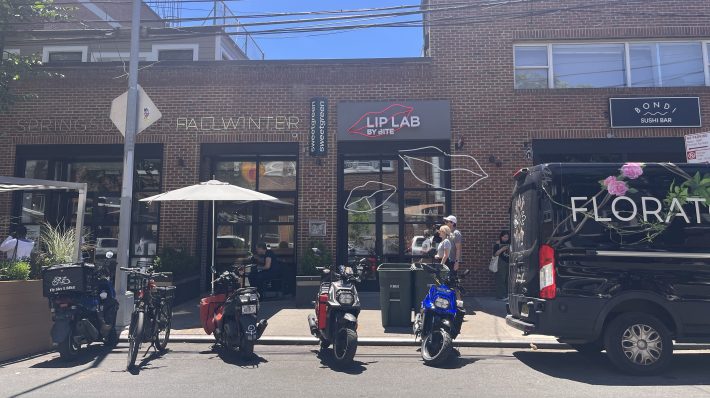
Much of the city’s 80,000-strong mobile delivery workforce lives in the outer boroughs but works in Manhattan — making DOT’s new policy a game-changer.
Mopeds sharing space with cyclists is extremely dangerous, especially on narrow bridge crossings, and can lead to less cyclists feeling less comfortable using the bridge’s bike paths.
After a horrific crash on the Manhattan Bridge bike path in the summer of 2023, a cyclist who witnessed the carnage told Streetsblog she may not ever be able to ride over the bridge again. The crash sent at least four people to the hospital with serious injuries, illustrating the danger of the the high-speed vehicles.
A public hearing on the proposed rule is scheduled for April 14. Members of the public can visit the city’s rulemaking website for instructions about how to participate.

Read More:
Streetsblog has migrated to a new comment system. New commenters can register directly in the comments section of any article. Returning commenters: your previous comments and display name have been preserved, but you'll need to reclaim your account by clicking "Forgot your password?" on the sign-in form, entering your email, and following the verification link to set a new password — this is required because passwords could not be carried over during the migration. For questions, contact tips@streetsblog.org.