How Cop ‘Courtesy Cards’ Keep Dangerous Drivers on the Roads
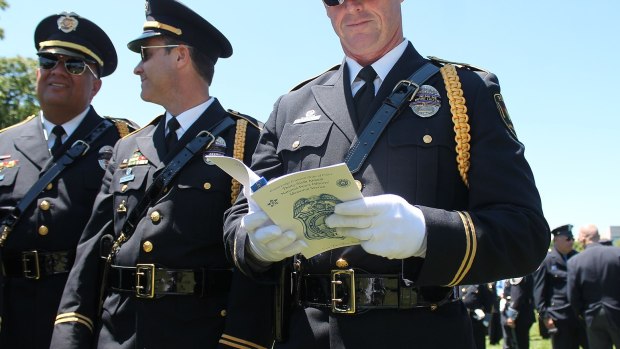
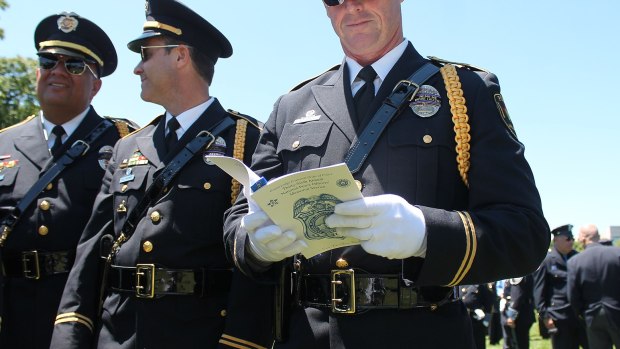
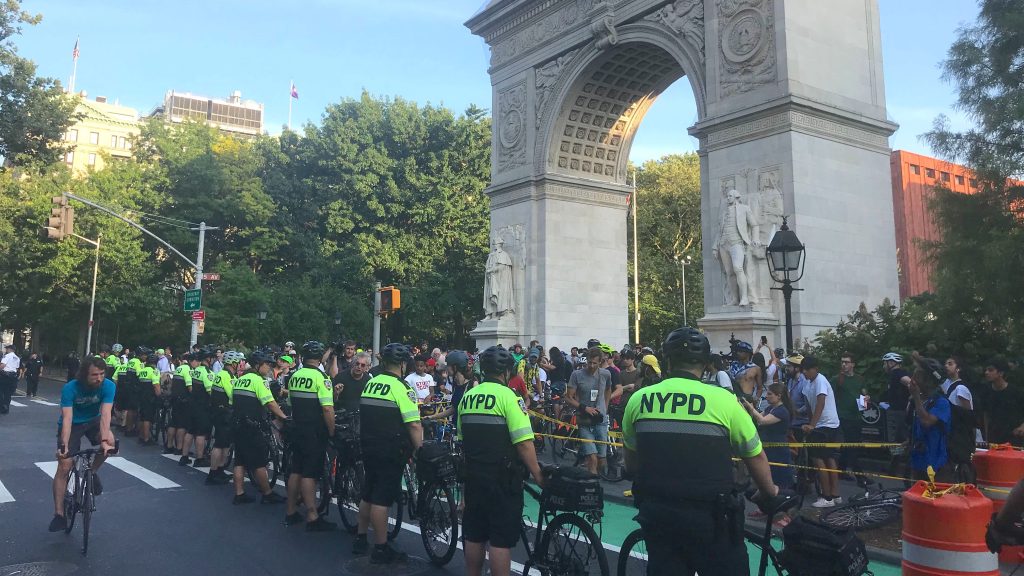
An explosive VICE Media exposé on the phenomenon of police “courtesy” cards in the greater New York area sparked outrage about corruption at the NYPD this week. But for street-safety advocates concerned about the prevalence of traffic violence and police brutality against people of color, it was just the tip of a truly terrifying and national iceberg.
Known locally as “PBA cards,” for the law-enforcement union association that’s most notorious for handing them out, the Police Benevolent Association of New York City, journalist Katie Way reported that courtesy cards are typically given to friends and families of police officers, who use them to request clemency during encounters with cops they don’t know. Some departments even reportedly gift the cards to local journalists and politicians.
Way reported that, for her sources, the cards “are most likely to work in one’s favor during traffic stops for minor infractions, like speeding or a busted tail light,” and slammed the phenomenon as “a concrete example of a larger, often more insidious problem in American policing: discretionary decision-making allows police to pick and choose who the law really applies to — and who gets a pass.”
Way is right, of course, about the corruption and racism inherent in offering legal clemency to the immediate families of predominantly white officers as a union benefit, the same way other cop unions offer member discounts on flower arrangements and pick up trucks. It’s especially horrifying amid a historic movement to end disparities in violent and deadly policing against Black, Indigenous and other people of color, many of whom presumably aren’t card-carrying friends of law enforcement — unless they happen to buy a card on E-bay.
But courtesy cards — and other concrete symbols of police discretion — are horrifying for another reason: They are almost always deployed in the context of traffic stops, where they can keep dangerous drivers from facing accountability. Which prompts street-safety activists to ask: Can police officers, with their all-too-human tendencies toward bias — not to mention racism and white supremacy — ever equitably enforce traffic law?
Police courtesy cards, of course, are not strictly native to New York — and they don’t always take the form of cards.
In an informal survey, Streetsblog found that people in at least 15 states either had personally been granted clemency in a transportation stop after presenting some form of physical evidence of their support for police unions, or had a close friend or family member who had done so.
“It’s definitely a thing,” said Meghan, originally of Pittsburgh. “I have one. You have to be subtle when you flash it, like have it behind your license when you take it out, but I’ve gotten off with many a warning for speeding.”
“My brother used to work at a library in New Jersey, and a patron gave him one for helping him with some tech questions he had,” said Anna.
“There are special Fraternal Order of Police license plates in Indiana for cops and their families,” said Charlie, originally of Griffith, Ind.
“My dad had one in the ’90s,” said Rebecca of Cleveland, Ohio. “It was actually a little badge he kept in his wallet. My father was pretty great at speeding and ignoring traffic laws so he was pulled over often. I guess this was useful for him.”

Similar to those interviewed for the VICE story, nearly every reported use of an official police-union-supporter card, window decal or branded license plate that Streetsblog found occurred in the context of a traffic stop. Some respondents that noted that presenting cards or other membership materials that noted the name and badge number of an officer worked better than displaying more general merchandise, like Fraternal Order of Police stickers on car windows — but both forms of identification got drivers courteous behavior from officer.
Like the American legal system itself, many courtesy cardholders seem to classify the traffic crimes for which they had avoided citation as “minor,” especially if that citation was for speeding — even if the speeding was so excessive it could kill another road user in a collision.
“Jack [who was caught speeding at close to 90 miles per hour on the New Jersey Turnpike] said he didn’t think it would be right to use a PBA card to extract himself from a more serious situation, like a bar fight or reckless driving,” Way wrote in her article — ignoring the fact that her source was a reckless driver by any responsible legal definition. Pedestrians almost never survive collisions with vehicles traveling 60 miles per hour or more, regardless of their age and health.
There’s no good data on how many reckless drivers avoid citations thanks to their implied relationships with law enforcement. There isn’t even data on how many courtesy cards, stickers, and other emblems are in circulation nationwide — and since law enforcement officers tend to deny that these things afford drivers special privileges, unions often don’t bother to track how many they produce. Way estimates that as many as 480,000 PBA cards are circulating in the New York area today.
If it were all merely decorative, why do so many police unions produce such a large volume of police booster merchandise — much of which explicitly directs officers to grant their owners’ the “highest courtesy”?
What’s certain is that officer-based traffic enforcement leaves enormous discretion to individuals. That’s a huge problem for street safety that deserves serious scrutiny — whether that discretion leads to the senseless death of a person of color at the hands of an officer, or clemency for a dangerous driver who might go on to kill other road users. It indicates that American communities ought to think seriously about whether our model of traffic enforcement really keeps us safe — or whether we should start exploring alternatives.

Read More:
Streetsblog has migrated to a new comment system. New commenters can register directly in the comments section of any article. Returning commenters: your previous comments and display name have been preserved, but you'll need to reclaim your account by clicking "Forgot your password?" on the sign-in form, entering your email, and following the verification link to set a new password — this is required because passwords could not be carried over during the migration. For questions, contact tips@streetsblog.org.