The ‘Busway’ Proves Another Benefit of Car-Free Streets: Safety
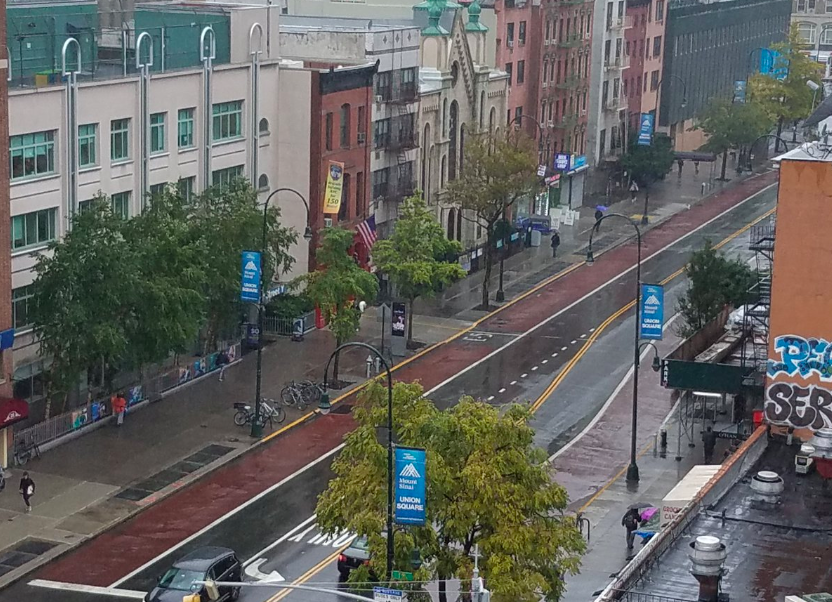
The car-free 14th Street Busway is a real lifesaver. No, literally.
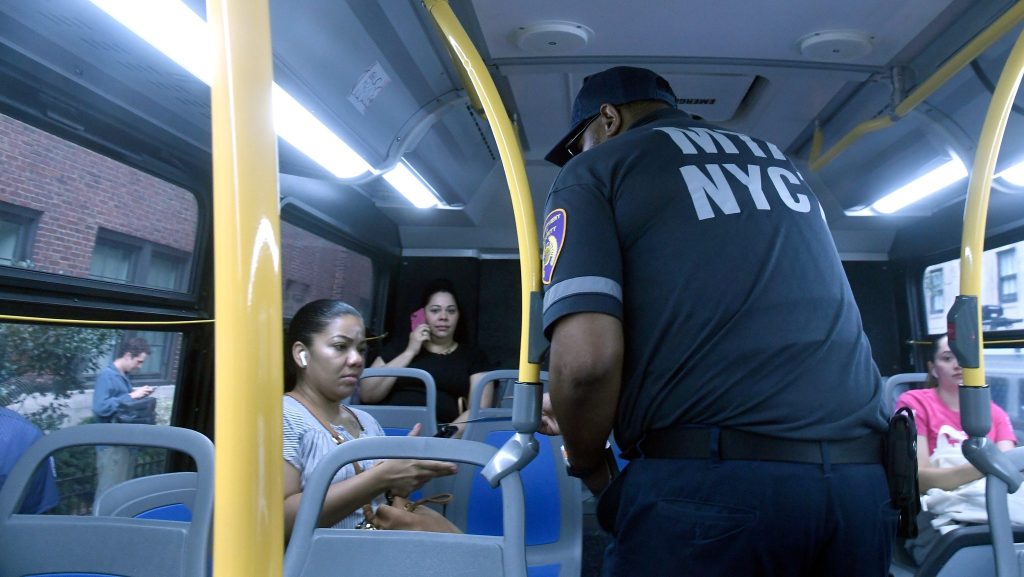
The benefits of the city’s transit-priority pilot program between Third and Ninth avenues in Manhattan are well documented: buses are moving much faster and ridership is up as a result of the improved service.
But the project is having a much greater, and much-less-heralded, safety impact.
In the four months since the busway began in October, total crashes are down 53 percent and injuries are down 63 percent compared to the same four-month period a year earlier. Crashes that resulted in injuries are down 68 percent.
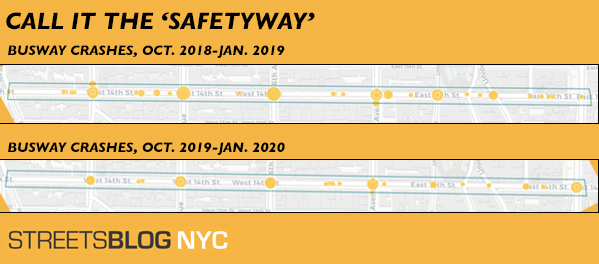
Here are the raw numbers:
- Total crashes
- Oct. 2018-Jan. 2019: 90
- Oct. 2019-Jan. 2020: 42 (a decrease of 53 percent)
- Total crashes with injuries
- Oct. 2018-Jan. 2019: 27
- Oct. 2019-Jan. 2020: 10 (a decrease of 63 percent)
- Total injuries
- Oct. 2018-Jan. 2019: 35 (seven cyclists, eight pedestrians, 20 motorists)
- Oct. 2019-Jan. 2020: 11 (three cyclists, seven pedestrians, one motorist, a total decrease of 68 percent)
It doesn’t take a rocket scientist — or a mayor! — to see what’s going on: Removing cars has enhanced safety for all road users. Street safety advocates have been calling for more car-free zones for years (and Mayor de Blasio has largely ignored them), so no one was surprised by Streetsblog’s back-of-the-envelope calculations.
“Let’s hope [the reduced crashes on 14th Street] is a herald of a similar benefit we will see from congestion pricing and pedestrian zones and busways in the city’s future,” said Jon Orcutt, a former Department of Transportation official who now is advocacy director for Bike New York. “That said, moving the safety needle citywide means more aggressive traffic calming for the really car-oriented streets like Atlantic Avenue, Northern Boulevard, Third Avenue (in both Brooklyn and the Bronx) and on and on. It’s a long list.”
Few, if any, of the most congested and dangerous stretches of roadway are being considered for busway treatment. The mayor said last year that he hoped to create new car-free busways in 2020, though he declined to specify where. Here are just two examples of dangerous roadways that could be remedied:
- Northern Boulevard between Queensboro Plaza and the Brooklyn-Queens Expressway
- Total crashes Oct. 2018-Jan. 2019: 163, injuring 39 people
- Total crashes Oct. 2019-Jan. 2020: 144, injuring 36 people
- Fordham Road between Jerome Avenue and Southern Boulevard
- Total crashes Oct. 2018-Jan. 2019: 133, injuring 42 people
- Total crashes Oct. 2019-Jan. 2020: 102, injuring 32 people
Also worth noting: The seven-block stretch of the Fulton Mall in Downtown Brooklyn — a car-free transitway for decades — had just 43 total crashes in all of 2019, injuring 13 people. In the four months between October, 2019 and January, 2020, there were just 16 crashes, injuring four people.
“There’s no question that more cars equals more crashes, so it’s no surprise that streets where people and transit are prioritized over traffic aren’t just more efficient and more pleasant; they’re also much safer,” said Transportation Alternatives spokesman Joe Cutrufo.
The clear safety benefit of car-free roadways prompted Streetsblog to ask City Hall a few questions (albeit on Presidents Day):
- What does City Hall think about these numbers?
- Will City Hall give a timeline for an expansion of the busway model to other transit strips?
- Since the evidence is clear — car-free streets are much safer — will the mayor commit to making more roadways off limits to cars? If so, when? If no, why not?
We will update this story if we hear back.
Update: An earlier version of this story had some bad math. Correct numbers but bad percentages. Sorry about that. Math!

Read More:
Streetsblog has migrated to a new comment system. New commenters can register directly in the comments section of any article. Returning commenters: your previous comments and display name have been preserved, but you'll need to reclaim your account by clicking "Forgot your password?" on the sign-in form, entering your email, and following the verification link to set a new password — this is required because passwords could not be carried over during the migration. For questions, contact tips@streetsblog.org.