Barcelona’s Superblocks: Change the Grid, Change Your Neighborhood

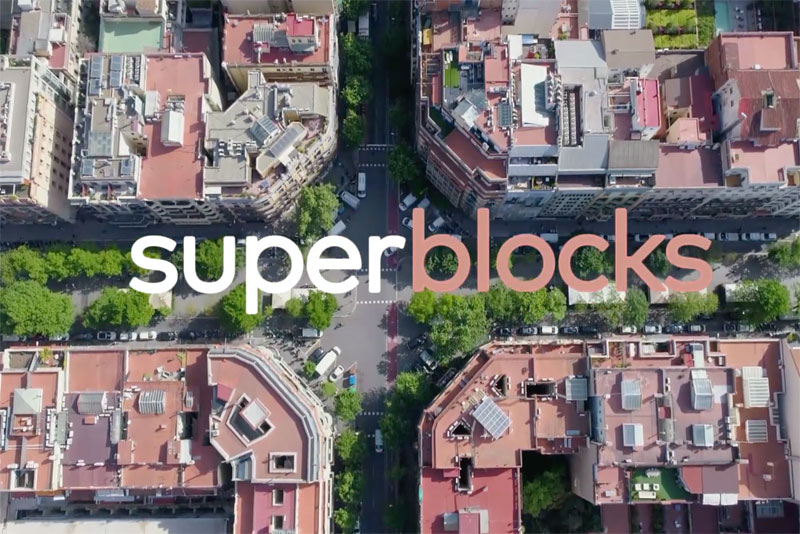
Two years ago, Barcelona announced it would transform chunks of its street grid to prioritize people over cars. The method: superblocks.
When American planners think of superblocks, they probably imagine big parcels that disrupt the pedestrian network and discourage walking. Barcelona’s superblocks are different. They only limit motor vehicle movement, which makes walking and biking easier and opens up streets for people to gather.
On Barcelona’s superblocks, local access for motor vehicles is still permitted, but through traffic is not. The streets are designed to make drivers feel like they are visitors, with narrow rights-of-way for cars. Almost all car traffic is local residents or people with personal business on the block.
Without dangerous car traffic overrunning the streets, generating noise and pollution, superblocks are full of life. Children can play and explore. Seniors and people with limited mobility can relax and socialize. People — including young kids — can feel safe and confident riding bikes.
I visited Barcelona in June, when some of the initial, temporary superblock treatments were being made permanent in a nine-square-block section of the street grid with a lot of public housing in the Poblenou neighborhood. The drone of cars was gone, and you could hear sounds you normally can’t in the center of a city. Street life ebbed and flowed through the course of the day and the week.
Barcelona has not installed many superblocks yet. In fact, until recently Poblenou was the only one. A second superblock officially opened in Sant Antoni just days before my arrival, a project tied to the redesign of a public market.
More superblocks are on the way, according to Barcelona officials, with roughly a dozen others in the pipeline. It will be exciting to see this experiment continue to transform Barcelona and show the rest of the world what cities can do when they tame car traffic and put people first.

Read More:
Streetsblog has migrated to a new comment system. New commenters can register directly in the comments section of any article. Returning commenters: your previous comments and display name have been preserved, but you'll need to reclaim your account by clicking "Forgot your password?" on the sign-in form, entering your email, and following the verification link to set a new password — this is required because passwords could not be carried over during the migration. For questions, contact tips@streetsblog.org.