CB 7 Committee Wants More Concrete Pedestrian Islands in Amsterdam Ave Redesign
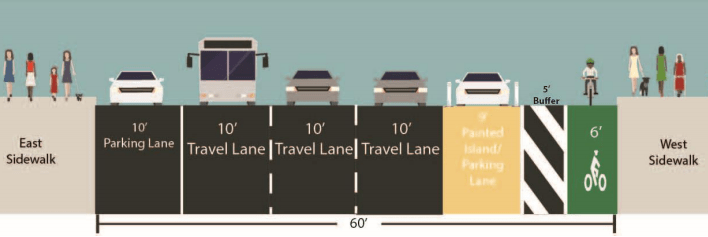
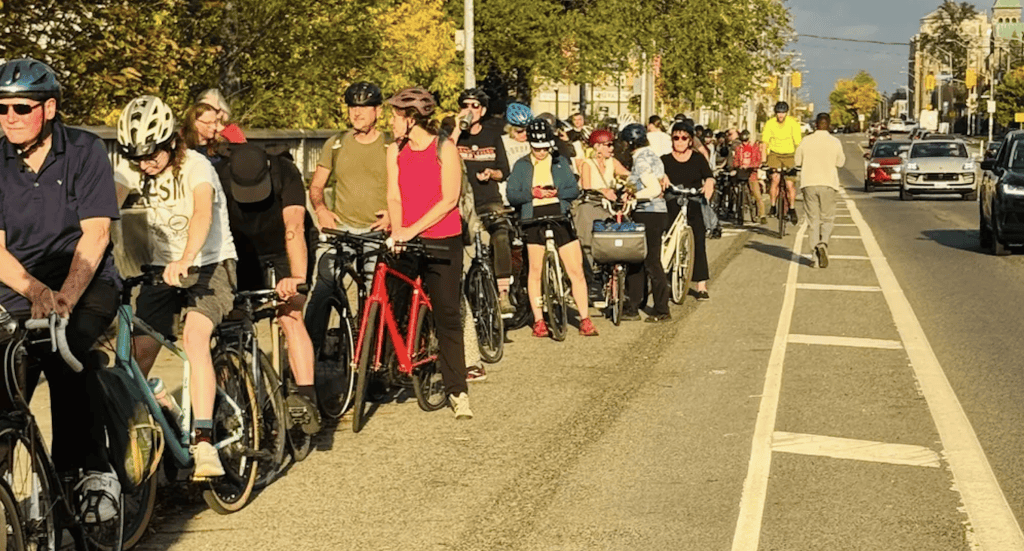
On Tuesday, the Manhattan Community Board 7 transportation committee voted unanimously for DOT’s plan for protected bike lane on 10th Avenue/Amsterdam Avenue between 52nd Street and 72nd Street [PDF] and bike upgrades at Columbus Circle [PDF]. But the committee still wants DOT to deliver more robust pedestrian safety measures in the project, according to a source who was in attendance.
Like Community Board 4 last month, the CB 7 transportation committee took issue with the absence of concrete pedestrian islands at intersections along 10th Avenue and Amsterdam in DOT’s plan. The project does call for pedestrian islands at intersections, but made out of paint and plastic posts, not concrete.
DOT attributed the lack of concrete to a shortage of resources for design and construction, the source said.
Because the concrete islands don’t necessitate full reconstruction of the street, DOT has been able to implement them quickly. But the agency hasn’t been applying concrete to every project where it make sense. On Ninth Street in Brooklyn, for example, DOT recently opted for painted pedestrian islands and left the possibility of concrete to future capital reconstruction projects.
The CB 7 committee did not withhold an endorsement, but did request some improvements. In addition to concrete pedestrian islands, the committee’s resolution called on DOT to eliminate the left turn from Amsterdam onto 71st Street and to add more loading zones to both sides of the street.
The committee also identified a few ways in which the Columbus Circle design could go further to protect cyclists from motor vehicle traffic.
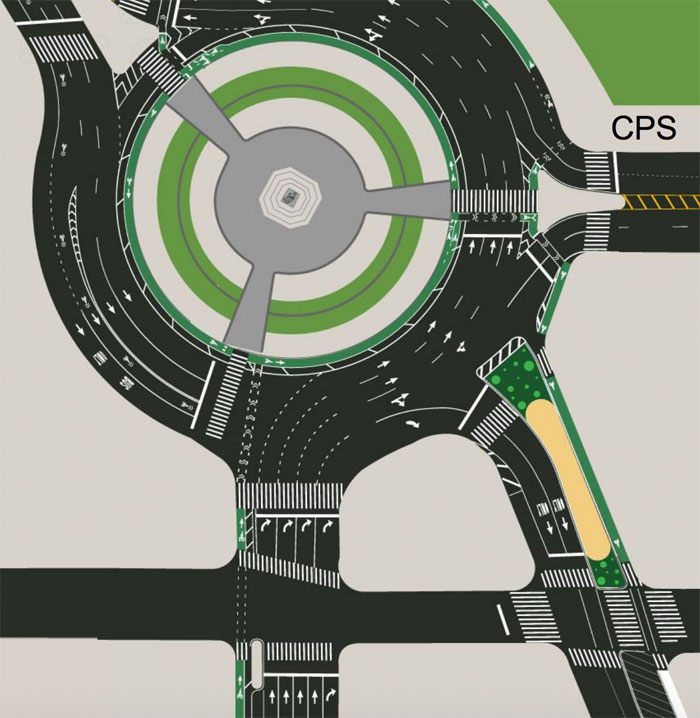
Most notably, the redesign does not include any physical separation between the inner bike lane loop and motor vehicle traffic. They also called for a bike lane south of 62nd Street on Central Park West, the primary route of most northbound bike traffic, and for delineated space for cyclists entering Columbus Circle eastbound from 59th Street and southbound from Broadway.
CB 7 will vote on the resolutions at its full board meeting, which will be held next Tuesday, July 17, at Goddard Riverside Center, located at 593 Columbus Avenue.

Read More:
Streetsblog has migrated to a new comment system. New commenters can register directly in the comments section of any article. Returning commenters: your previous comments and display name have been preserved, but you'll need to reclaim your account by clicking "Forgot your password?" on the sign-in form, entering your email, and following the verification link to set a new password — this is required because passwords could not be carried over during the migration. For questions, contact tips@streetsblog.org.