Assembly Member Dick Gottfried Supports “the Concept” of Congestion Pricing
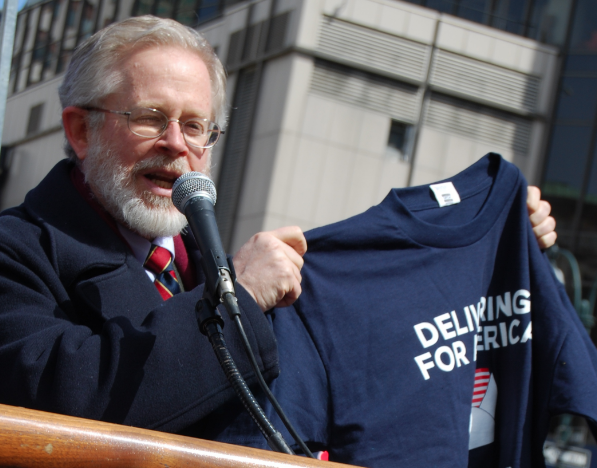
Assembly Member Richard Gottfried believes in congestion pricing, in theory. The question now, as it was ten years ago, is how hard he’ll work to enact a policy that would benefit his constituents enormously.
With Governor Cuomo expected to propose a congestion pricing plan based on the recommendations of his Fix NYC panel, Streetsblog is contacting representatives in the State Senate and Assembly to get their take.
Gottfried, a 47-year incumbent, represents Chelsea, Hell’s Kitchen, and parts of Midtown and the Upper West Side — some of the most traffic-choked neighborhoods in the city. About 80 percent of households don’t own a car, and among those who do car commute, the median income is $102,981, according to the Tri-State Transportation Campaign.
In a statement, Gottfried called congestion pricing “an important step to a healthier and more livable city” that “can help speed traffic flow, reduce air and noise pollution, and provide a reliable funding stream for New York’s public transportation.”
He also qualified that support:
I support the concept, while many details still need to be worked out. These include ensuring that the revenue it generates is dedicated to increased funding for mass transit in New York City, resolving various special situations, and avoiding ‘congestion parking.’
It’s similar to Gottfried’s position a decade ago, when he went on the record supporting congestion pricing but was mostly invisible while suburban representatives like Westchester’s Richard Brodsky were battering the plan in the press on a daily basis.
Exactly which special situations Gottfried wants to resolve isn’t clear. But he represents an area with excellent transit access, where owning a car is a luxury few people spring for.
As for “congestion parking” — the idea that people will drive up the edge of the toll cordon and park — it’s mostly a red herring. The overwhelming majority of car commuters to the Manhattan CBD have a viable transit route between home and work, and for people who stop driving into the zone, those transit options will make more sense than driving part of the trip, searching for parking, and then waiting to catch a train.
If park-and-ride behavior is still a concern, the city developed a whole residential parking permit plan in 2008 to address the same worries, and it can be dusted off today.
Meanwhile, residents of Gottfried’s district go about their lives on streets with some of the New York region’s worst traffic, walking along avenues still designed like highways to accommodate all those cars and trucks.
Read More:
Streetsblog has migrated to a new comment system. New commenters can register directly in the comments section of any article. Returning commenters: your previous comments and display name have been preserved, but you'll need to reclaim your account by clicking "Forgot your password?" on the sign-in form, entering your email, and following the verification link to set a new password — this is required because passwords could not be carried over during the migration. For questions, contact tips@streetsblog.org.