Our Bus Stops Are Too Close Together

Bus ridership is falling in American cities, and the only way to turn around the trend is to provide better service. Here’s one thing nearly every U.S. transit agency should consider to win back riders: “Bus stop balancing,” which TransitCenter explains in a new video.
In most cities, bus stops are spaced too closely together. On a local bus route, stops should be within a convenient walking distance of each other — about a quarter mile. If stops are spaced much more tightly than that, buses spend an excessive amount of time stopped for boarding and at red lights.
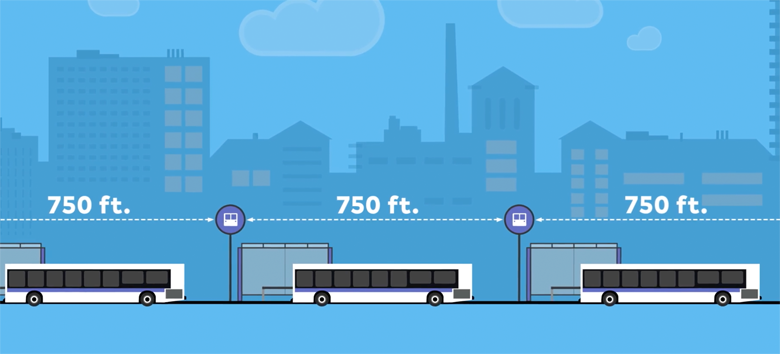
The TransitCenter video focuses on New York, where guidelines call for stops to be spaced just 750 feet apart, but the same principles apply in just about every American city:
Transit agencies in San Francisco and Maryland are consolidating bus stops to improve service, TransitCenter reports. A Portland study found bus stop consolidation improved bus speeds 6 percent.
It can be politically difficult for agencies to remove bus stops, since every stop has its constituency. But transit agencies can prioritize which stops should stay. TransitCenter recommends preserving high ridership stops, stops with important connections to other transit lines, and stops near schools, medical centers, or other important destinations.

Streetsblog has migrated to a new comment system. New commenters can register directly in the comments section of any article. Returning commenters: your previous comments and display name have been preserved, but you'll need to reclaim your account by clicking "Forgot your password?" on the sign-in form, entering your email, and following the verification link to set a new password — this is required because passwords could not be carried over during the migration. For questions, contact tips@streetsblog.org.