Council Members Press City Hall for Half-Priced MetroCards for Low-Income New Yorkers
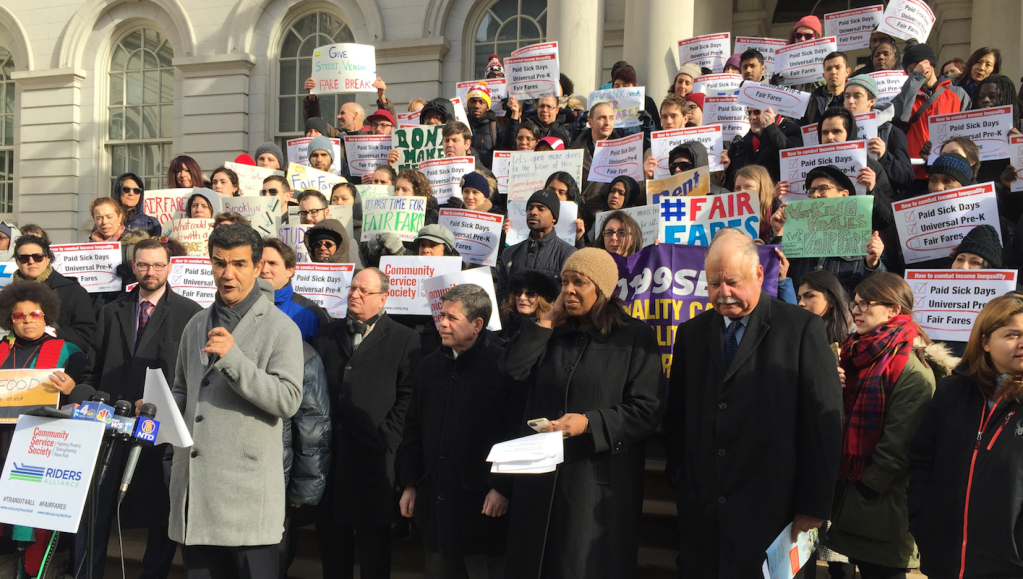
City Council members are perplexed by Mayor de Blasio’s contention that the city cannot afford to provide half-cost MetroCards for low-income New Yorkers.
The “Fair Fares” campaign, led by the Community Service Society, Riders Alliance, and the Straphangers’ Campaign, has drummed up support from 30 council members, but the mayor has so far declined to fund their proposal, arguing that the state-run MTA should take on the responsibility as the city enters a period of fiscal uncertainty with Republicans in control in Washington.
CSS estimates that it would cost the city $212 million annually to provide half-priced fares to the 800,000 New Yorkers who live below the federal poverty line, putting an average of $732 each year back into poor families’ pocketbooks.
“A monthly MetroCard is literally 20 percent of my monthly income, and I’m not alone: Too many New York City residents struggle just to get where they need to go,” said CSS client Love Andujar.
With de Blasio’s proposed budget topping $86 billion — $13 billion more than the year before he took office — City Council members are accusing him of “passing the buck” to Albany.
“I just don’t think that the budget is a real answer, that it’s legitimate, given that there’s an increase [in total funding],” Council Member Antonio Reynoso said at a transportation committee hearing this morning. Reynoso noted that the administration has pushed for billions of dollars of spending on a proposed Brooklyn-Queens streetcar and citywide ferry service, and had yet to furnish a list of costs that the federal Republicans could shift onto the city.
While de Blasio’s transit spending priorities are suspect, Andrew Cuomo isn’t blameless either. Cuomo has repeatedly pulled a bait-and-switch on MTA funding, most recently in his current executive budget, which withholds $65 million that the governor had previously promised for the transit system.
Last year, Cuomo failed to follow through on a promise to fund the MTA capital program without borrowing billions. By relying heavily on debt to pay for system maintenance and upgrades, Cuomo is causing transit fares to rise faster.
“The Transit Affordability Crisis,” a CSS and Riders Alliance report released last April, showed the tremendous burden transit fares pose to the city’s poorest residents. The price of a 30-day MetroCard, for example, which many New Yorkers cannot afford, amounts to 10 percent of the average household income for residents living below the federal poverty line.
Low-income New Yorkers must weigh transit costs against necessities like food or medical care, and some are forced to ask other riders for swipes or jump the turnstile. That burden will continue to grow when the MTA raises fares in March.
“Our city spends an enormous amount of money on these cases when they result in an arrest. We can avoid those costs associated with prosecuting these cases by making MetroCards affordable for the poorest people in our city,” said Deborah Lolai of the Bronx Defenders, a legal assistance group. “Make no mistake: an arrest for fare evasion is not just an arrest. It can cost out clients their hard-earned jobs, the public benefits they depend on, their children, their housing, and can even incredibly subject them to deportation.”
Police stopped New Yorkers for fare evasion 52,000 times in 2016, according to CSS President and CEO David Jones. The number of summonses is somewhat lower but still large — 29,000 in 2015. The crime, he told council members, amounts to prosecution for stealing bread.
“Essentially now the main work of the transit police has become catching people who jump turnstiles,” Jones said. “This is a kind of insanity going on in this city, particularly because of the great wealth here, that we’re starting to make a priority of people who try to evade a fare as if they are major criminals.”

Read More:
Streetsblog has migrated to a new comment system. New commenters can register directly in the comments section of any article. Returning commenters: your previous comments and display name have been preserved, but you'll need to reclaim your account by clicking "Forgot your password?" on the sign-in form, entering your email, and following the verification link to set a new password — this is required because passwords could not be carried over during the migration. For questions, contact tips@streetsblog.org.