No, Seattle Isn’t Waging a “War on Cars”


It’s cliché at this point for newspapers to label any effort to improve walking, biking, or transit as a “war on cars.” The latest in this proud tradition is Seattle Times columnist Brier Dudley, who wrote recently that the city is waging “a shock-and-awe campaign targeting anyone who dares to drive in, through or around Seattle.” What was it exactly that set him off?
The offense Seattle committed was to shift away from measuring streets using “Level of Service,” which prioritizes the movement of vehicles. Instead the city will measure how many people are moving on streets, regardless of the mode they’ve chosen, writes Scott Bonjukian at the Urbanist:
This is indeed a novel approach to measuring the performance of local streets. The traditional Level of Service (LOS) tool ranks roadways based on how fast cars move; free flowing traffic gets an A, and gridlock gets an F. As demonstrated by over 60 years of post-WWII sprawl, the problem with this is it leads to an infinite loop of congestion, construction, and poor urban environments. Cities set a high standard for LOS, see that traffic is congested, widen roads or build new ones, see that the roads fill up with more cars due to induced demand, and repeat ad nauseam. This is also results in limited, if any, consideration for other users of the street: people walking, bicycling, and riding transit.
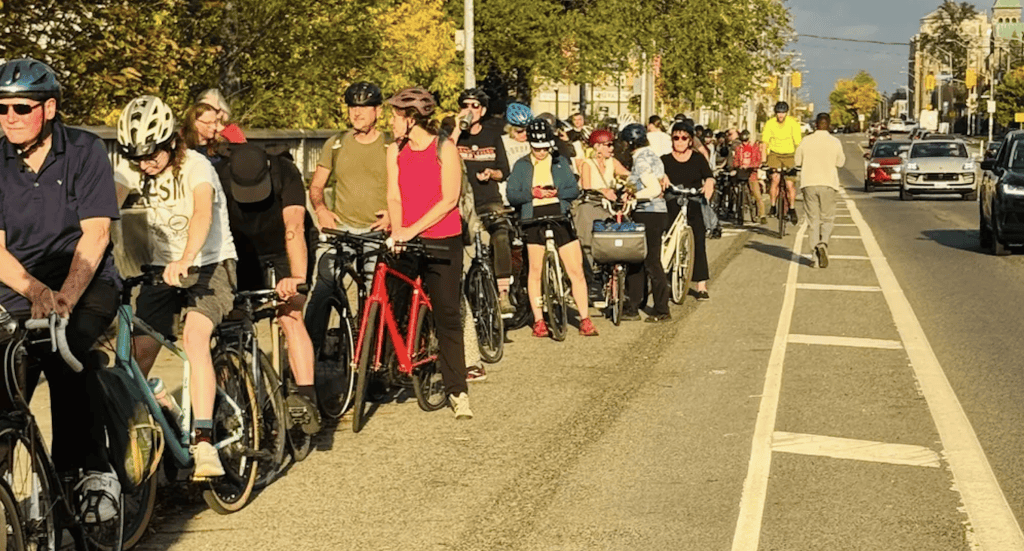
Seattle is not hiding the fact that it is more concerned about moving people than cars. When a City reaches a certain size it is only prudent to prioritize more people-friendly and efficient ways of moving around. Streets packed with people are a good sign of urban vitality and desirable city. Even traffic jams are a good indicator of economic health; no major city in the world has figured out how to completely get rid of vehicle congestion.
With our rate of population growth, limiting development is not an option. And by “improvement” the vast majority of traffic engineers interpret that as “widen”. Widening Seattle’s streets is not physically possible. We have many lovely neighborhoods with buildings that sit on the edge of the property line and adjacent to the sidewalk. If Dudley is thinking along the lines of traditional LOS, we can only conclude that he is also advocating for arterial expansions that will unleash destruction on a massive scale, displacing thousands of residents and businesses, taking away hundreds of acres of private property, and purging the City’s coffers.
The Seattle Times asserts that the vast majority of people and businesses in Seattle still depend on cars. But that’s not really true, Bonjukian points out. Only 43 percent of the city’s work trips are made by solo car commuters and the number is even lower for non-work trips.
Promoting more efficient use of street space is hardly a sinister effort — it’s fairer, more efficient, and improves mobility in the broadest sense.
Elsewhere on the Network today: The Urban Edge looks at how Houston’s historically black Third Ward is trying to maintain its identity as property values rise. Broken Sidewalk takes a close look at the effect of air pollution on the lungs. And Greater Greater Washington says we should change how we approach pedestrian crossings.

Read More:
Streetsblog has migrated to a new comment system. New commenters can register directly in the comments section of any article. Returning commenters: your previous comments and display name have been preserved, but you'll need to reclaim your account by clicking "Forgot your password?" on the sign-in form, entering your email, and following the verification link to set a new password — this is required because passwords could not be carried over during the migration. For questions, contact tips@streetsblog.org.