If Central Park Was Car-Free, New Safety Measures Could Be in Place 24/7


Four major pedestrian crossings on the Central Park loop will be redesigned to shorten walking distances and alert approaching drivers and cyclists, the city announced today. The new crossing treatments are part of a package that will also lower the speed limit on the loop from 25 to 20 mph.
Two people were killed by cyclists in separate collisions on the loop this summer — 75-year-old Irving Schachter, struck by a teenage cyclist who reportedly swerved into the running lane to avoid a pedicab, and 58-year-old Jill Tarlov, hit at a marked crossing by a cyclist who frequently trained in the park (but whose speed at the time has not been determined).
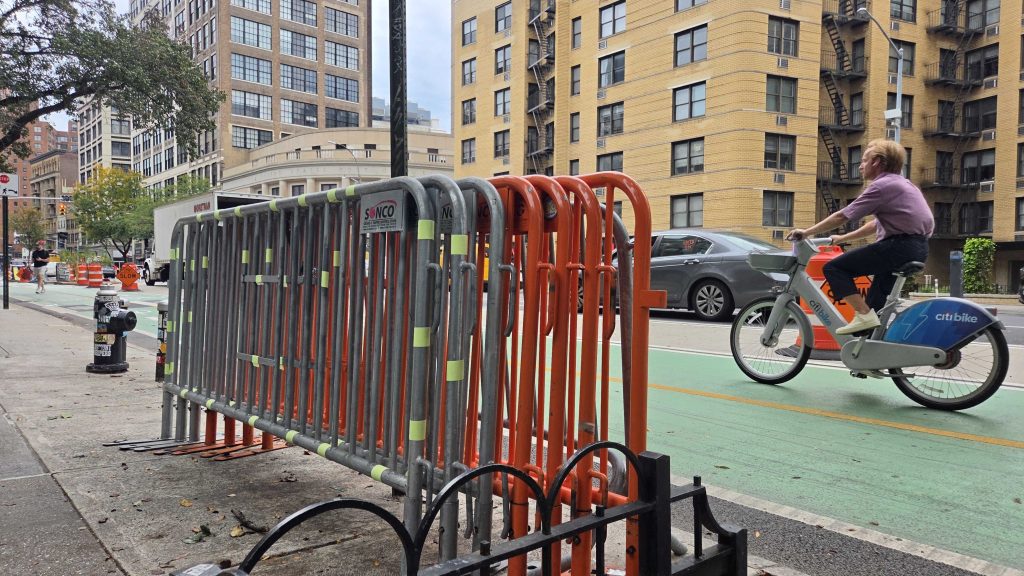
The changes DOT will implement should reduce the risk of pedestrian injury on the park loop. If motor vehicle speeds decline, all other traffic on the loop should be less harried during the hours when cars are allowed in the park. When cars are not in the park, the four major crossings will be even shorter for pedestrians, with movable barricades and signs with concrete anchors narrowing the distance further. These are the locations that will get the new treatment:
- West Drive at Delacorte Theater (near W. 81st Street)
- West Drive at Sheep Meadow (near W. 68th Street)
- West Drive at Heckscher Ballfields Crossing (near 63rd Street)
- East Drive at Terrace Drive (near E. 72nd Street)
Still, the fact that this design will minimize crossing distances when cars aren’t around points to the basic shortcoming in the plan: As long as the design of the loop has to accommodate car traffic, safety measures can only go so far. In a completely car-free park, the safer pedestrian crossing distances could be permanent, and the city could get rid of the traffic signals that cause misunderstandings between pedestrians and cyclists.

Read More:
Streetsblog has migrated to a new comment system. New commenters can register directly in the comments section of any article. Returning commenters: your previous comments and display name have been preserved, but you'll need to reclaim your account by clicking "Forgot your password?" on the sign-in form, entering your email, and following the verification link to set a new password — this is required because passwords could not be carried over during the migration. For questions, contact tips@streetsblog.org.