A New Perspective on Crossing the Street at Your Own Pace

Gary Howe has been seeing things differently since he suffered a foot injury when he slipped on an icy patch of broken sidewalk in his hometown of Traverse City, Michigan, this winter.
Since then, hobbling has replaced walking for Howe, who runs Network Blog My Wheels are Turning and lives car-lite in this northern Michigan city.
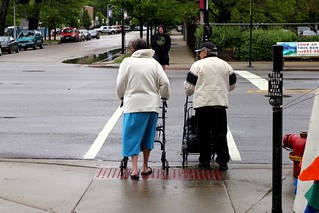
The injury has been an eye-opener, he explains, showing how difficult things are for people who move at a slower pace:
I’ve written about walking speeds and speeds at crosswalk before. Normally, I’m one of the faster ones and well within the 4-feet per second that most people cross a street. With this injury, I’m reduced to about half of my normal pace, around 2-feet per second, maybe a tad faster, sometimes a little slower. I really noticed it the other day when my pace tested the patience of an otherwise considerate driver. The driver stopped (as is city ordinance) and waved me to cross, only to lose patience as I proceeded and finally giving me a gesture from behind the windshield communicating something like, “WTF? Can’t you go faster?”
Before the injury, I was already aware of the need for streets/sidewalks and crosswalk times to be designed with a wider range of abilities and speeds. During the last two months I now have the empirical understanding of what it is like for people with injuries, disabilities, or just slower cadence than the majority of people to get around.
I know how it feels to stub one’s injured foot on a broken sidewalk and surprisingly have a jolt of pain race up my leg that forces you to sit. Right there. Now.
And, I appreciate a bit more the feeling of holding up traffic because there is no higher gear.
I also have a new appreciation for my coming years as an older person who hopes to age in place. Even if my normal good health and luck carries into my elder years (I’m 40, and thinking about it) I can’t help but wonder what the City will be like when I’m not hobbled by injury, but just naturally slower.
Elsewhere on the Network today: Reconnecting America shares a new report ranking transit connections to American airports. Second Avenue Sagas looks at the real estate impact of a subway service change in New York City. And Rebuilding Place in the Urban Space thinks Walmart may have ulterior motives for occupying a mixed-use location in the Washington, D.C., area.

Read More:
Streetsblog has migrated to a new comment system. New commenters can register directly in the comments section of any article. Returning commenters: your previous comments and display name have been preserved, but you'll need to reclaim your account by clicking "Forgot your password?" on the sign-in form, entering your email, and following the verification link to set a new password — this is required because passwords could not be carried over during the migration. For questions, contact tips@streetsblog.org.