‘Sociopaths’ Illegally Blow Safety Redesign Outside Greenpoint School
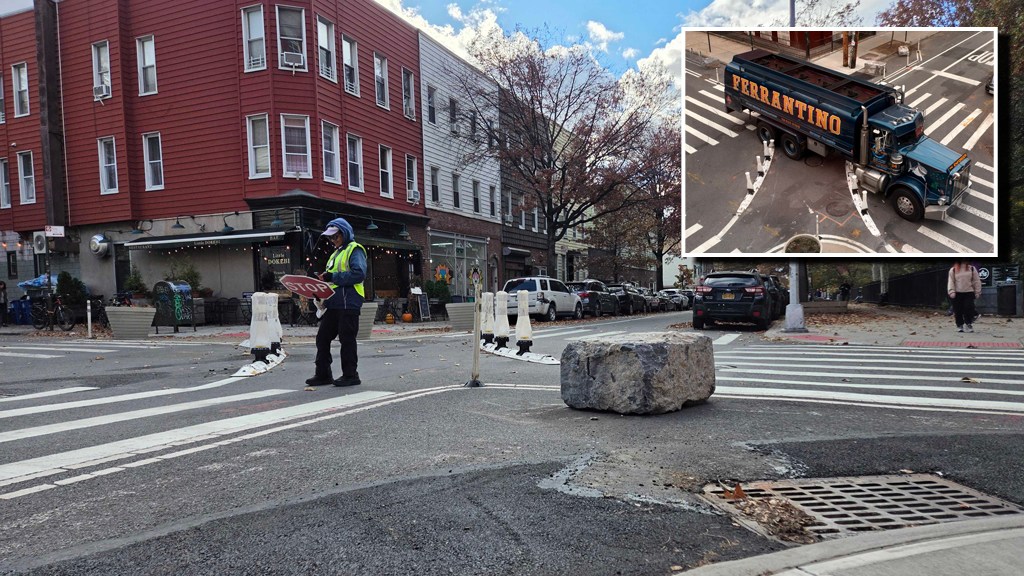
The newly redesigned low-traffic intersection in front of a Greenpoint school is mostly successful — except for some “sociopaths,” that is.
That’s how one local activist referred to the drivers who still plow through the city Department of Transportation’s traffic diverter that, at least on paper and in plastic, prevents drivers from using Driggs Avenue as a neighborhood cut-through. The diverter is an increasingly common tool for reducing car traffic in residential communities, especially near schools like PS 110.
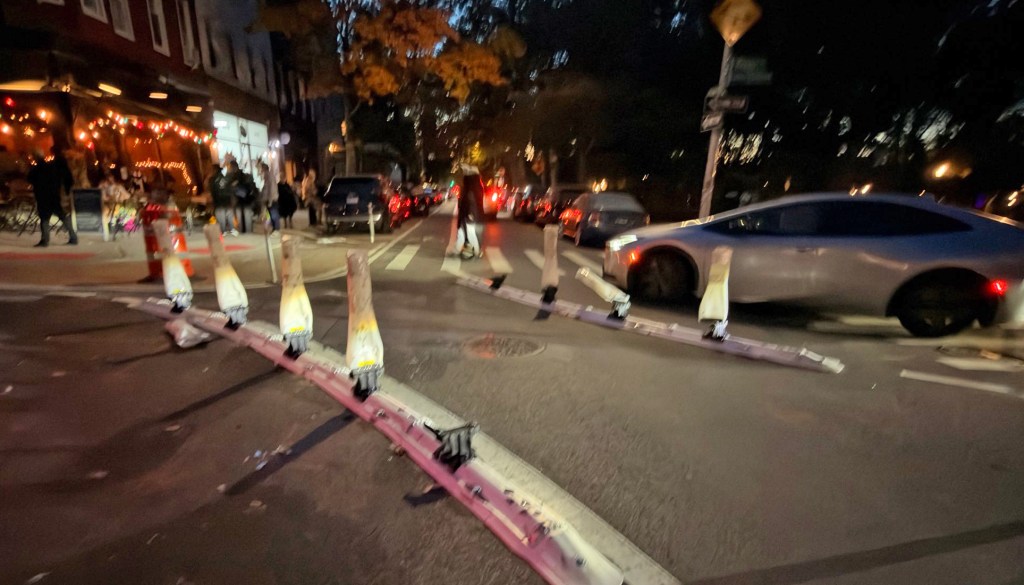
But neighbors are still noticing broken plastic most mornings, the result of some drivers who simply won’t play by the new rules.
“You can’t prevent someone who’s just that much of a sociopath,” said Carrie Hill, a school parent and advocate.
Despite the few drivers who cut through, Hill said the redesign, which was installed last month, was mostly successful.
“It’s slowing traffic down,” she’s aid. “I’m hoping that after a couple times of someone making this error and being like, ‘Oh, this isn’t a cut-through anymore,’ they will just use the suggested route.”
For now, though, some of Hill’s “sociopaths” have been driving over (and around) the flexible bollards to save time. Streetsblog checked out the scene on Monday and, as if on cue, a westbound Tesla driver drove onto the sidewalk to continue straight on Driggs, now an illegal move.
This reporter was so shocked by the driver’s high-speed move that he didn’t have time to get an in-focus photo of the offender. Not one minute later, a class of young children from P.S. 110 took that same path after an outing at the nearby McGolrick Park.
One local said the diverter makes the roadway a bit “more chaotic” for now, but thinks it’s just be a matter of time before drivers become accustomed to the changes (just as they did on the 39th Avenue bike boulevard in Queens).
“Right now it looks like, at the very least, people have not gotten used to it,” said Liam McCormick of Little Dokebi.
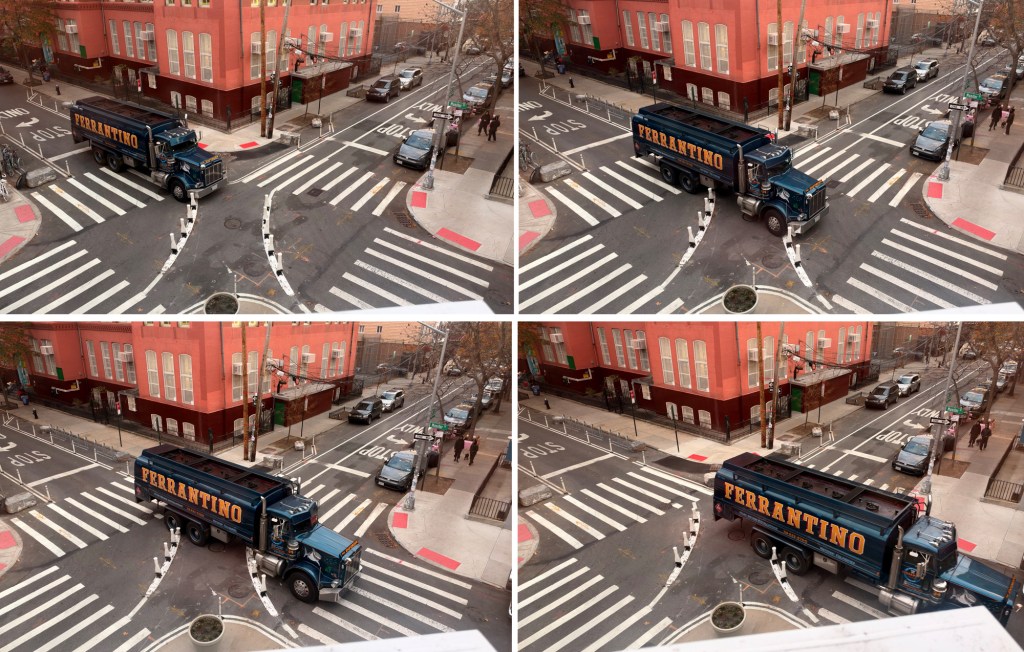
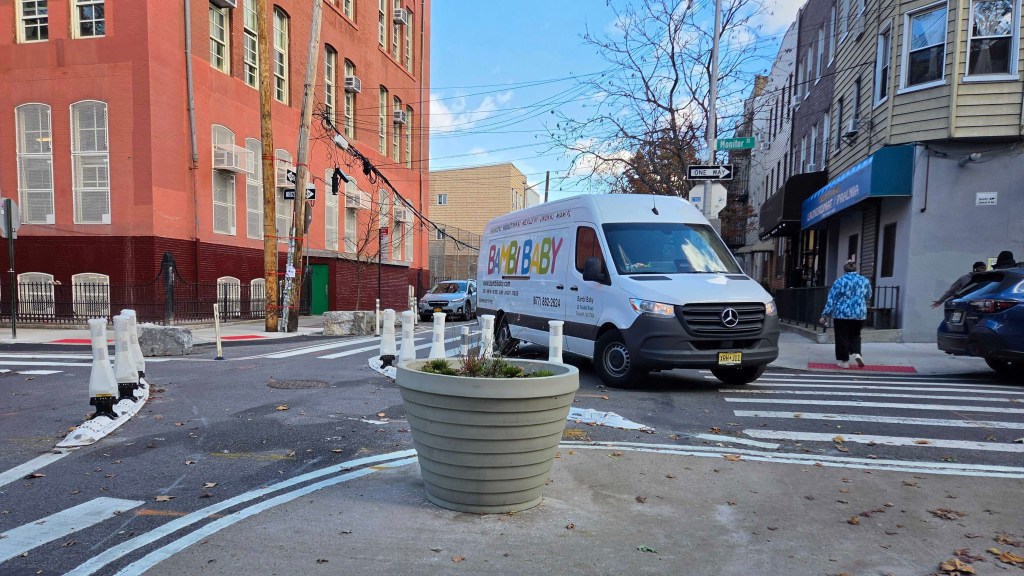
The DOT says the diverter will reduce cut-through traffic in the neighborhood, which then makes streets safer.
“The traffic diverter at Driggs Avenue and Monitor Street puts the safety of students, pedestrians, and cyclists first by limiting cut through traffic while maintaining necessary local access,” a DOT spokesperson said.
But the agency offered no comment about the psychology of drivers who are abusing the new road design, but said it will add planters and granite blocks to further encourage drivers to obey the new traffic pattern.
The diverter and other improvements nearby were a long time coming. In 2021, beloved PS 110 teacher Matthew Jensen was killed by a hit-and-run driver on McGuinness Boulevard, just blocks from the school. Days after, then-Mayor Bill de Blasio promised extensive safety improvements, which were initially blocked by his successor, but reinstated by Mayor Mamdani.
In 2023, tragedy in the form of a driver struck and killed cyclist Teddy Orzechowski, 73, at Monitor and Driggs right outside the school.
Since 2024, there have been 36 reported crashes on just the eight blocks of Driggs Avenue between Meeker and McGuinness, according to city stats, injuring 11 people.
The killings emboldened activists and city officials to take on the entrenched car culture as well as the Adams administration, which took bribes from a local business owner to stall the safety improvements, according to law enforcement authorities.
“This neighborhood has been a victim of Robert Moses since the Brooklyn-Queens Expressway was put in,” said Noel Hidalgo, a resident of the neighborhood who has been tracking reckless drivers at the diverter. “These are neighborhood streets and they should be for neighborhood vehicles.
Hidalgo said the changes are largely working. “This weekend was one of the most peaceful in the neighborhood,” he said.
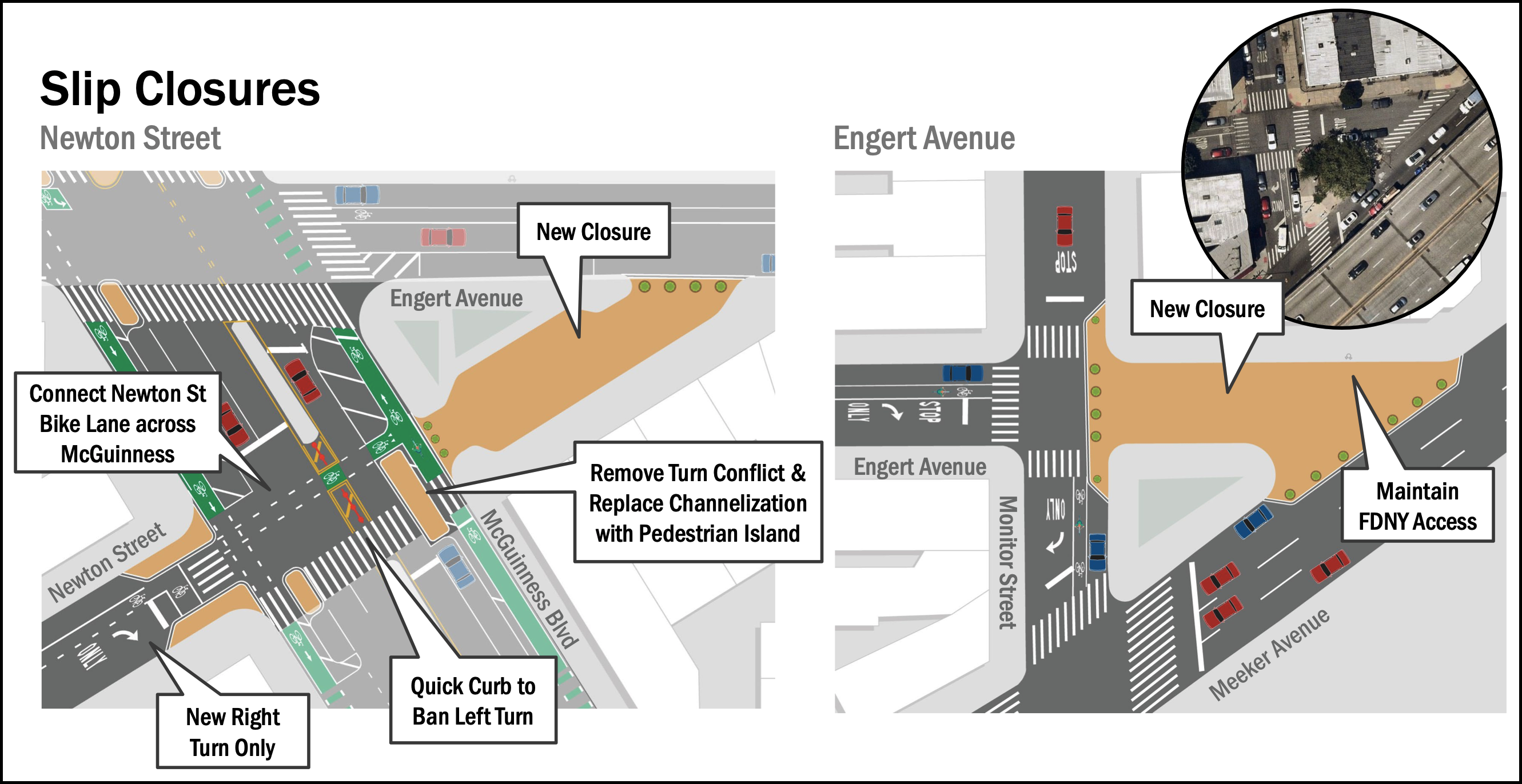
One thing everyone could agree on, was that the intersection was a good first step to a true low-traffic neighborhood. The other steps? The DOT closed slip lanes from high-speed Meeker Avenue onto Engert Avenue and from McGuinness Boulevard onto Newton Street.
Some drivers still complain that they need to find different routes, but none of the changes are permanent. Besides, drivers can access every location that they previously could access, just from another direction.
“People get way too wrapped up in like, ‘What if it’s going to be terrible?'” Hill said. “Try it. If it works, it works. If it doesn’t, it doesn’t. And we try something else.”
The only thing that’s permanent, after all, is road violence, but that, too, could change.