Rideout On Rust Street: Cyclists Demand Protected Lane on Industrial Corridor As DOT Stalls
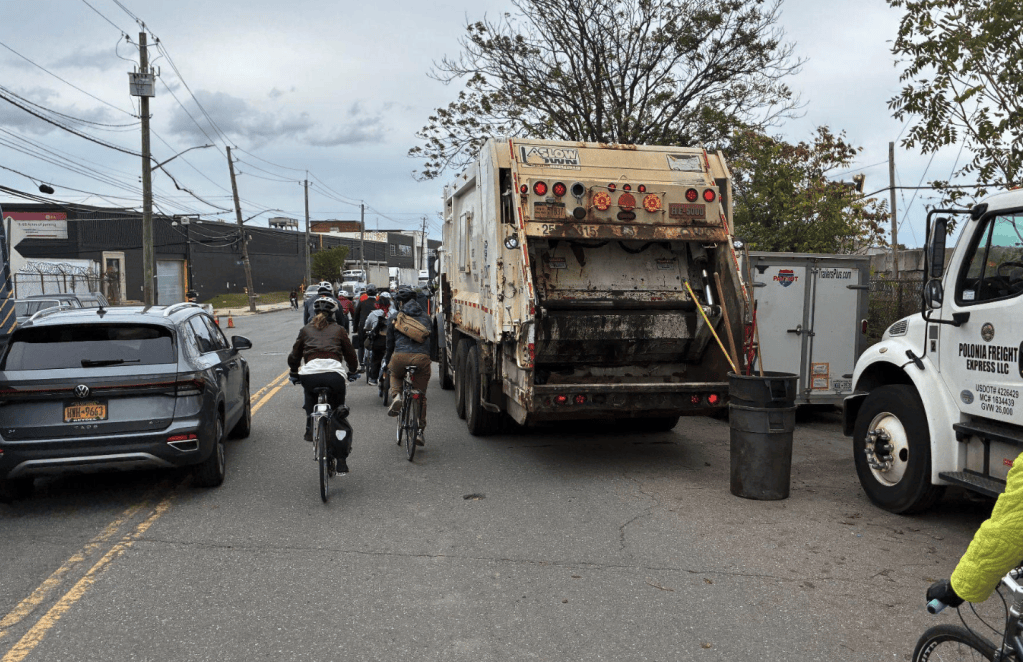
Cyclist Jacob Keen said he biked on Rust Street “hundreds of times” because, however dangerous he found the industrial roadway, it remains an important connector to multiple Queens neighborhoods.
One day, two years ago, Keen’s ride was going exactly as so many previous rides had gone: Harrowing.
“There were a lot of 18-wheelers, almost parked on the sidewalk, obstructing the view … to the right and the left,” he said.
On this fateful day, Keen was following a car that started crossing Maspeth Avenue, a single messy intersection where there have been more than 120 reported crashes since 2013, injuring 70 people. “As I got into that intersection, [the driver] immediately hit his brakes. And that’s when I looked to my right.
“And as soon as I did, I could finally see around that final [illegally parked] trailer, and there was a double flatbed with one of those forklifts hanging off the back, flying through.”
Keen tried skidding to a stop on his fixed-gear bicycle, but was unable to stop in time. The trucker sideswiped his bike, and, because Keen’s feet were attached to the pedals, he went flying with the bike and was thrown under the truck.
“The first thing I did after the crash was look for my bike, as any self-respecting cyclist would do,” Keen said. But before long, he noticed that his foot felt “wet” and also realized that it was “really messed up.”
The foot was so damaged, in fact, that doctors had to amputate. Keen got this piece of news just as the anesthesia kicked in.
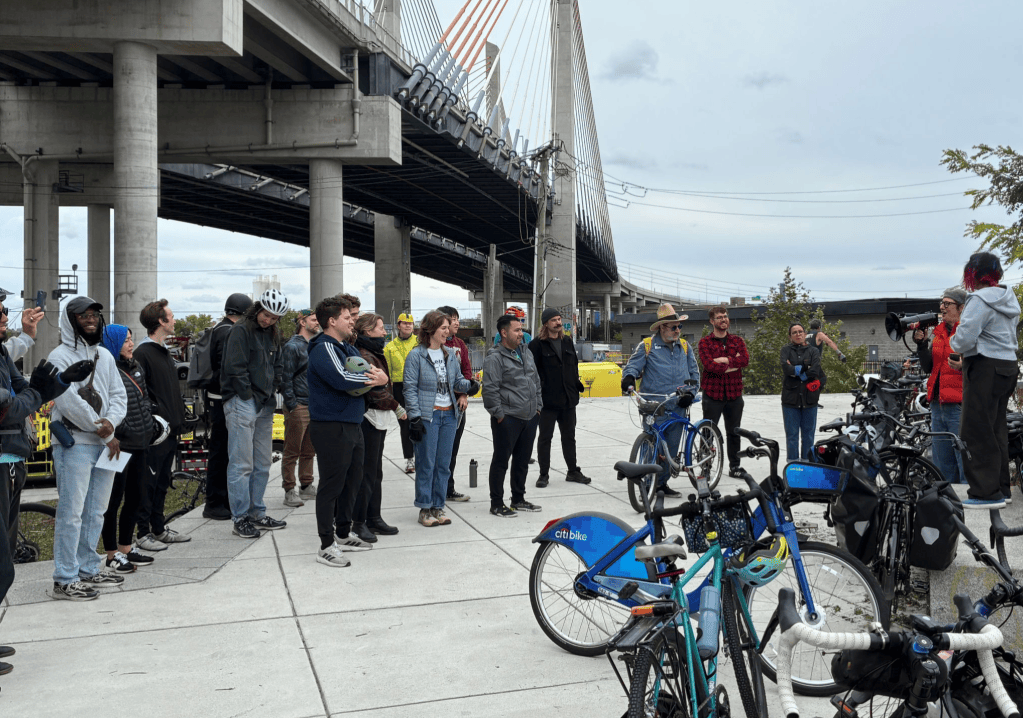
Keen, who has moved to Oklahoma, was not at Saturday’s group tour organized by Ridgewood Rides along Rust Street and the contiguous 56th Road, where there was 664 reported crashes between Jan. 1, 2013 and June 11, 2026, according to city data (which has not been updated in months). Those crashes injured 236 people, including 14 pedestrians and 23 cyclists, two fatally.
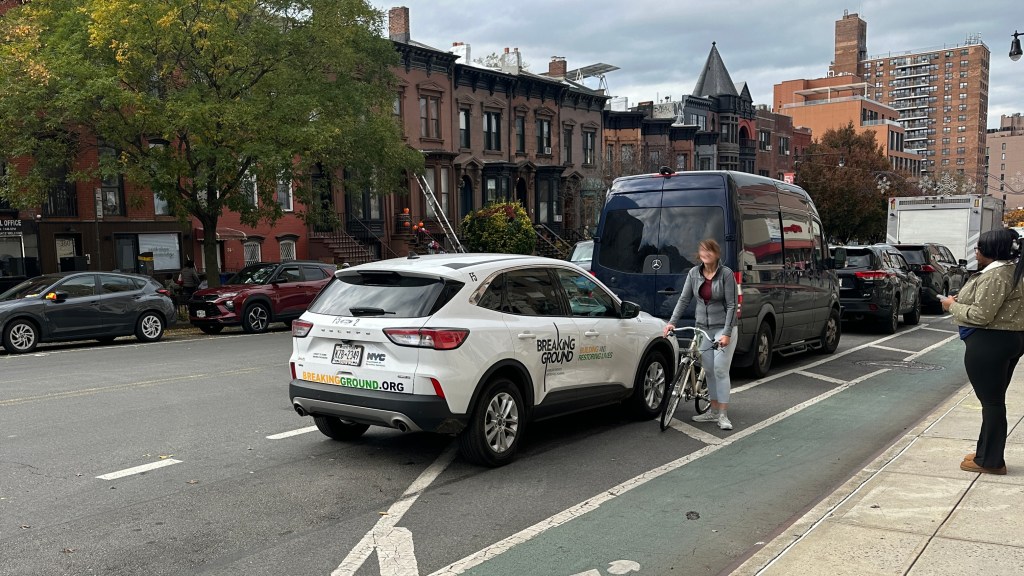
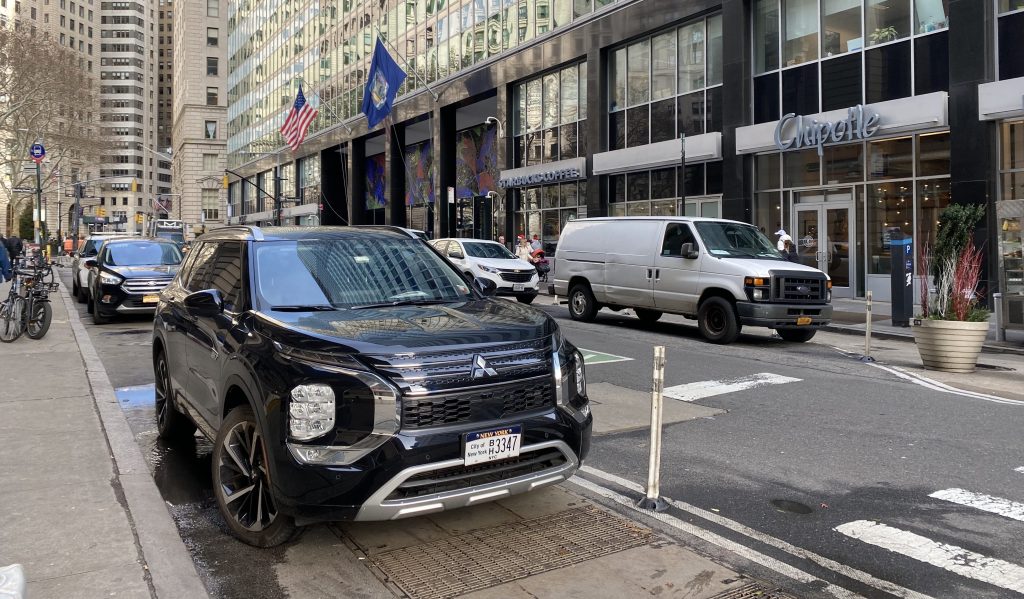
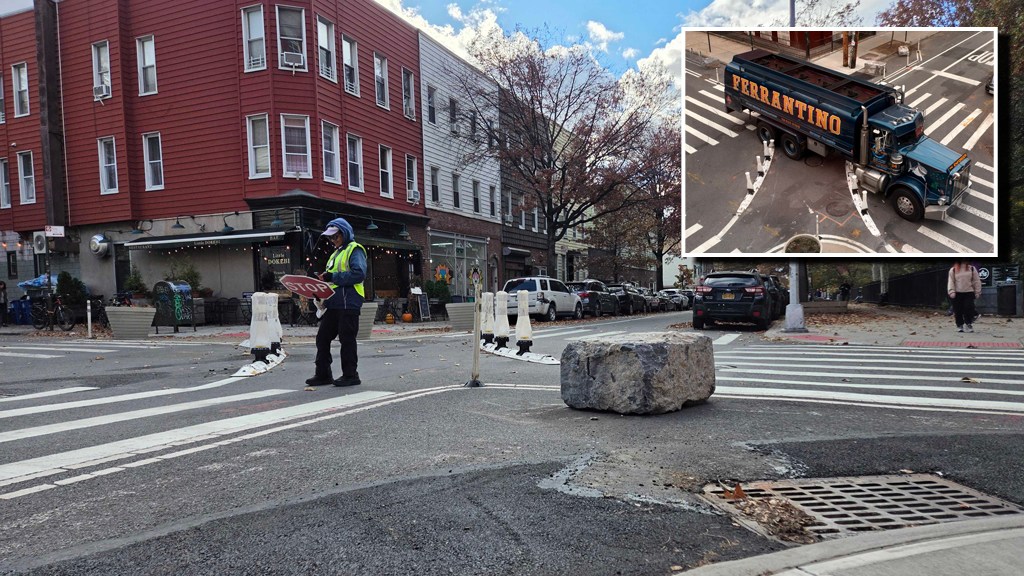
The three-dozen cyclists who participated demanded a protected bike lane on the crucial roadway, currently a potholed stretch with heavy truck traffic and illegally parked vehicles.
“Rust Street is the direct road to get to other neighborhoods,” said Bree Mobley, a member of Ridgewood Rides, the cyclist group that organized the protest as part of its push to fill “the gaps in our cycling network.”
“It does have to support a lot of really big truck traffic, and we totally totally understand that. We’re not trying to like remove the industrial element. But because it’s such a big road, we see it as an opportunity to carve out some space for the other users of the street who are there anyway, because it is the most direct route. This is something the city should and can relatively easily implement.
“Having a concrete barrier would be a lot of protection between them [cyclists] and the really large trucks,” added Mobley.
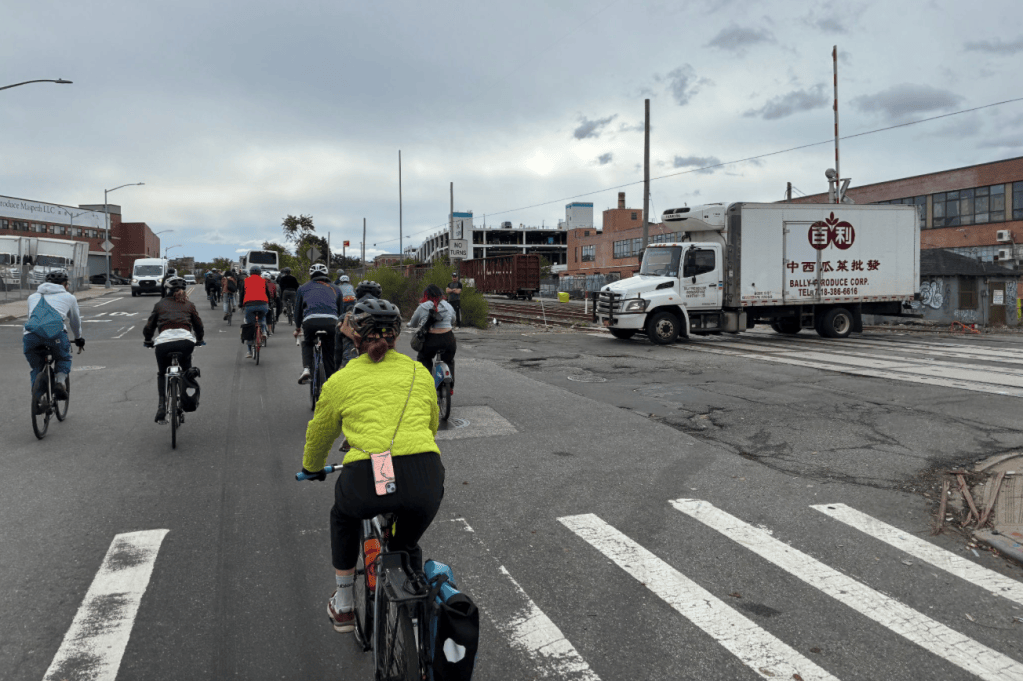
Mae Francke, the Queens organizer for Transportation Alternatives, pointed out that most crashes on Rust Street occur at intersections for three reasons: “Because of [poor] visibility, because of speed, and because of space.”
Keen said that he was unable to see the truck coming because his line of sight was blocked by the large semi-truck trailers. He also said the crash report showed that the truck driver was going 35.
Creating a protected widened gap between the parked trucks and those driving down the road: protects the cyclists, gives visibility to their existence, as well as “visibility for cyclists to see out,” said Keen.
State Assembly Member (and incoming Rep.) Claire Valdez joined the ride, adding her voice to the call for a two-way protected bike lane, plus the attendant daylighting and traffic-calming measures.
“We deserve connected neighborhoods,” said Valdez.
It’s not as if the Department of Transportation is unaware of the safety problem. In 2024, the agency presented a fairly comprehensive plan to add protected bike lanes on a number of streets west of the area in question. In that presentation, Rust Street and 56th Road were labeled as “future routes.”
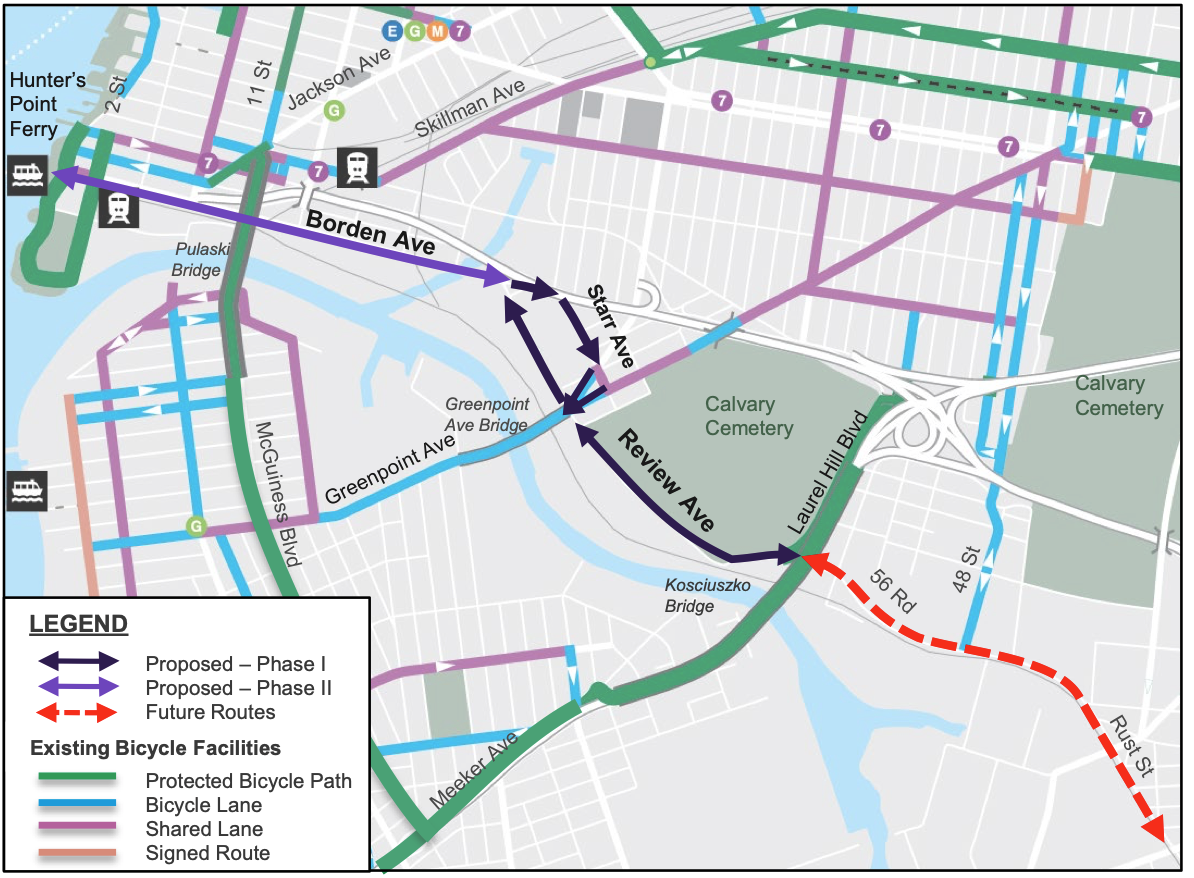
Streetsblog asked the agency for an update on the Rust Street and 56th Road portion of the 2024 plan, but spokesperson Mona Bruno declined to offer specifics, saying only, “All New Yorkers deserve to feel safe traveling on their streets no matter how they are getting around. We appreciate the community’s support for safe cycling infrastructure and will review any requests.”
Keen has one: Sure, he’s in the Sooner State, but he wants to someday ride on Rust Street again — once there’s a bike lane.