Analyze This: NYPD’s Elite Crash Unit Is Investigating Fewer Collisions
New York is second to the Second City.
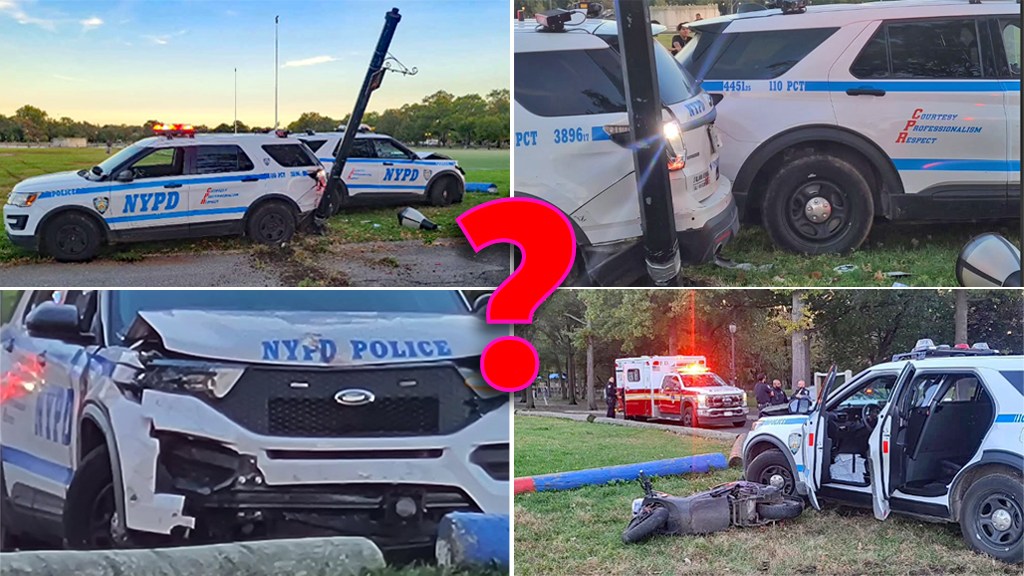
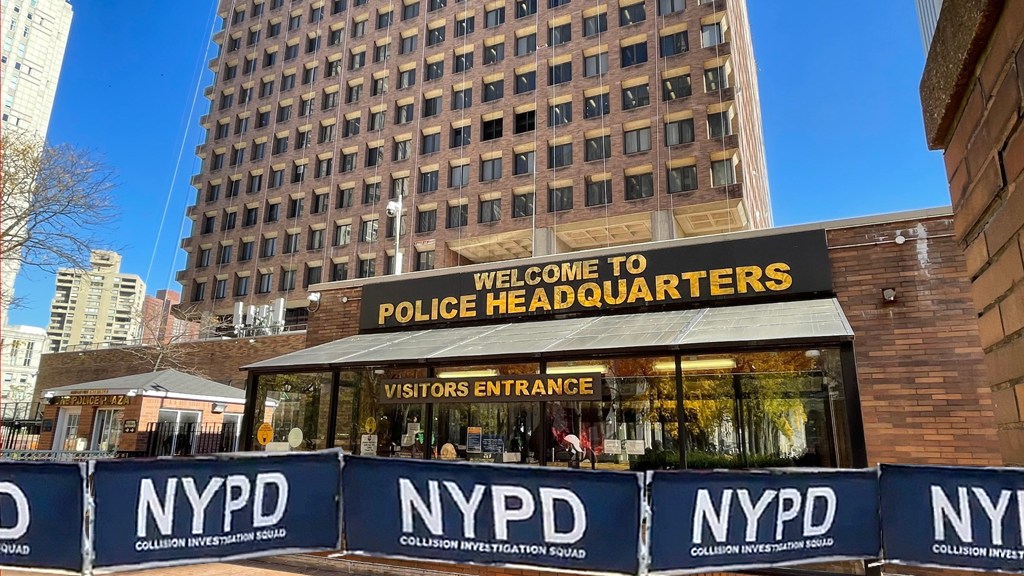
The elite team of NYPD detectives that investigates serious crashes in hopes of uncovering critical street safety flaws is analyzing even fewer collisions than normal this year — and that shortfall again underscores the squad’s limited safety role compared to peer cities such as Chicago.
Through Sept. 9, according to the NYPD, the Collision Investigation Squad has reviewed just 179 crashes, on pace for fewer than the squad’s case load last year, which itself was 21 percent fewer cases than the year before. The squad typically investigates the 225 or so fatal crashes and a few dozen crashes of the 3,000 “critical” injury crashes per year.
In fact, officers seem to be working at roughly half the pace of CIS back in 2013, when a Comptroller’s study found that CIS officers completed 16 cases a year on average. This year, they’re on pace for just eight. And it’s not as if it has been an unusually busy year for the NYPD; reported collisions, collisions with injuries, and overall fatalities are all slightly down this year, according to the agency’s own stats.
Meanwhile, the Chicago Police Department deploys far more officers to investigate far more crashes, according to a recent outside study. Chicago’s police department is roughly one-third the size of the NYPD, yet staffs its unit with 53 officers, 22 more than the NYPD.
In 2024, the last year for which data is available, Chicago’s officers investigated 3,733 crashes: 144 fatals, 461 serious crashes, 2,624 minor injury crashes and 504 crashes involving only property damages. Meanwhile, in 2025, the last year for which we have New York data, the NYPD did just 263 investigations, down from 335 the year before.
Chicago police officers not only investigate far more crashes, but they do it much faster: A fatal crash investigation takes a Chicago cop roughly 80 hours on average. At that pace, a New York City collision investigation officer could do around 23 investigations every year, instead of the mere eight they currently do.
If NYPD cops were as brisk as those in the Windy City, and the squad had Chicago-level staffing, they could investigate every fatal crash and the thousands of other serious crashes.
Street safety advocates expressed alarm at CIS’s paltry work this year.
“That’s pathetic,” said Charles Komanoff, the former head of Transportation Alternatives who has repeatedly advocated in Streetsblog for changes in the CIS unit. “Roughly eight [investigations] per detective per year is appalling, and cries out for explanation.”
Others called on the NYPD to do more to investigate crashes.
“New York City has a responsibility to both investigate these crashes and prevent the next one, and CIS can’t fall behind,” said Ben Furnas, the executive director of Transportation Alternatives. “The NYPD needs to investigate more crashes to do their part in New York City’s Vision Zero ambitions.”
In a statement, an NYPD spokesperson, who did not provide their name, criticized Streetsblog’s comparison while also declining to answer specific questions about the NYPD.
“You will have to ask the Chicago Police Department why they staff their unit the way they do,” the spokesperson wrote. “Comparing our two departments is disingenuous as we police two different cities under different circumstances.”
Streetsblog also reached out to multiple former CIS administrators and investigators, none of whom would comment on the record.
Longstanding shortfall
The limitations of the Collision Investigation Squad are the fruit of decades of poor decision-making.
The main issue seems to be staffing: Because NYPD brass devoted so few resources to investigating crashes, the unit was only assigned fatal crashes and those resulting in serious injuries. (Chicago, for its part, justifies the staffing of its unit by calling these cases “among the most complex and time-consuming” handled by the department.)
In 2013, then-NYPD Commissioner Ray Kelly was forced to consider growing the squad from its then-19 officers following a few high-profile investigative failures.
Kelly didn’t envision a massive expansion. But others did: Then-Comptroller John Liu’s “People’s Budget” that year advocated for 177 CIS investigators — a 900-percent increase — to allow it to investigate all crashes involving serious injuries or fatalities.
The cost would have been just $12 million — a drop in the NYPD’s $4.4-billion budget bucket at the time.
In the end, Kelly only increased the CIS to 26 officers.
Two years later, after victims of road violence complained, the NYPD admitted to the City Council that it was only investigating 1 percent of serious and fatal crashes and that the unit’s staffing had actually dropped by two officers.
Fast forward to 2019, when the City Council offered the NYPD $2 million to hire 15 more detectives to the squad. Then-top cop James O’Neill claimed CIS was “something we look at on an ongoing basis,” but ended up turning down the cash.
And even when it does investigate a case and produce a detailed report, CIS’s findings rarely become public. Street safety advocates assume that those reports highlight major issues that the city could address — but the public will never know, as only a handful of the estimated 4,000 reports the unit has created have ever been made public.
(These reports, which are generally finished “within six months,” according to one NYPD webpage, are available to victims’ families only by filing a public records requests, which then typically takes an additional six to nine months before the NYPD provides a response.)
Advocates believe that publishing the reports would go a long way towards improving street safety.
“That’s a treasure trove of data about who, and what, is responsible for crashes that kill and seriously injure across the city,” Komanoff said. “And on the professional and policy level, we would know how the streets should be redesigned and who should be the targets of future NYPD enforcement.”
The mayor’s office did not respond to multiple requests for comment for this article.

Read More:
Streetsblog has migrated to a new comment system. New commenters can register directly in the comments section of any article. Returning commenters: your previous comments and display name have been preserved, but you'll need to reclaim your account by clicking "Forgot your password?" on the sign-in form, entering your email, and following the verification link to set a new password — this is required because passwords could not be carried over during the migration. For questions, contact tips@streetsblog.org.