Dear Mr. Fantasy: Build ‘The Hanging Gardens of Brooklyn’
Every year since I’ve been old enough to pedal a bicycle on the streets of New York, a sort of amnesia falls upon me as the heat of the summer sun rises, and I set off on my Cannondale to catch the waves at Coney Island. And every year, the reality of the Ocean Parkway bike path begins with a faint remembrance and slowly builds, eternal traffic light by eternal traffic light, to the wallop of a baseball bat, and I tell myself, “Never again.”
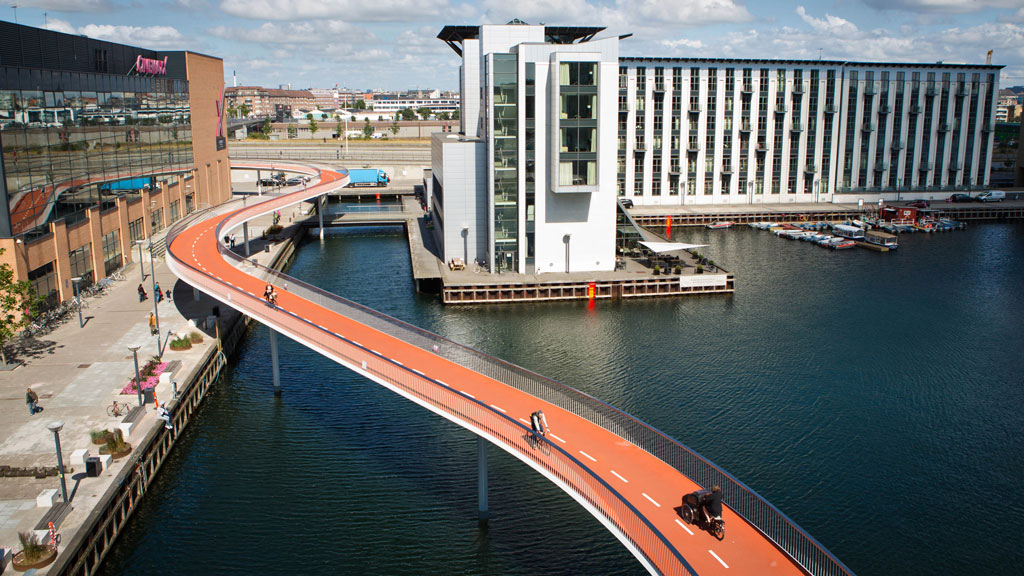
The money my family saves by not having a car we spend on travel, so I’ve had the opportunity to ride bicycles in a number of cities in Europe. Berlin, Stockholm, and Amsterdam are all very different but equally rewarding cities to explore on two wheels. It is the cycling infrastructure in Copenhagen, however, that sets it apart. Traffic lights are timed so that cyclists riding at a steady speed catch a “green wave” and ride continuously without stopping. The Cykelslangen — the Bicycle Snake — is a dedicated cycling bridge across the harbor that 17,500 people ride daily. Having experienced Copenhagen, it is impossible for me not to wonder what it would take to give Ocean Parkway the same treatment, and what Brooklyn might look like if someone did.
We’ve come a long way since the Bloomberg administration used Europe as a model to create small pedestrian zones in Times Square and Union Square and build protected bike lanes in Manhattan. But these efforts have been slow to expand. There are no Citi Bikes past certain points in the outer boroughs, few protected bike lanes, and riding in many Brooklyn neighborhoods is legitimately dangerous. The result is that these neighborhoods are effectively closed off to cyclists, and to the tourism dollars that follow them.
Ocean Parkway is the oldest bike path in the country, and while that sounds distinguished, it is the absolute opposite of Copenhagen. Six lanes of traffic to the left of riders, parked cars and a lane of local traffic to the right, 28 busy intersections, and a near-constant intake of exhaust. Tourists couldn’t ride it even if they wanted to; there are no Citibike docks or safe places to lock rental bikes anywhere near Coney Island.
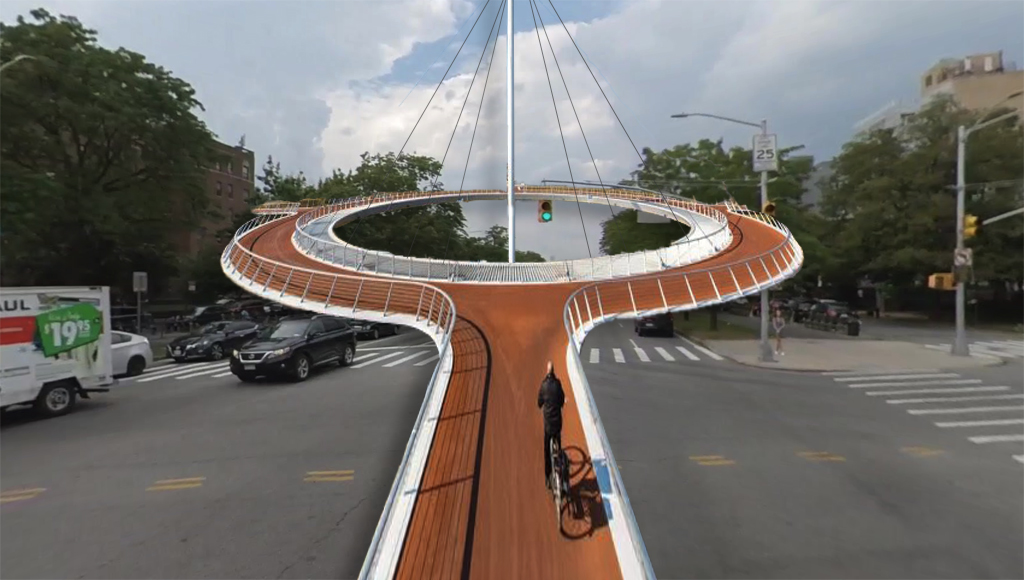
In Belgium, they’ve built Hechtel-Esel, an elevated bike path which winds cyclists at treetop level through a pine forest. In the Netherlands, they’ve constructed the Hoverring in Eindhoven, an elevated roundabout suspended from cables attached to a centralized pole and fitted with LED lighting which is visible at night as a ring of light. I have not yet had the opportunity to ride on either, but someday I will. Millions of other tourists from around the world will as well. Europe brings in over 44 billion euros a year in bicycle tourism. Brooklyn? Virtually none.
The High Line cost $220 million and is five times smaller than what Ocean Parkway would require, from 2007 to 2027, but the High Line is projected to have generated over $1.4 billion in tax revenue and brought $6 billion in new development. Erecting a Copenhagen-inspired elevated bike path down the center of Ocean Parkway would allow New York to join the ranks of global cycling destinations, enabling Brooklyn to generate and spread revenue from its 585-acre park to its historic boardwalk on the sea.
Ocean Parkway is currently one of the most dangerous corridors in Brooklyn because the width of the road allows speeding cars to weave in and out of traffic. Reclaiming the inner two lanes for the elevated bike lane’s infrastructural supports would improve safety by slowing traffic, and bordering the elevated lane with greenery, like the High Line, would not only create an unbelievable biking experience but would improve air quality and rejoin the two sides of what are now neighborhoods essentially divided by a highway.
You may say I’m a dreamer, but I’m not the only one.

Read More:
Streetsblog has migrated to a new comment system. New commenters can register directly in the comments section of any article. Returning commenters: your previous comments and display name have been preserved, but you'll need to reclaim your account by clicking "Forgot your password?" on the sign-in form, entering your email, and following the verification link to set a new password — this is required because passwords could not be carried over during the migration. For questions, contact tips@streetsblog.org.